
Dermatology Clinic Appointment Booking: How the Front Desk Should Separate Medical and Cosmetic Visits
WAJ Team
July 10, 2026
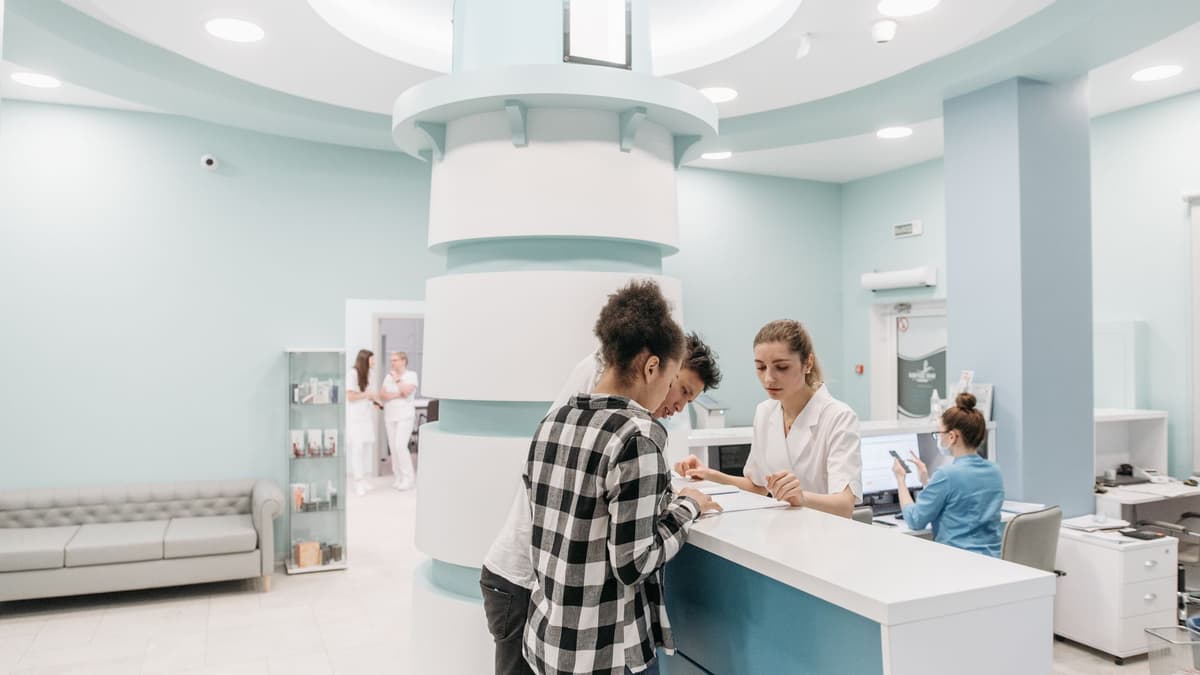
Good dermatology clinic appointment booking starts with one decision at the front desk: is this visit medical or cosmetic? Once reception asks a few set questions and books each patient into the right appointment type, with the right length and the right practitioner, the day stops running late and patients stop getting turned away at the chair. Reception sorts and schedules. It never diagnoses.
Most dermatology clinics in the Gulf now do both. In the morning a doctor sees a teenager with acne, a father with a changing mole and a child with eczema. In the afternoon the same rooms host laser courses, skin boosters and peels. Good business, but chaos if booked badly.
Why mixing medical and cosmetic bookings causes chaos
Picture a Thursday at a clinic in Jumeirah. One patient books a "consultation" online for a rash that has spread over a week. Another books a "consultation" for filler. Both land in identical 15-minute slots with the same dermatologist. The rash needs a proper examination. The filler patient expects treatment on the day, and there is no procedure time left. One runs over, one leaves disappointed, and the next five patients wait.
One generic slot causes the same problems everywhere:
- Wrong length. A full skin check and a quick review are not the same appointment.
- Wrong practitioner. Some work only the doctor can do; some a nurse or therapist can do within their scope.
- Wrong room or device. A laser booking with no laser room free will fail.
- Wrong expectations. Cosmetic patients often expect treatment on the day. Medical patients often arrive anxious and need time.
What should reception ask when booking?
The goal is to route the patient, not assess them. Reception never tells a patient what their condition is, whether it is serious or which treatment they need. A short intake script, in Arabic or English:
- Is this visit about a skin, hair or nail concern you want checked, or a cosmetic treatment?
- Is this your first visit to us, or a follow-up?
- Which treatment or concern is it about, in your own words?
- Has a doctor already recommended this treatment for you?
- Have you had this treatment before, here or elsewhere? When?
- Are you pregnant or breastfeeding? (Only where it affects the booking, and asked privately.)
Record the answers on the patient's file in their words. "Itchy patch on arm, two weeks" is useful to a doctor. "Skin problem" is not.
What if the case sounds urgent?
Reception will sometimes hear worrying things: a bleeding mole, a fast-spreading rash with fever, swelling after a treatment elsewhere. Staff should not judge how serious it is. Give them a clear rule:
- If the patient describes something that sounds severe or is getting worse quickly, tell them to go to emergency services or call the emergency number.
- Otherwise, pass the message to the doctor or the clinical lead the same day, and follow their guidance on when to book.
- Write down what was said, what advice was given and who it was escalated to.
The clinic's doctors should agree the escalation list and wording in advance, so a receptionist never has to improvise.
Appointment types and lengths
Build separate appointment types in your system, each with its own length, practitioner, room and device. The table below is an example structure. The lengths are examples only; your doctors should set the real ones.
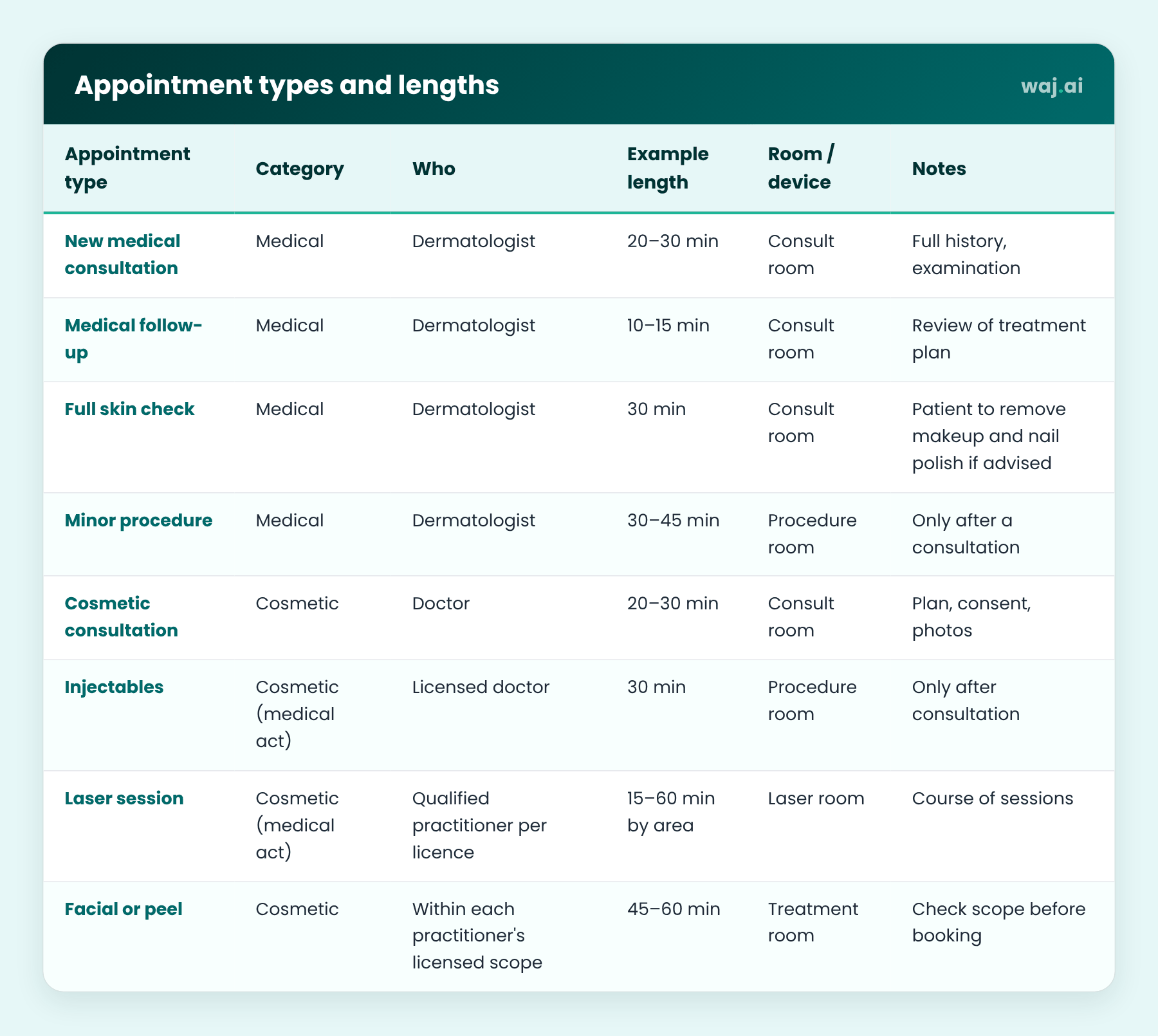
- New medical consultation
Category: Medical
Who: Dermatologist
Example length: 20–30 min
Room / device: Consult room
Notes: Full history, examination - Medical follow-up
Category: Medical
Who: Dermatologist
Example length: 10–15 min
Room / device: Consult room
Notes: Review of treatment plan - Full skin check
Category: Medical
Who: Dermatologist
Example length: 30 min
Room / device: Consult room
Notes: Patient to remove makeup and nail polish if advised - Minor procedure
Category: Medical
Who: Dermatologist
Example length: 30–45 min
Room / device: Procedure room
Notes: Only after a consultation - Cosmetic consultation
Category: Cosmetic
Who: Doctor
Example length: 20–30 min
Room / device: Consult room
Notes: Plan, consent, photos - Injectables
Category: Cosmetic (medical act)
Who: Licensed doctor
Example length: 30 min
Room / device: Procedure room
Notes: Only after consultation - Laser session
Category: Cosmetic (medical act)
Who: Qualified practitioner per licence
Example length: 15–60 min by area
Room / device: Laser room
Notes: Course of sessions - Facial or peel
Category: Cosmetic
Who: Within each practitioner's licensed scope
Example length: 45–60 min
Room / device: Treatment room
Notes: Check scope before booking
Two things to notice. First, consultation and procedure slots are separate. Second, "cosmetic" does not mean "anyone can do it".
Consultation slots vs procedure slots
The cleanest rule we have seen: no new patient goes straight into a procedure slot. They book a consultation first. If the doctor agrees treatment is suitable and there is time, it can happen the same day. If not, reception books the procedure from the doctor's note.
This protects the doctor's diary and gives patients time to think. Patients who feel rushed rarely come back, as we covered in our guide to aesthetic clinic patient retention.
Who can do what: scope matters at booking
In Dubai, the DHA treats injectables and medical lasers as medical acts. They are for licensed clinics and qualified practitioners only, and beauty therapists cannot carry out medical procedures. Other emirates and countries have their own rules. Reception should never book a procedure with a practitioner whose licence does not cover it, even if the patient asks for "the same lady as last time".
Link each service to the practitioners allowed to do it, so the wrong combination cannot be booked. Confirm the scope rules for your clinic with the DHA, DOH, MOH or your local regulator, or a lawyer.
Pre-visit instructions that cut wasted appointments
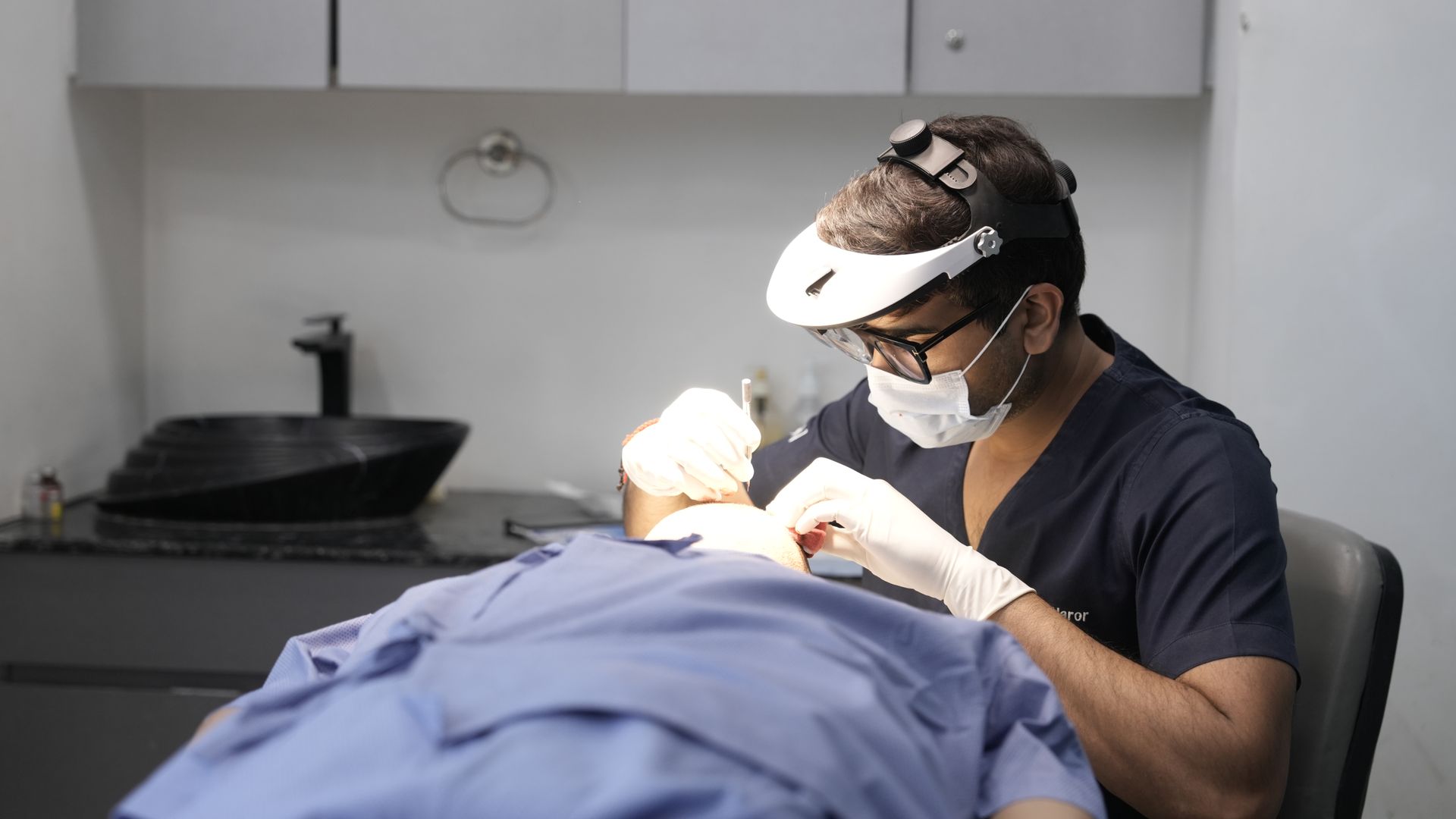
Many failed slots come from patients arriving unprepared. Send instructions by appointment type, written or approved by your doctors, for example:
- Arrive 10 minutes early to complete forms.
- Bring a list of current medications and any previous test results.
- For a skin check, come without makeup or nail polish if the doctor advises it.
- For laser, follow the doctor's instructions on sun exposure and shaving before the session.
- For any procedure, follow the specific preparation your doctor has given you.
Reminders also bring down no-shows, which hurt more in a clinic where a doctor's slot cannot easily be refilled. Our guide on how to cut no-shows goes into reminders in more detail.
Privacy at the reception desk
A dermatology waiting room is a small space where people discuss personal things. Treat it that way:
- Do not ask about symptoms or medical history loudly at the counter. Use a form, a tablet or a quiet corner.
- Do not read appointment reasons aloud. Call patients by name only.
- Keep screens turned away from the waiting area and locked when unattended.
- Do not send diagnosis or treatment details in general marketing messages.
The rules back this up. Under Saudi Arabia's PDPL, health data is sensitive and cannot be used for marketing, and direct marketing needs opt-in consent. In the UAE, Federal Law No. 2 of 2019 keeps health data inside the UAE by default. Check where your booking and patient software stores data, and confirm your obligations with SDAIA, the DHA or DOH, or a lawyer.
Where software helps
Most of this is process and training. Software makes the right thing the easy thing. In WAJ, each appointment type can be its own service with its own length and staff, so a filler booking cannot land in a 15-minute follow-up slot. Online booking can show patients only the right options, client notes keep intake answers on the file, and WhatsApp reminders carry the pre-visit instructions for that appointment. WAJ's clinic product, Nabd, is built for this kind of clinic workflow. Our guide on aesthetic clinic management and automation goes further into running a clinic in the UAE, Saudi Arabia and Jordan.
Related reading
- Medical Tourism Aesthetic Clinic Dubai: Serving Visiting Patients Well
- Aesthetic Clinic Consultation Fee: Should Your Clinic Charge for Consultations?
FAQ
Should receptionists in a dermatology clinic triage patients?
Only in the booking sense: they sort visits into medical or cosmetic, new or follow-up, and pick the right slot. They should never diagnose or judge how serious a condition is. Urgent-sounding cases go to the doctor or emergency services.
How long should a dermatology appointment be?
It depends on the type. A new consultation or full skin check needs more time than a follow-up, so your doctors should set a length per appointment type.
Can a new patient book a cosmetic procedure directly?
It is safer to book a consultation first. The doctor decides if the treatment is suitable, and treatment can happen the same day if there is time.
Who can do laser and injectables in a Dubai clinic?
The DHA treats injectables and medical lasers as medical acts for licensed clinics and qualified practitioners. Beauty therapists cannot do medical procedures. Confirm the details with the DHA.
Can we use patients' treatment history for marketing?
In Saudi Arabia, health data is sensitive under the PDPL and cannot be used for marketing. Elsewhere, be just as careful and get legal advice before using any health information in campaigns.
Book a free WAJ demo to see how separate appointment types, intake notes and reminders work in practice: waj.ai/demo
Follow WAJ on Google
Add WAJ as a preferred source to see more of our articles in your Google Search results, marked with a "preferred" badge.