
Medical Tourism Aesthetic Clinic Dubai: Serving Visiting Patients Well
WAJ Team
May 15, 2026

A medical tourism aesthetic clinic in Dubai serves visitors best by planning the whole trip with them: an honest consultation before they fly, treatments that fit the time they actually have in the city, and a clear follow-up plan for after they go home. The demand is there. Dubai welcomed 19.59 million international overnight visitors in 2025, its third record year in a row, according to Dubai's Department of Economy and Tourism (DET). The clinics that win these patients are the ones that make a short stay feel safe and organised.
This guide is for clinic owners and managers across the Gulf. It covers operations, not medicine. What is suitable for any patient is always the treating doctor's decision, and nothing here is medical or legal advice.
Who are visiting aesthetic patients?
They are not one group. A clinic in Jumeirah might see, in a single week, a regular from Kuwait who flies in every few months, a family from Europe on a winter holiday, a businesswoman in town for a conference, and an expat's mother visiting for three weeks. What they share is a fixed window. They arrive on a date and leave on a date, and everything you offer has to fit between the two.
A local patient can come back next Tuesday. A visitor often cannot.
Which treatments make sense for a short stay?
This is the doctor's call, case by case. The operational point is simpler: recovery time and follow-up needs matter as much as the treatment itself when someone is flying out soon.
- Consultations suit any length of stay and are often the right first step for a new visitor.
- Non-surgical treatments may suit a short trip, but the doctor needs to consider downtime, any review appointment, sun exposure on holiday, and the flight home before agreeing a date.
- Treatment plans that need a series of sessions usually need either a longer stay, repeat visits, or a partner clinic at home. Say so upfront.
Under DHA rules, injectables and medical lasers are medical acts reserved for licensed clinics and qualified practitioners. Beauty therapists cannot carry out medical procedures. Visitors sometimes ask a spa or salon for something only a clinic can do; your front desk should be clear about what you are licensed to offer.
Products such as toxins and fillers must be stored and handled as the manufacturer specifies and under the regulator's rules. That applies whether the patient is local or flew in this morning.
Can a clinic consult with a patient before they arrive?
You can do a lot before arrival, within limits. Use the time before the trip for logistics and fit, not diagnosis:
- Collect the patient's goals, travel dates and contact details.
- Explain which treatments the clinic offers and what an in-person consultation involves.
- Share general information about downtime and follow-up so they can plan their trip.
- Book the in-person consultation early in their stay, so there is room for treatment and a review before they leave.
Any remote clinical assessment must stay within what your licence and the health regulator allow. If your clinic offers telemedicine, confirm the current rules with DHA, DOH or MOH before you rely on it for visitors.
How to schedule around a patient's trip
Book backwards from the flight. If a visitor leaves on a Friday and the doctor wants a review a few days after treatment, the treatment cannot be on Wednesday. Put the consultation in the first days of the trip, leave space for treatment and review, and keep a buffer in case the doctor decides to wait.
Practical habits that help:
- Record arrival and departure dates on the patient profile.
- Hold a tentative review slot when you book the treatment.
- Send WhatsApp reminders in the patient's preferred language, with the clinic location pin. Hotels and serviced apartments can be confusing for first-time visitors.

What follow-up looks like after they fly home
Follow-up is where clinics often lose visiting patients, and their trust. Before the patient leaves, give them written aftercare in their language, a named contact at the clinic, and clear instructions on what to do if they have a concern. Agree whether a remote check-in is appropriate, and within what limits.
Many visitors come back on their next trip if the clinic remembered them. Our guide to aesthetic clinic patient retention in the UAE, Saudi Arabia and Jordan covers the follow-up routines that bring patients back.
Language support
Arabic and English are the baseline. Depending on your visitors, Russian, French, Hindi or Mandarin may matter too. You need consent forms and aftercare sheets in the main languages, a reception team that knows who speaks what, and a way to message patients in their preferred language. Never rely on a family member translating medical consent if you can avoid it.
Payment and deposits for international patients
Visitors book ahead and sometimes cancel because flights change. A deposit on treatment bookings protects your doctor's time, and a clear policy protects the patient. Keep it simple:
- State the deposit amount and cancellation window when you confirm the booking.
- Explain how rescheduling works if flights change.
- Show prices clearly, including VAT, so there are no surprises at checkout.
Health data rules for visiting patients
This is where clinics need to be careful. In the UAE, Federal Law No. 2 of 2019 on the use of ICT in health fields means health data on services provided in the UAE must, by default, be stored and processed inside the country. A 2021 Ministerial Resolution lists exceptions, including when the patient requests the transfer. So if a visitor asks you to send their records to their doctor at home, that request matters, and it should be documented. Dubai clinics also connect to NABIDH, Dubai's health information exchange. The UAE's general personal data law, Federal Decree-Law No. 45 of 2021, sits alongside these rules.
In Saudi Arabia, the PDPL has been fully enforceable since 14 September 2024 and is regulated by SDAIA. Health data is sensitive data and cannot be used for marketing, and direct marketing needs opt-in consent.
Confirm the details for your situation with DHA, DOH, MOH, SDAIA or a lawyer.

Medical advertising rules
Medical advertising in the UAE and Saudi Arabia is regulated by the health authorities, and the rules can be stricter than people expect. Avoid promising results, be careful with before-and-after content, and never use a patient's health information in marketing without the right consent. Check the current advertising rules with your regulator before running campaigns aimed at visitors.
The visiting patient journey at a glance
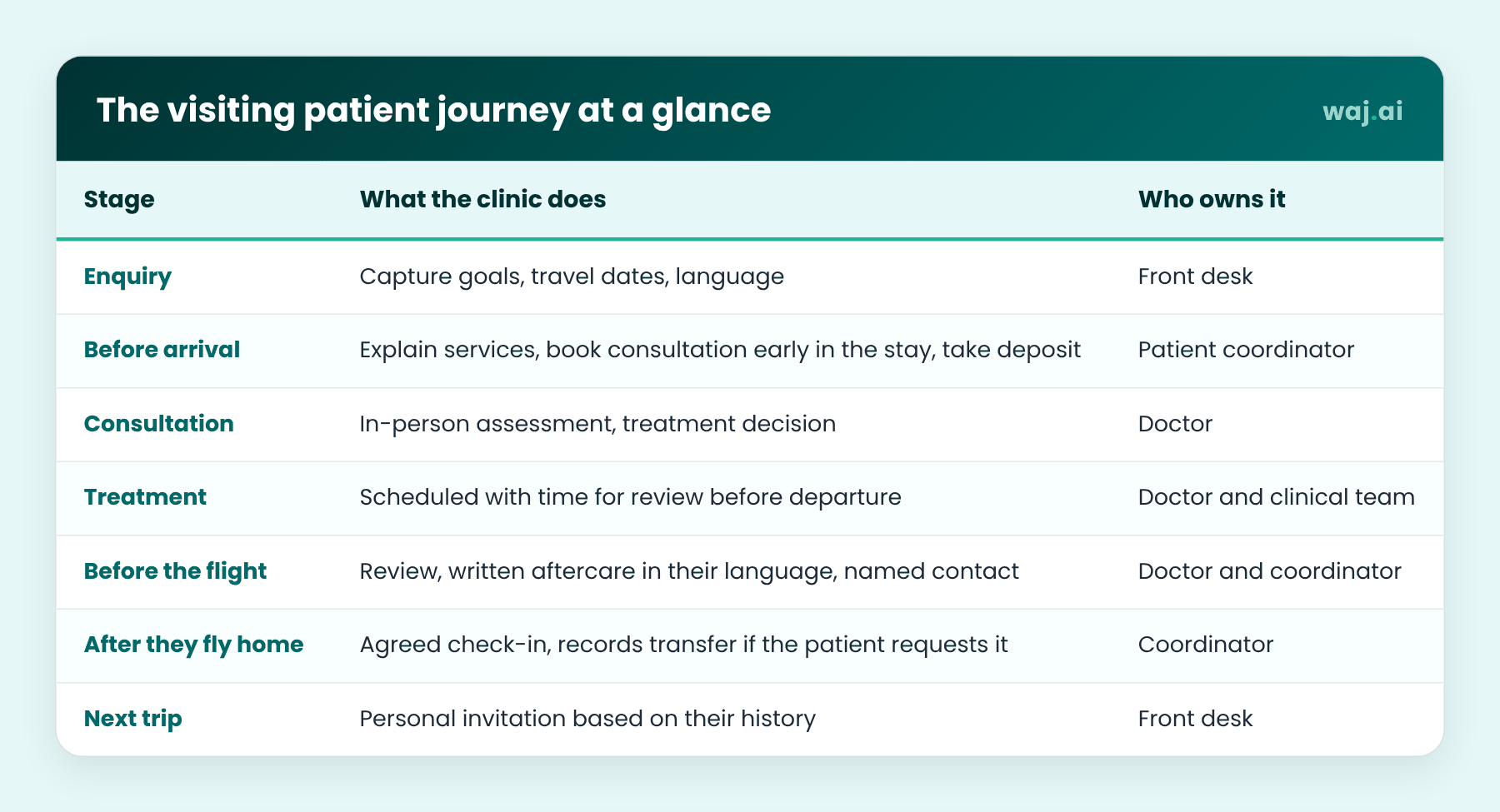
- Enquiry
What the clinic does: Capture goals, travel dates, language
Who owns it: Front desk - Before arrival
What the clinic does: Explain services, book consultation early in the stay, take deposit
Who owns it: Patient coordinator - Consultation
What the clinic does: In-person assessment, treatment decision
Who owns it: Doctor - Treatment
What the clinic does: Scheduled with time for review before departure
Who owns it: Doctor and clinical team - Before the flight
What the clinic does: Review, written aftercare in their language, named contact
Who owns it: Doctor and coordinator - After they fly home
What the clinic does: Agreed check-in, records transfer if the patient requests it
Who owns it: Coordinator - Next trip
What the clinic does: Personal invitation based on their history
Who owns it: Front desk
Where clinic software fits
This journey runs on good records and timely messages. In WAJ (and WAJ's clinic product, Nabd), the client profile holds notes and history, online booking lets patients book from abroad, the POS handles deposits and payments with UAE VAT built in, and WhatsApp reminders keep visitors on track during a busy trip. Our guide to aesthetic clinic management automation goes deeper on the routines worth automating.
If you want to see how a visiting patient's journey would look in your clinic, book a free WAJ demo: waj.ai/demo.
FAQ
Can visitors get aesthetic treatments in Dubai on a short trip?
Sometimes, depending on the treatment and the doctor's assessment, with recovery and the flight home considered first.
Can a clinic diagnose a patient over video before they arrive?
Only within what the clinic's licence and the health regulator allow. Use pre-arrival contact mainly for planning and information.
Can a UAE clinic send a visitor's records to their doctor abroad?
UAE health data stays in the country by default, but a 2021 Ministerial Resolution lists exceptions, including a patient's own request. Document the request and confirm the process with your regulator.
Should clinics take deposits from international patients?
A clear deposit and rescheduling policy protects both the doctor's time and the patient, especially when flights change.
Is this guide medical or legal advice?
No. It covers clinic operations. Treatment decisions belong to the treating doctor, and regulatory questions should go to DHA, DOH, MOH, SDAIA or a lawyer.
Follow WAJ on Google
Add WAJ as a preferred source to see more of our articles in your Google Search results, marked with a "preferred" badge.