
Salon Retail Sales: How to Sell Products in Your Salon Without Being Pushy
WAJ Team
October 26, 2026
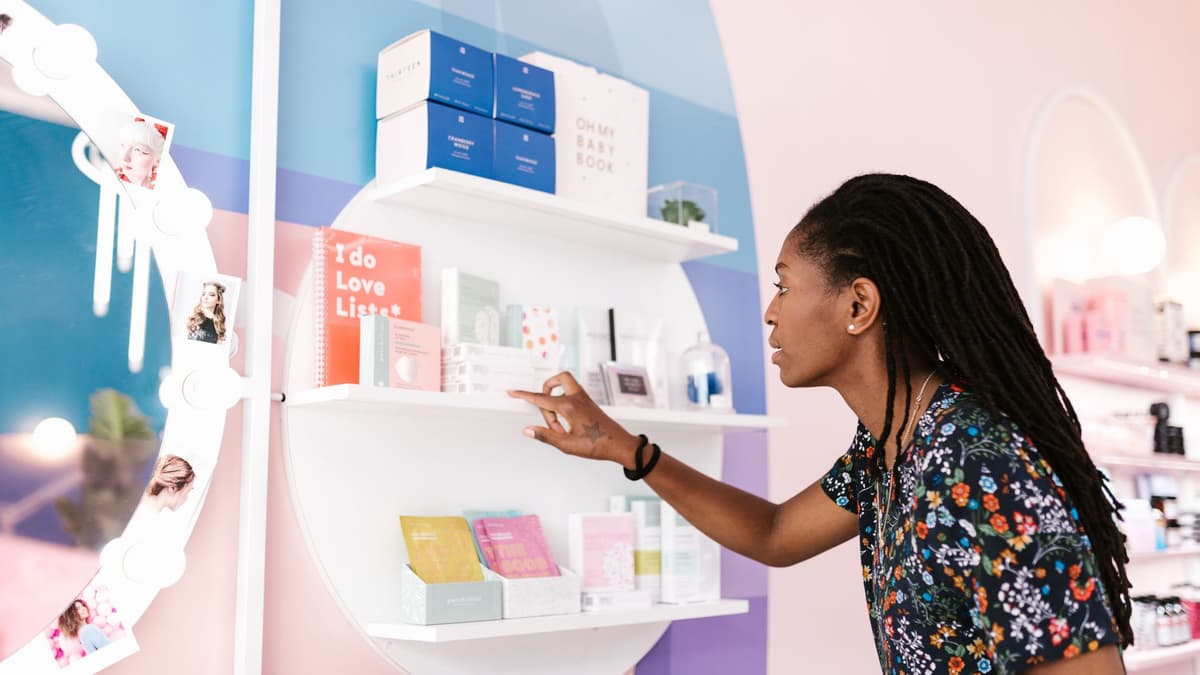
The quickest way to grow salon retail sales is to stop pitching at the till and start prescribing during the service. Stock a small range your team actually uses, recommend one or two products while the client can see and feel the result, and hand over a short take-home card at checkout. Add a fair staff incentive and per-stylist tracking, and retail becomes part of good service instead of an awkward sales moment.
Why do most salons struggle to sell retail?
Picture a ladies' salon in Al Barsha at 7pm. A client has just had a beautiful blow-dry. At reception she hears a product name she has never heard, says "maybe next time", and that is the end of it. Behind the desk sit forty bottles from five brands, a few close to expiry.
Three things go wrong there. The shelf has too many products, which confuses clients and ties up cash. The recommendation comes at payment, when she is thinking about parking, not her hair. And the team hates selling, which clients can feel. Fix those three and the rest follows.
How many products should a salon stock?
Fewer than you think. One or two brands that cover your core services is enough for most salons: shampoo and conditioner for colour-treated and dry hair, a heat protectant, one or two styling products, a take-home mask, cuticle oil and foot cream for the nail bar, and a sunscreen if you run facials.
The rule is simple: if your team does not use it on clients, do not sell it. Build the range around your menu, not a distributor's catalogue. If the menu needs tidying first, our guide to building a spa service menu walks through it.
When is the right moment to recommend a product?
During the service, while the product is in the stylist's hands. Here is the flow that works:
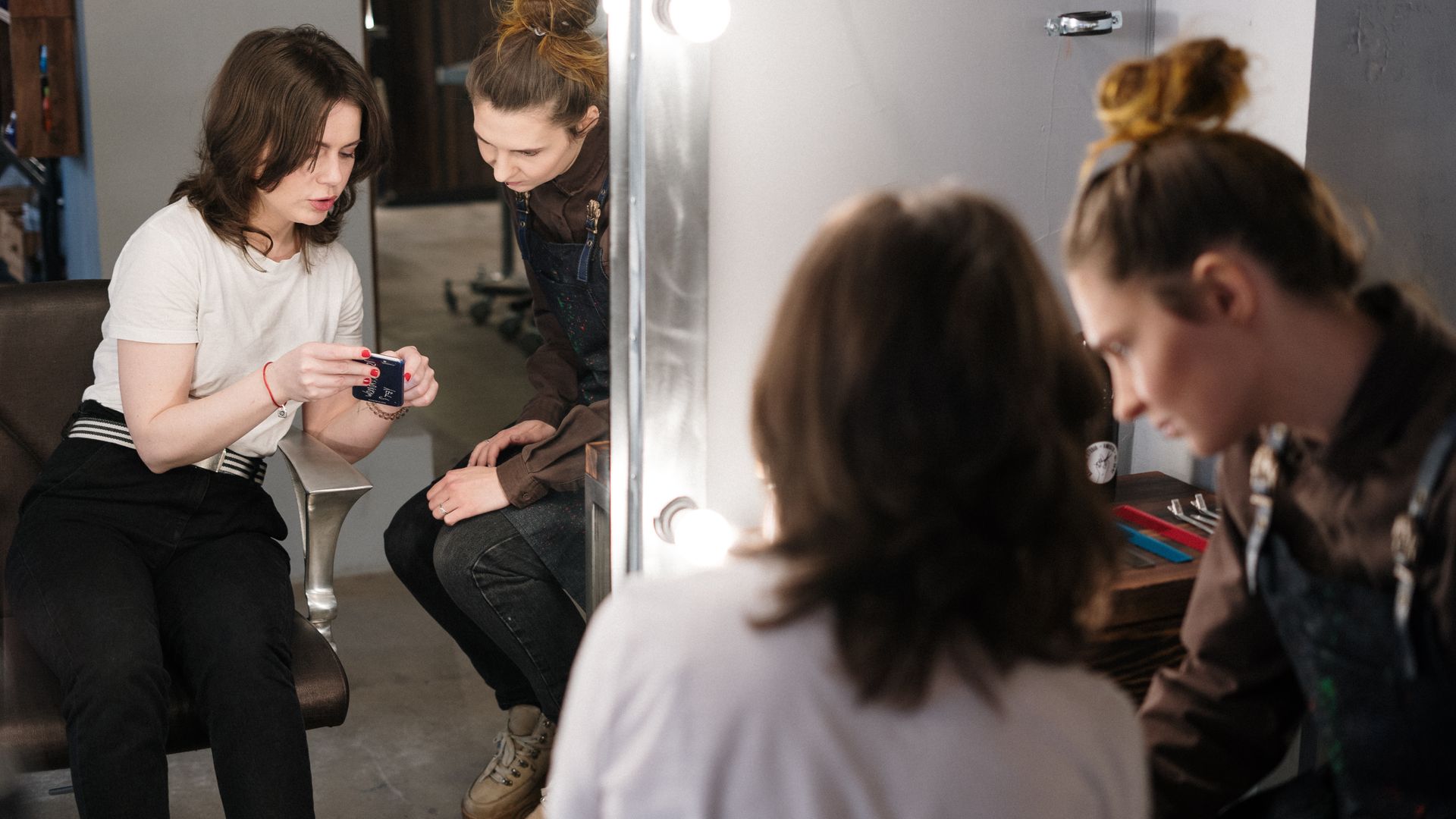
- Ask about the home routine in the consultation. "What do you use on your hair at home? How often do you blow-dry?"
- Name the product as you use it. "I'm putting on a heat protectant now because your ends are dry from the sun and the AC."
- Let the client feel or smell it. A small amount on the back of the hand does more than a speech.
- Tie it to one result. "If you blow-dry at home, this is the one thing I'd add."
- Mention it once more at the end, then stop. "I've written it on your card if you want it."
No discounts, no "we have an offer today". She has just watched a professional use it on her own hair. That is the sale.
What should each service recommend?
Matching product to service keeps recommendations short and believable:
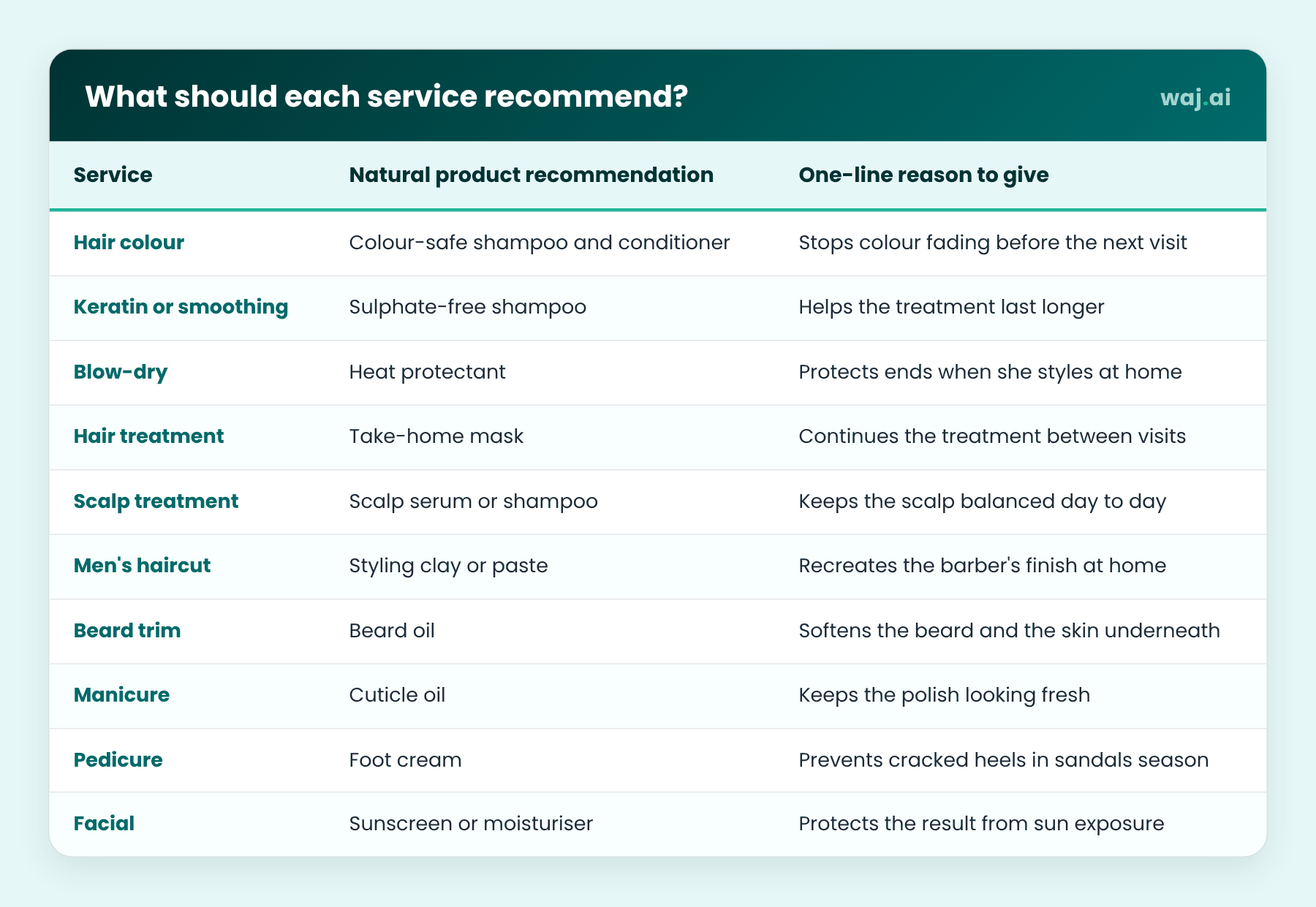
- Hair colour
Natural product recommendation: Colour-safe shampoo and conditioner
One-line reason to give: Stops colour fading before the next visit - Keratin or smoothing
Natural product recommendation: Sulphate-free shampoo
One-line reason to give: Helps the treatment last longer - Blow-dry
Natural product recommendation: Heat protectant
One-line reason to give: Protects ends when she styles at home - Hair treatment
Natural product recommendation: Take-home mask
One-line reason to give: Continues the treatment between visits - Scalp treatment
Natural product recommendation: Scalp serum or shampoo
One-line reason to give: Keeps the scalp balanced day to day - Men's haircut
Natural product recommendation: Styling clay or paste
One-line reason to give: Recreates the barber's finish at home - Beard trim
Natural product recommendation: Beard oil
One-line reason to give: Softens the beard and the skin underneath - Manicure
Natural product recommendation: Cuticle oil
One-line reason to give: Keeps the polish looking fresh - Pedicure
Natural product recommendation: Foot cream
One-line reason to give: Prevents cracked heels in sandals season - Facial
Natural product recommendation: Sunscreen or moisturiser
One-line reason to give: Protects the result from sun exposure
Train new hires on this table in their first week. It gives quieter staff a script they can rely on.
What is a take-home prescription card?
It is a small card, or a WhatsApp message, with four lines: today's service and the stylist's name, the one or two products recommended and how often to use them, one home tip ("rinse with cool water"), and the suggested date of the next visit. Dermatologists have done this for decades. Salons rarely do, which is why it stands out.
Send it on WhatsApp after the appointment, so it is on her phone when she is standing in a pharmacy. Save the same recommendation in her client notes so the next stylist can ask, "Did the mask help?" In WAJ, notes and visit history sit on the client profile. For WhatsApp etiquette, see our piece on salon software and WhatsApp in MENA.
How should you display products and testers?
Clients buy what they can touch.
- Put the range at eye level near reception, and a few products at each station if space allows.
- Show prices clearly. A hidden price feels like a trap.
- Keep testers open and clean, labelled with the date first opened.
- Group by need, not by brand. "Colour care", "Dry hair", "Men" is easier to shop than a wall of logos.
- Rotate a seasonal shelf: sun protection before summer, gift sets before Eid.
Locked cabinets send the opposite message. If theft worries you, keep one tester out and the stock behind the desk.
How should you reward staff for retail sales?
Pay something, and keep it simple and fair. A retail commission separate from service commission, either a flat amount per product or a modest percentage, is the usual choice. A monthly team pool suits salons where reception closes the sale but the stylist made the recommendation. And recognise the stylist with the most repeat buyers, not just the highest total.
Avoid aggressive targets. A stylist chasing a number will push, and clients will avoid her chair. WAJ handles staff commissions, so retail and service commission are tracked per person without a month-end spreadsheet.
How do you track retail sales per stylist?
If retail is rung up without a staff name, you cannot coach anyone. Record every product sale against the stylist who recommended it, then review monthly: retail sales per stylist, the share of her clients who bought anything, average retail per visit, and how many clients bought the same product again.
The last one matters most: a client who rebuys trusts the recommendation. With retail in the same POS and reports as your services, this is a five-minute review.
How do you handle reordering and stock?
Retail only works if the product is on the shelf. Run stock through your inventory, not a notebook:
- Set a minimum quantity for each product.
- Reorder when stock reaches that level, not when the shelf is empty.
- Sell older stock first and check expiry dates every month.
- Drop any product that has not moved in three months.
Multi-branch salons should compare branches. A product that sells in Jumeirah may sit in Sharjah, and moving stock is cheaper than discounting it.
Do bundles help salon retail sales?
Yes, when they solve a real need: a "colour care kit" with a colour service, a beard kit for barbershop regulars, a gift set before Eid. Price them so the client sees value without learning to wait for discounts. Our guide on how to price salon services covers the logic of packages and margins.
A note for salons in Kuwait
Kuwait's Ministry of Health issued a salon and beauty Health Requirements Guide in August 2025 under Ministerial Resolution No. 194/2025, with a compliance deadline of 1 March 2026. It requires that only ministry-approved products with expiry dates are used, that opened items are labelled with their first-use date, and that salons provide nothing beyond their licensed activity. That can restrict what you sell and whether retail sits within your licence at all. Confirm with the Ministry of Health and MOCI before stocking a shelf, and owners elsewhere should check their own local rules.
FAQ
How much of a salon's revenue should come from retail?
There is no universal figure. Track your own retail per stylist and aim to beat last month rather than chase an industry number.
Should stylists get commission on retail?
Yes. Even a small commission signals that retail matters. Keep it separate from service commission so staff see what recommendations earned them.
How do I recommend products without sounding pushy?
Recommend during the service, name one product, tie it to one result and mention it once more at checkout. No discounts, no pressure.
Can salons in Kuwait sell retail products?
Kuwait's MoH rules allow only ministry-approved products and no activities beyond the licence. Check with the Ministry of Health and MOCI what your licence covers.
Make retail part of the service
Good retail is just good aftercare, written down and made easy to buy. If you want your POS, inventory, client notes and staff commissions in one place, book a free WAJ demo and we will show you how other Gulf salons set it up.
Follow WAJ on Google
Add WAJ as a preferred source to see more of our articles in your Google Search results, marked with a "preferred" badge.