
Scalp Treatment Salon Services: A Menu Clients Will Rebook
WAJ Team
June 7, 2026
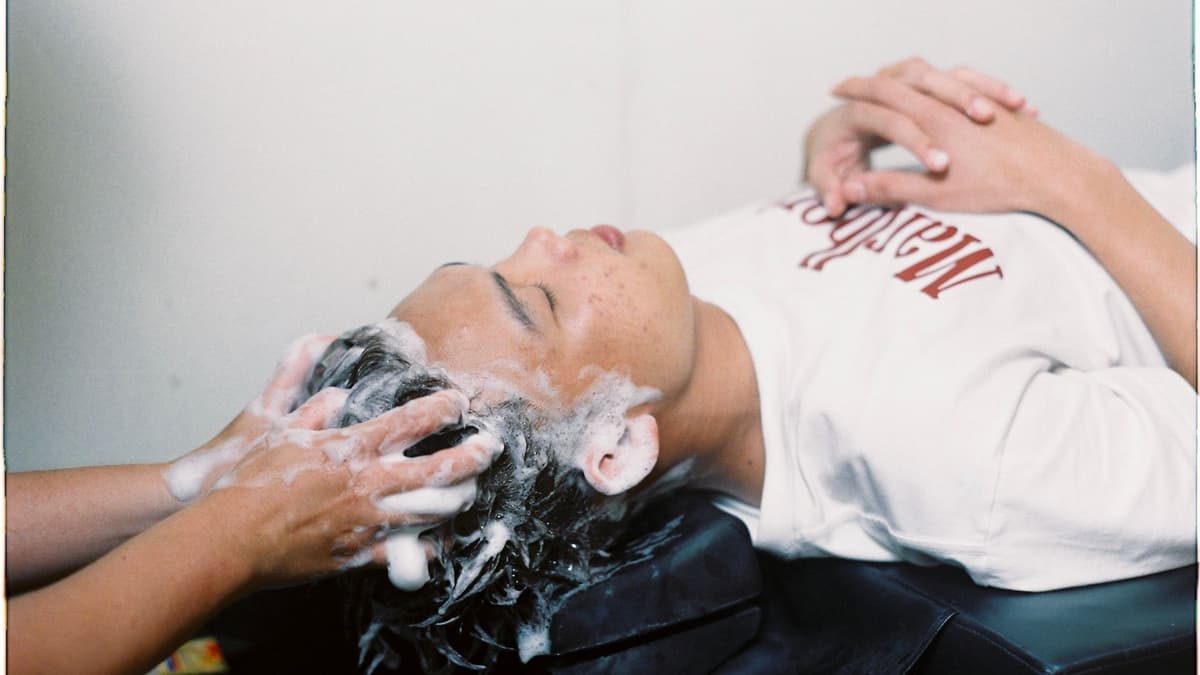
A scalp treatment salon menu works when it is simple, non-medical and sold as a course rather than a one-off. Offer three or four clear services (detox, exfoliation, massage with steam, and an oil ritual), start every first visit with a short scalp check, and send anything that looks like hair loss or a skin condition to a dermatologist. Then give clients a home-care routine and a reason to come back in three or four weeks.
Why are Gulf clients asking for scalp treatments?
Spend a week at the backwash of any ladies salon in Riyadh or Sharjah and you will hear the same complaints. Hair feels heavy two days after washing. The scalp itches. Shampoo does not seem to shift the build-up. Four things drive this:
- Hard water. Many clients say their hair feels different since moving to the Gulf and blame the water. Whatever the cause, the feeling of residue is real to them.
- Heat and sweat. Long summers, gym sessions and car-park-to-mall walks keep the scalp damp for hours.
- Hijab wearers. Hair covered most of the day gets less air. Many clients who wear hijab want a scalp that feels clean and light, treated somewhere private and women-only.
- Styling habits. Dry shampoo, heavy oils and hair perfume all leave residue.
None of this is medical. It is comfort and grooming, which is exactly where a salon helps.
What scalp services can a salon offer (and what it should not)?
Keep your menu firmly on the beauty side.
Scalp detox
A clay or charcoal-based clarifying pre-wash, left on for a few minutes, then a double shampoo. It lifts build-up and oil, and clients feel the difference the same day.
Scalp exfoliation
A gentle scrub or leave-on exfoliant worked in with fingertips or a soft silicone brush. Never on broken or irritated skin.
Scalp massage
Ten to twenty minutes of slow, firm massage, dry or with a light oil. This is the part clients talk about afterwards, so train the whole team on one routine.
Steam
A steamer or warm towels after a mask turns the service into a ritual. In summer, keep the room cooler than you think so the client does not leave sweating into her hijab.
Oil rituals
Warm oil worked through the scalp, wrapped, then washed out. Many Gulf and Levant clients grew up oiling their hair at home, so this needs little explaining. Offer two or three blends and let the client smell them first.
What to leave out
Never sell anything as a cure for hair loss, thinning, dandruff disorders or any skin condition, and keep words like "treats", "regrows" or "heals" off your menu and Instagram. Machines claiming medical results, and anything with needles or injections, belong in a licensed clinic with qualified practitioners. If unsure, check with your health authority (DHA, DOH, MOH or your country's ministry) before listing a service.
Are scalp analysis cameras worth buying?
For most salons, yes. A handheld camera linked to a tablet shows the client her own scalp on screen, turning a vague "my scalp feels heavy" into something you can both see.
- Take a photo at the first visit, with the client's consent, and save it to their client record.
- Show the client what you see in plain language. "There is quite a bit of product sitting here" is fine. "You have a fungal infection" is not your call to make.
- Repeat the photo after three or four sessions so the client sees the change.
- If you see redness, sores, bald patches, heavy shedding or anything that worries you, stop and recommend a dermatologist. Write that recommendation in the client's notes.
The camera is a trust tool, not a diagnostic device, and your team should say so if asked.
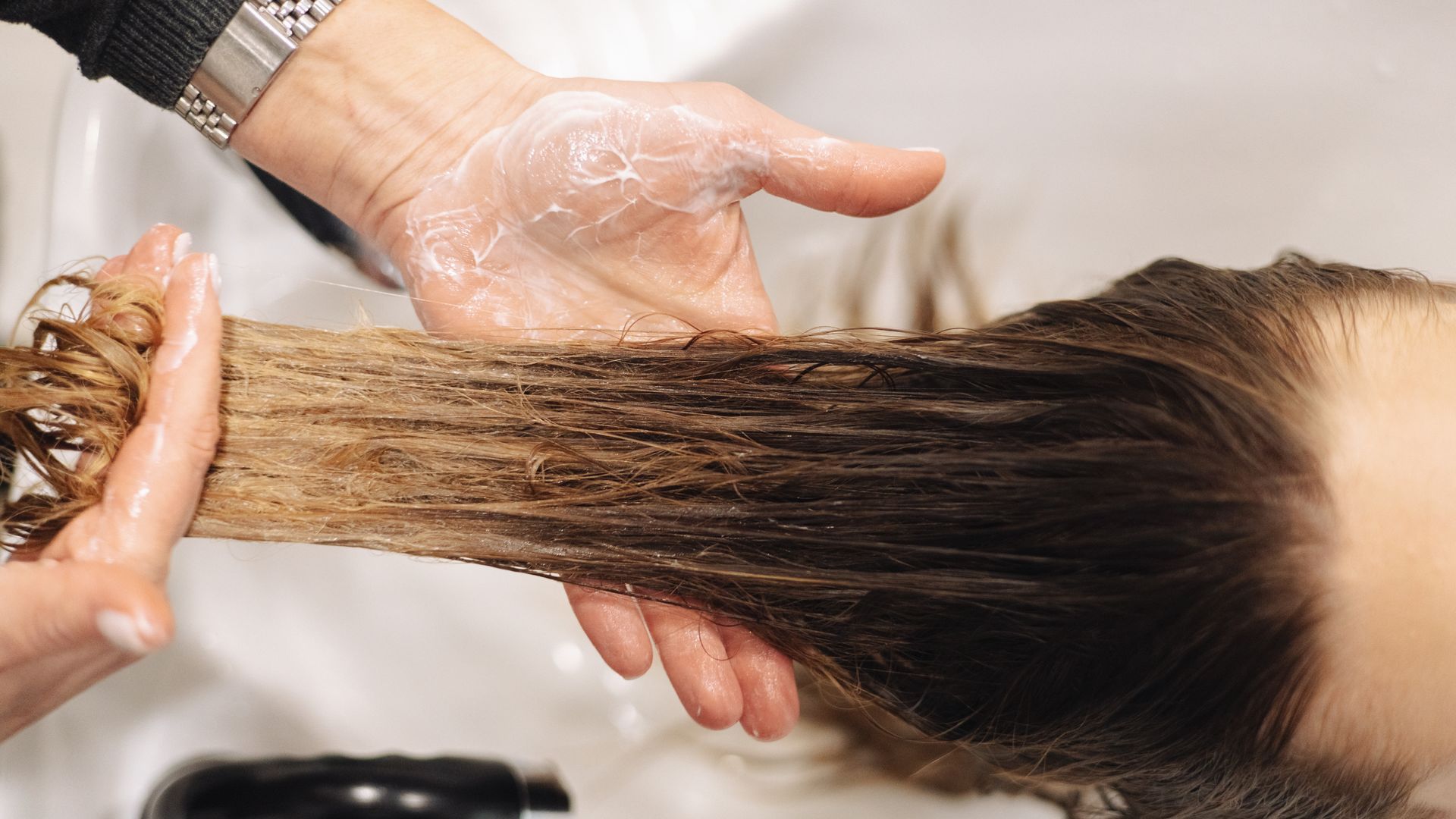
When should you refer a client to a dermatologist?
Make it a written rule, not a judgement call for a junior stylist on a busy Thursday. Refer the client, and skip exfoliation and strong products, if you notice:
- Patches of hair loss, sudden shedding or noticeable thinning
- Painful, bleeding, scaly or weeping areas
- Redness or rash that has lasted more than a few days
- Recent scalp surgery, a hair transplant or ongoing medical treatment
When in doubt, wait for the doctor's go-ahead. Clients respect a salon that says "this needs a doctor first", and it makes the rest of your advice more believable.
How do you sell scalp treatments as a course?
One scalp detox feels nice. Four sessions, three or four weeks apart, show results the client can see on the camera. That is how you get rebookings.
A simple structure:
- Consultation and first session. Scalp check, photo, first treatment, and a recommended plan written in the client's record.
- Sessions two to four. Same core treatment, adjusted to how the scalp is responding.
- Review. New photo, side-by-side comparison, and a maintenance plan, usually one session every four to six weeks.
Sell the course as a prepaid package at a small discount. Clients who prepay are less likely to drift. If no-shows are already a problem in your salon, our guide on how to cut no-shows covers the reminder and deposit side in more detail.
What home-care products should you retail?
Scalp care retails easily because the client has just felt the difference. Keep the shelf small:
- A clarifying shampoo for weekly use
- A gentle daily shampoo
- A scalp serum or tonic (cosmetic, not medicated)
- The oil you used in the ritual, in a take-home size
- A soft silicone scalp brush
Send the routine on WhatsApp after the visit, and track stock so a happy client never hears "we are out".
How long should each treatment take and how should you price it?
Price in tiers so clients can start small and trade up. The numbers below are examples only. Set your own prices based on your costs, location and the products you use.
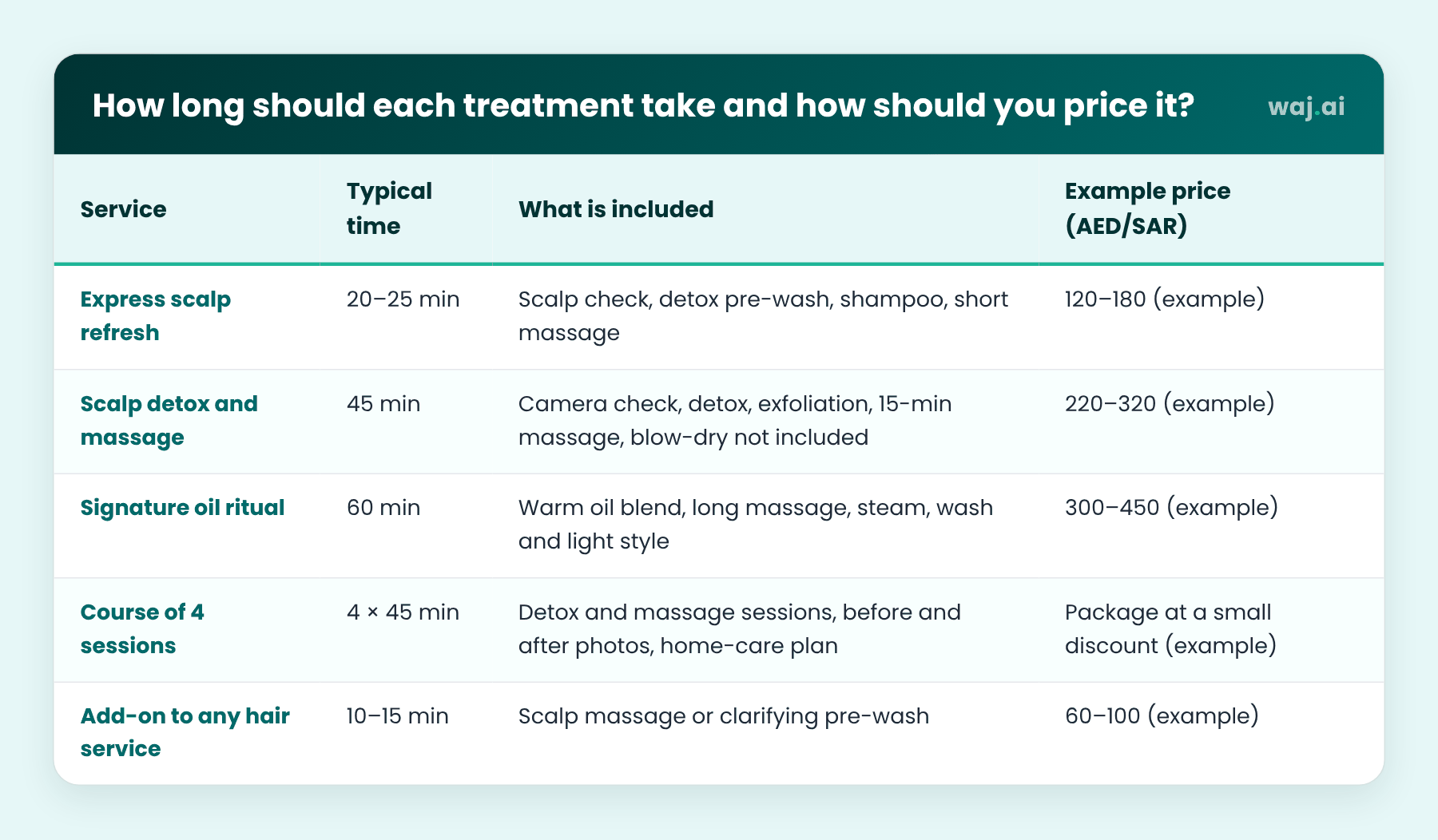
- Express scalp refresh
Typical time: 20–25 min
What is included: Scalp check, detox pre-wash, shampoo, short massage
Example price (AED/SAR): 120–180 (example) - Scalp detox and massage
Typical time: 45 min
What is included: Camera check, detox, exfoliation, 15-min massage, blow-dry not included
Example price (AED/SAR): 220–320 (example) - Signature oil ritual
Typical time: 60 min
What is included: Warm oil blend, long massage, steam, wash and light style
Example price (AED/SAR): 300–450 (example) - Course of 4 sessions
Typical time: 4 × 45 min
What is included: Detox and massage sessions, before and after photos, home-care plan
Example price (AED/SAR): Package at a small discount (example) - Add-on to any hair service
Typical time: 10–15 min
What is included: Scalp massage or clarifying pre-wash
Example price (AED/SAR): 60–100 (example)
Two tips from experience. The add-on is your best entry point: a client booked for colour will often say yes to fifteen minutes of massage, and some book the full treatment next time. And keep the blow-dry out of the mid-tier unless you can staff it, or one treatment blocks a chair and a stylist for an extra forty minutes.
In a ladies-only space, privacy is part of what clients pay for; our guide to ladies salon management in the Gulf covers the layout side.
Is summer a good time to launch scalp treatments?
Yes. Heat makes the problem obvious right now, and quieter weeks give your team time to learn the routine. A launch offer for existing clients gives you a reason to message them, and our Gulf summer slow season guide has more ideas.
Where WAJ fits
A notebook and a WhatsApp group work at first. Once you have courses, photos and retail to track, it gets messy. WAJ keeps scalp notes, consent and treatment history in one CRM record, sells the course as a package and tracks sessions used, sends WhatsApp reminders when the next one is due, and tracks retail stock through the same POS. If that sounds useful, book a free WAJ demo: waj.ai/demo.
FAQ
Can a salon treat dandruff or hair loss?
No. A salon can offer cleansing, exfoliation, massage and oil rituals that make the scalp feel cleaner and more comfortable. Hair loss, persistent flaking and skin conditions should go to a dermatologist. Avoid medical claims on your menu.
How often should a client have a scalp treatment?
Most salons recommend a course of three or four sessions, three to four weeks apart, then maintenance every four to six weeks. Adjust it to how the client's scalp responds.
Is a scalp treatment suitable for clients who wear hijab?
Yes, and many of them actively look for it. Offer a private, women-only area, keep the room cool in summer, and allow time for the hair to dry properly before the client covers it again.
Do I need a scalp analysis camera?
It is not essential, but it helps clients see their progress and makes courses easier to sell. Always get consent before taking photos and store them in the client's record, not on a staff member's phone.
Follow WAJ on Google
Add WAJ as a preferred source to see more of our articles in your Google Search results, marked with a "preferred" badge.