
Massage Therapist Schedule: How Many Treatments a Day Before Quality Drops?
WAJ Team
August 14, 2026

Most experienced spa operators treat five to six hours of hands-on massage as a sensible daily ceiling for one therapist, with deep tissue counted as heavier work than a relaxation massage. Past that point, pressure gets uneven, attention drifts and the last client of the day gets a weaker treatment than the first. A good massage therapist schedule caps hands-on hours, mixes heavy and light treatments, and builds buffers and breaks into the booking system so the cap holds on a busy day.
That figure is a rule of thumb from running treatment rooms, not a number from a study. But you need a number written down, because without one the calendar decides for you.
Why massage is harder on the body than it looks
Clients see a calm room. The therapist is standing for an hour, leaning body weight through thumbs, forearms and elbows, often over a table at the wrong height, with wrists, shoulders and lower back taking the load. Add a Gulf summer: the walk from staff accommodation in August heat, a treatment room kept cool for the client, then back out again.
Deep tissue, sports massage and long hot-stone sessions are the heaviest. Facials, scrubs and wraps let the hands and back recover while the therapist keeps working.
The damage is slow. A therapist loses a little grip strength, compensates with the wrong muscles, and six months later is on sick leave or on a flight home.
How many massages a day is too many?
There is no single right answer, but here is how I would set it for a new spa in Dubai or Riyadh:
- Count hands-on hours, not bookings. Four 90-minute deep tissue sessions are six heavy hours; six 60-minute relaxation massages are six lighter ones.
- Set a daily cap per therapist. Five to six hands-on hours is a reasonable starting ceiling for full-body massage. Experienced therapists may manage more on lighter days; newer ones often need less.
- Cap heavy treatments separately. For example, no more than two or three deep tissue or sports sessions in one shift.
- Set a weekly cap too. One heavy day is fine. Six heavy days in a row is how you lose people.
- Review it monthly with the therapists. They will tell you where the line is if you listen.
Alternating deep tissue with lighter treatments
The simplest fix costs nothing: stop booking heavy treatments back to back. A pattern like deep tissue, then facial, then Swedish, then scrub gives the hands and lower back real recovery time without losing revenue.
The booking system has to know which treatments are heavy. Tag them on your menu (deep tissue, sports, hot stone over 75 minutes) and make it a rule that front desk does not stack two heavy tags in a row for the same therapist unless a manager approves it. In WAJ, the staff calendar shows each therapist's day by service, so a receptionist can see at a glance when someone is about to get three deep tissues in a row and move one.
Scheduling buffers in the booking system
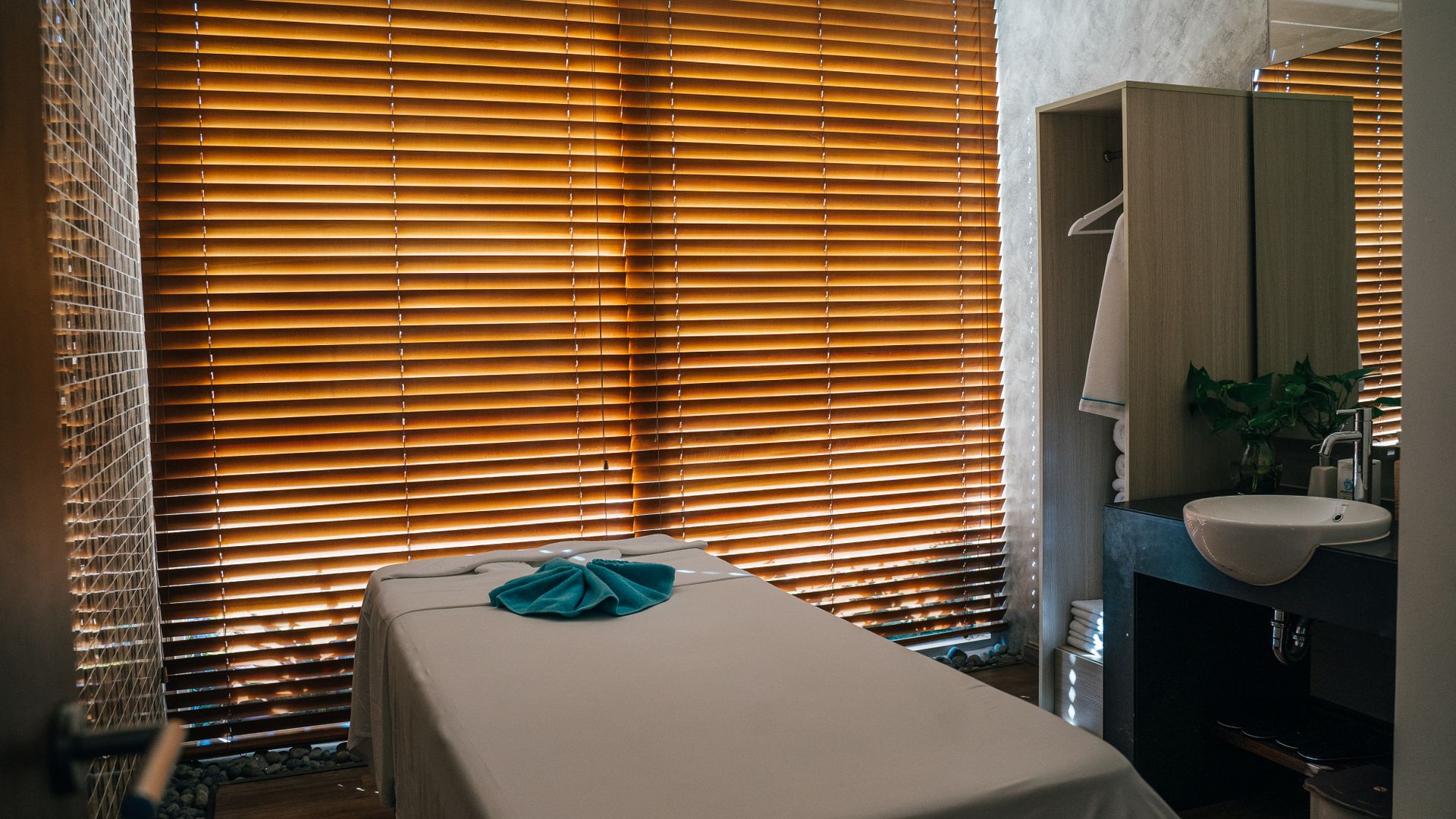
A 60-minute massage is not 60 minutes of therapist time. Add the consultation, changing, stripping the table, fresh linen, hand washing and a sip of water, and it is realistically 75 to 80 minutes.
If your booking system shows 60-minute slots back to back, the therapist pays for the gap with their break. Build the buffer into the service itself:
- Set processing or cleanup time after each massage, usually 10 to 15 minutes.
- Add a longer buffer after heavy treatments.
- Block a fixed lunch break that online booking cannot override.
- Keep one floating slot in the afternoon for overruns, late arrivals and walk-ins.
When clients book themselves online at midnight, nobody at the front desk is there to notice a therapist has no breathing room, so the rules have to live in the system. If no-shows are already eating your margins, sort those first with reminders and deposits; our guide on how to cut no-shows covers the WhatsApp reminder side.
Sample daily schedule for one massage therapist
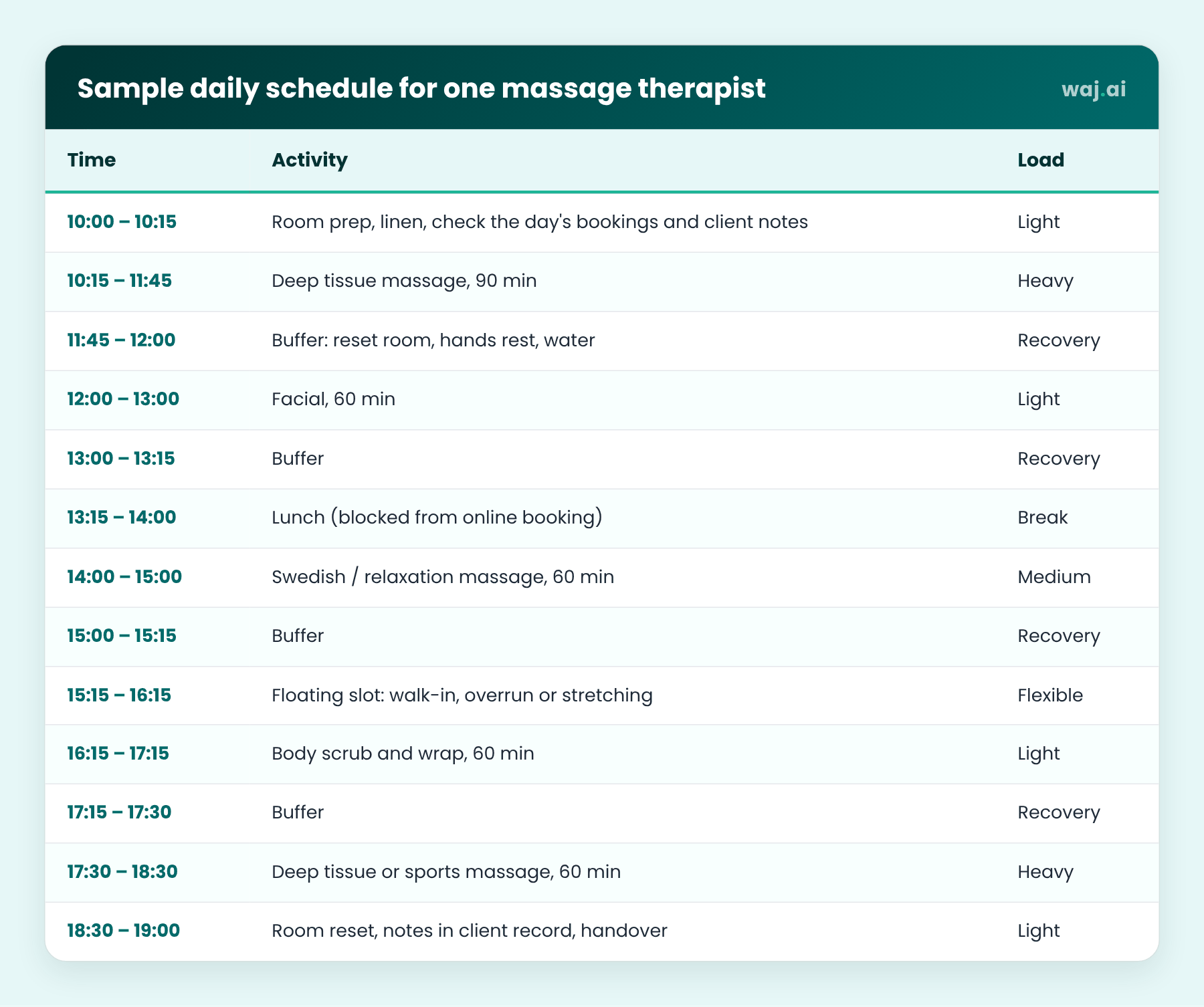
Here is an example nine-hour shift that keeps hands-on time near five and a half hours. Treatment names and timings are illustrative; adjust them to your menu.
- 10:00 – 10:15
Activity: Room prep, linen, check the day's bookings and client notes
Load: Light - 10:15 – 11:45
Activity: Deep tissue massage, 90 min
Load: Heavy - 11:45 – 12:00
Activity: Buffer: reset room, hands rest, water
Load: Recovery - 12:00 – 13:00
Activity: Facial, 60 min
Load: Light - 13:00 – 13:15
Activity: Buffer
Load: Recovery - 13:15 – 14:00
Activity: Lunch (blocked from online booking)
Load: Break - 14:00 – 15:00
Activity: Swedish / relaxation massage, 60 min
Load: Medium - 15:00 – 15:15
Activity: Buffer
Load: Recovery - 15:15 – 16:15
Activity: Floating slot: walk-in, overrun or stretching
Load: Flexible - 16:15 – 17:15
Activity: Body scrub and wrap, 60 min
Load: Light - 17:15 – 17:30
Activity: Buffer
Load: Recovery - 17:30 – 18:30
Activity: Deep tissue or sports massage, 60 min
Load: Heavy - 18:30 – 19:00
Activity: Room reset, notes in client record, handover
Load: Light
Two heavy sessions, never back to back. On a slow day the floating slot becomes paid rest; on a busy day it absorbs the chaos without breaking the cap.
Fair commission so therapists aren't pushed to overbook
If a therapist's pay depends almost entirely on treatment count, they will ask for more bookings, skip breaks and take the 8 pm walk-in, often willingly, because they support families back home. It is still your job to stop it. Some ways to reward quality as well as volume:
- A solid base salary so a quiet week in July does not push someone into taking every slot in October.
- Commission on service revenue up to the daily cap, with no extra rate for going over it.
- Rewards for rebooking and retail, which come from client trust rather than exhaustion.
- Tiered rates for experience, so senior therapists earn more per hour instead of needing more hours.
Whatever you choose, calculate it from real booking data. WAJ calculates staff commissions from completed services and sales, which ends the month-end arguments and shows who keeps working past the cap.

Warning signs of therapist burnout
Watch for these before they turn into resignations:
- Complaints about pressure being "lighter than last time" from regular clients
- More late starts, longer gaps between sessions, or skipped notes in client records
- Requests to avoid deep tissue, or frequent wrist and shoulder strapping
- Short temper with colleagues or the front desk
- Rising sick days, often clustered after the heaviest shifts of the week
- A strong therapist suddenly asking about transfers or "going home for a while"
A short monthly one-to-one catches most of this. Ask what hurts and which days feel too heavy, then change the schedule.
Retention and what replacing a therapist really costs
In the Gulf, replacing a therapist means recruitment, visas, medical tests, accommodation, flights and weeks of training on your protocols. Meanwhile the regulars who asked for that therapist by name drift to the spa down the road.
A spa that caps workload honestly becomes known among therapists as a good place to work, and that word travels fast. If you sell memberships, steady therapists matter even more, because members expect the same hands every month. Our piece on the spa membership model in the Gulf goes into that.
How overloading therapists hurts the client experience
Clients feel fatigue even when they can't name it. The massage is a bit rushed, and the therapist forgets the sore left shoulder because the notes never got written. The client leaves satisfied but not impressed, and does not rebook.
A rested therapist with clear notes in the client record gives a treatment that feels personal, and that is what brings people back. Summer is a good time to fix this: with lighter schedules in July and August, reset caps and buffers before the busy season returns. See our guide to handling the salon summer slow season for more ideas on using the quiet months.
FAQ
How many massages can a therapist do in a day?
As a rule of thumb, five to six hands-on hours is a sensible daily ceiling, with no more than two or three deep tissue sessions.
How long should the break be between massages?
Plan 10 to 15 minutes after each massage, longer after deep tissue, built into the service duration so online booking respects it.
Should massage therapists be paid commission only?
Commission-only pay pushes therapists to overbook. A base salary plus commission, with no bonus for exceeding the daily cap, is fairer.
What are the first signs of therapist burnout?
Lighter pressure, client complaints, skipped notes, wrist or shoulder strapping, more sick days and short temper are common early signs.
Can booking software stop therapists being overbooked?
Yes, if you set it up properly: cleanup buffers on each service, blocked lunch breaks, and a staff calendar that shows heavy treatments so front desk can spread them out.
Want to see how buffers, staff calendars and commissions work together in one system? Book a free WAJ demo: waj.ai/demo.
Follow WAJ on Google
Add WAJ as a preferred source to see more of our articles in your Google Search results, marked with a "preferred" badge.