How to Build a Dental Recall System That Fills Your Chairs
WAJ Team
October 8, 2026
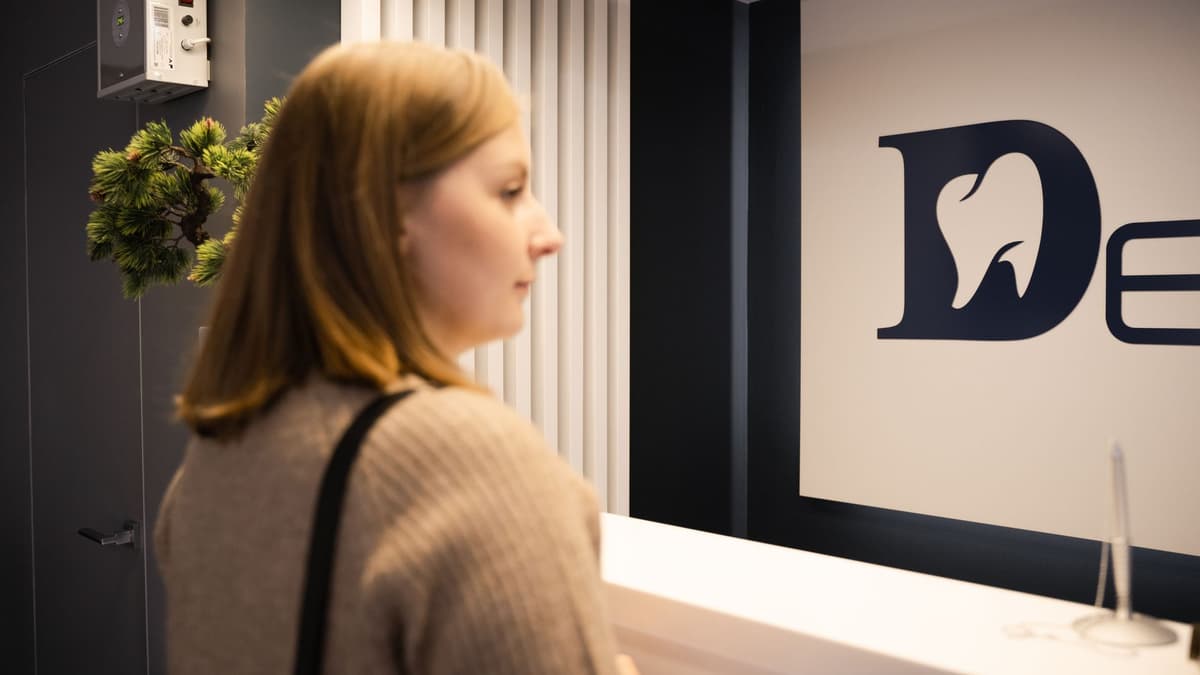
A dental recall system is the routine that brings patients back for their next check-up and cleaning, on time, without the front desk chasing them one by one. The core is simple: book the next visit before the patient leaves, send reminders by WhatsApp and SMS at fixed points, and work a weekly list of anyone who is overdue. Done properly, it keeps your hygiene chairs full with patients you already have.
Many Gulf clinics spend real money on ads for new patients while existing ones quietly drift past their six-month mark. Those patients already trust you. They just haven't been asked.
What is a dental recall, and how often should patients come back?
A recall is a planned return visit for a check-up, a hygiene appointment, or both. The common default is every six months, but treat it as a starting point. The right interval depends on the dentist's clinical judgement for each patient: someone with gum disease may need to come back sooner, while a low-risk patient may be fine with a longer gap.
Store the interval per patient, set by the dentist at the end of each visit. A clinic-wide "6 months for everyone" setting is easy, and wrong for many patients.
Step 1: Book the next visit before the patient leaves
This is the single most effective habit in any recall system. A patient who walks out with a date in their phone is far more likely to come back than one who is told "we'll remind you".
- The dentist or hygienist confirms the recall interval in the notes before the patient stands up.
- The receptionist offers two or three specific slots at checkout. Not "when suits you?", but "Tuesday the 14th at 5 p.m., or Saturday morning?"
- The booking is confirmed by WhatsApp straight away, so the patient has it in writing.
- If the patient refuses to commit, flag them for the recall list with the due date, so they don't disappear.
Step 2: Set a reminder sequence by WhatsApp and SMS
Pre-booked patients need reminders that protect the appointment. Patients without a booking need reminders that get them to book. Treat these as two different sequences.
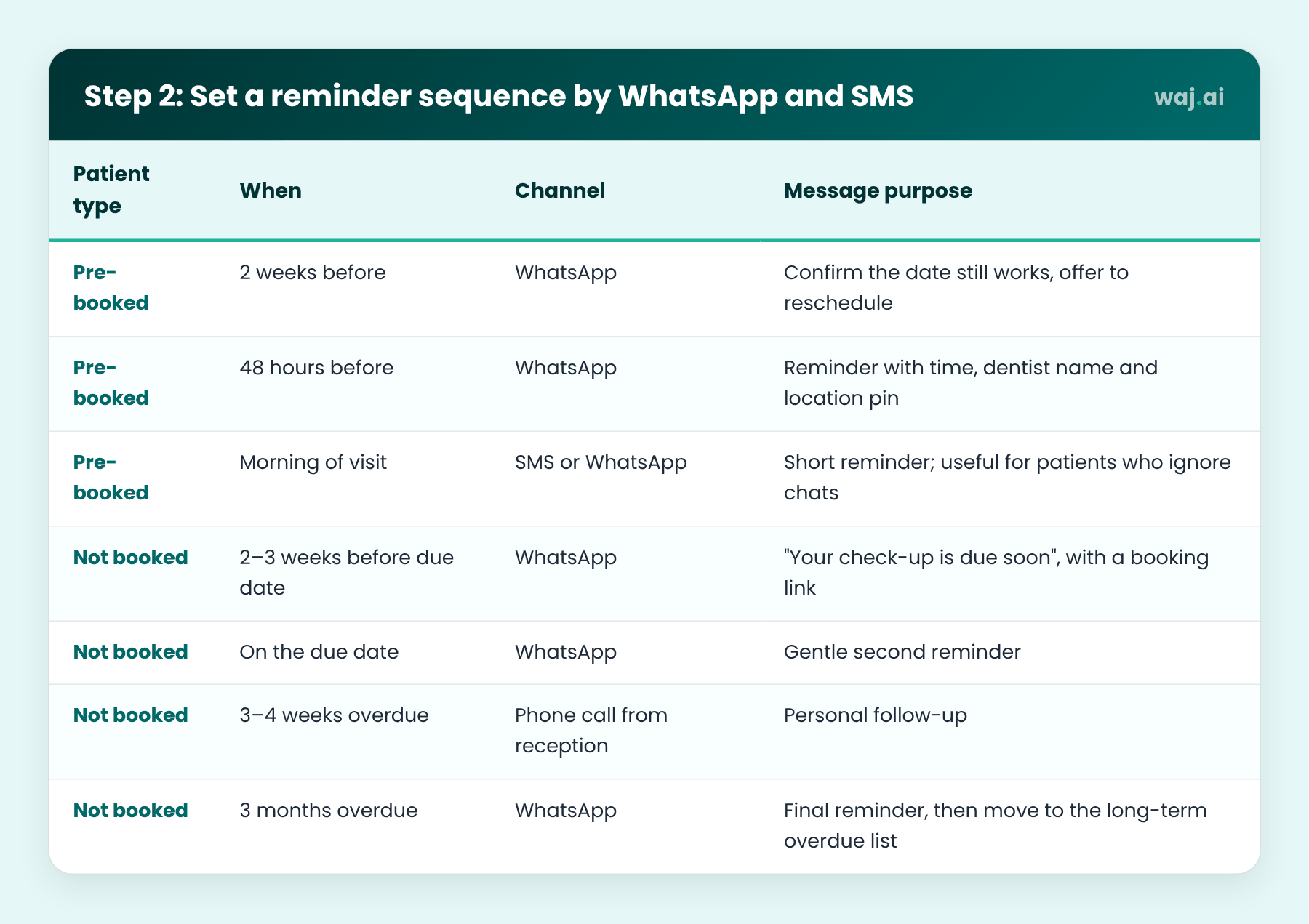
- Pre-booked
When: 2 weeks before
Channel: WhatsApp
Message purpose: Confirm the date still works, offer to reschedule - Pre-booked
When: 48 hours before
Channel: WhatsApp
Message purpose: Reminder with time, dentist name and location pin - Pre-booked
When: Morning of visit
Channel: SMS or WhatsApp
Message purpose: Short reminder; useful for patients who ignore chats - Not booked
When: 2–3 weeks before due date
Channel: WhatsApp
Message purpose: "Your check-up is due soon", with a booking link - Not booked
When: On the due date
Channel: WhatsApp
Message purpose: Gentle second reminder - Not booked
When: 3–4 weeks overdue
Channel: Phone call from reception
Message purpose: Personal follow-up - Not booked
When: 3 months overdue
Channel: WhatsApp
Message purpose: Final reminder, then move to the long-term overdue list
A few practical points:
- WhatsApp first. In the UAE, Saudi Arabia, Jordan and the rest of the region, it's where patients actually read messages. Keep SMS as a backup. We explained why in our piece on salon software with WhatsApp in MENA, and the same logic applies to clinics.
- Arabic and English. Send in the patient's preferred language. A Jordanian grandmother and an expat engineer in Dubai shouldn't get the same text.
- Respect prayer times and late evenings. A recall message at 11 p.m. feels like spam even when it isn't.
If no-shows are your main problem rather than recalls, our guide on cutting no-shows goes deeper into deposits and confirmation rules.
Step 3: Work an overdue recall list every week
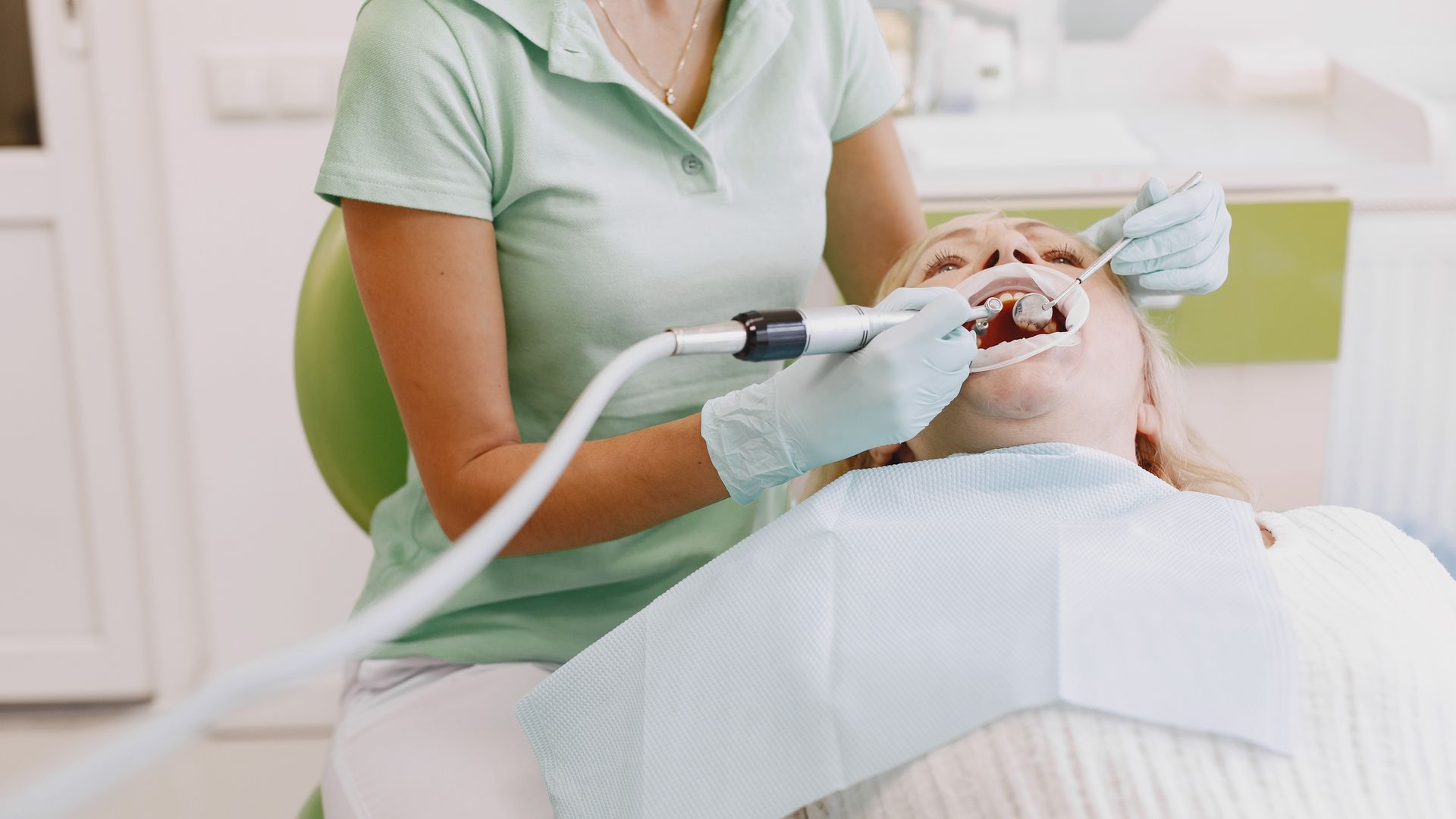
Reminders catch most patients. The recall list catches the rest.
Once a week, pull a list of patients past their recall date with no future booking. Sort it by how overdue they are, then:
- 0–1 month overdue: a phone call from reception. Most of these patients simply forgot.
- 1–6 months overdue: WhatsApp first, call if there's no reply.
- 6+ months overdue: a single, friendly message. If there's still no reply, mark them inactive and stop. Repeated chasing does more harm than good.
Give one person ownership of the list and an hour a week to work it.
Family recalls: book the household together
Families are a big part of dental work in the Gulf. If a mother brings three children, try to align their recall dates so the family comes on the same afternoon, ideally after school.
- Link family members in the patient records so reception can see the household at a glance.
- Send one message to the parent covering all the children due, instead of four separate ones.
The weeks before school starts are busy for children's check-ups, so open those slots early.
Treatment-plan follow-ups for unfinished work
A recall system isn't only about check-ups. Many patients accept a treatment plan, finish the first stage, and then vanish: the second filling, the crown after the root canal, the next aligner review.
Track open treatment plans separately from hygiene recalls:
- When a plan is accepted, record each stage as a pending item.
- If the next stage isn't booked within a set time, it goes on a follow-up list for the treatment coordinator.
- Follow-ups should come from someone who can answer clinical questions or route them to the dentist, not a generic marketing message.
Which metrics show if your recall system is working?
Keep it to a few numbers and review them monthly.
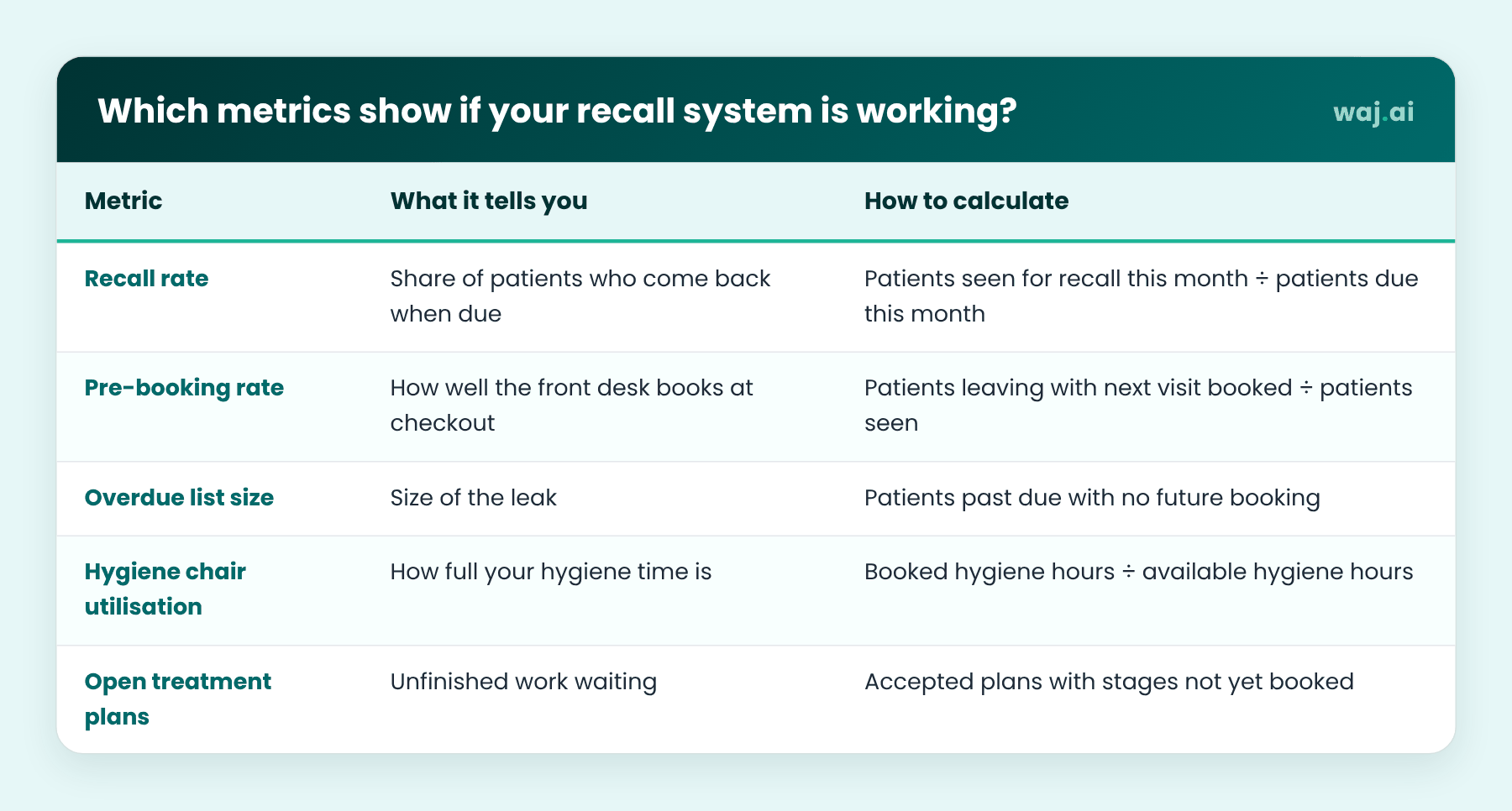
- Recall rate
What it tells you: Share of patients who come back when due
How to calculate: Patients seen for recall this month ÷ patients due this month - Pre-booking rate
What it tells you: How well the front desk books at checkout
How to calculate: Patients leaving with next visit booked ÷ patients seen - Overdue list size
What it tells you: Size of the leak
How to calculate: Patients past due with no future booking - Hygiene chair utilisation
What it tells you: How full your hygiene time is
How to calculate: Booked hygiene hours ÷ available hygiene hours - Open treatment plans
What it tells you: Unfinished work waiting
How to calculate: Accepted plans with stages not yet booked
Look at the trend over several months. If pre-booking drops, it's usually a front-desk habit that slipped, and it's fixable in a week.
Privacy: care reminders are not marketing
This matters more for clinics than for salons. In Saudi Arabia, the Personal Data Protection Law (PDPL) has been fully enforceable since 14 September 2024, regulated by SDAIA. Health data counts as sensitive data and cannot be used for marketing, and direct marketing needs opt-in consent.
In practice:
- A reminder that a patient's check-up is due is part of their care. Keep it factual: what, when, where.
- A promotion is different. A whitening offer sent to everyone who had a cleaning uses health data to sell. Don't mix promotions into recall messages, and only send marketing to patients who opted in.
- Limit access. Reception needs dates and phone numbers; it doesn't need full clinical notes to send a reminder.
The UAE and Jordan have their own data protection rules. This isn't legal advice, so confirm your approach with SDAIA, the relevant health authority (DHA, DOH or MOH) or a lawyer. Our article on aesthetic clinic patient retention covers retention ideas that stay on the right side of these rules.
How WAJ supports a dental recall system
WAJ gives clinics online booking, a staff calendar across dentists and hygienists, patient records with notes and history, and automated WhatsApp reminders. Reports show how the hygiene chairs are being used. WAJ's clinic product, Nabd, runs on the same platform. There's no booking commission and no onboarding fee.
If you'd like to see how a recall routine would look in your clinic, book a free WAJ demo: waj.ai/demo.
FAQ
How often should dental patients be recalled?
Six months is the common default, but the interval should be set by the dentist for each patient based on their oral health. Some patients need shorter intervals, others longer.
What is a good recall rate for a dental clinic?
There's no single benchmark that fits every clinic. Measure your own rate monthly, then work on pre-booking and the overdue list to push it up over time.
Should recall reminders go by WhatsApp or SMS?
WhatsApp first in most of the Middle East, with SMS as a backup for patients who don't read chats. Use the patient's preferred language.
Can I send promotions to patients in my recall list?
In Saudi Arabia, health data can't be used for marketing and direct marketing needs opt-in consent under the PDPL. Keep care reminders separate from promotions, and confirm your approach with a lawyer or the regulator.
Follow WAJ on Google
Add WAJ as a preferred source to see more of our articles in your Google Search results, marked with a "preferred" badge.