
Barbershop Walk-Ins vs Appointments: How to Run Both Without Chaos
WAJ Team
September 22, 2026
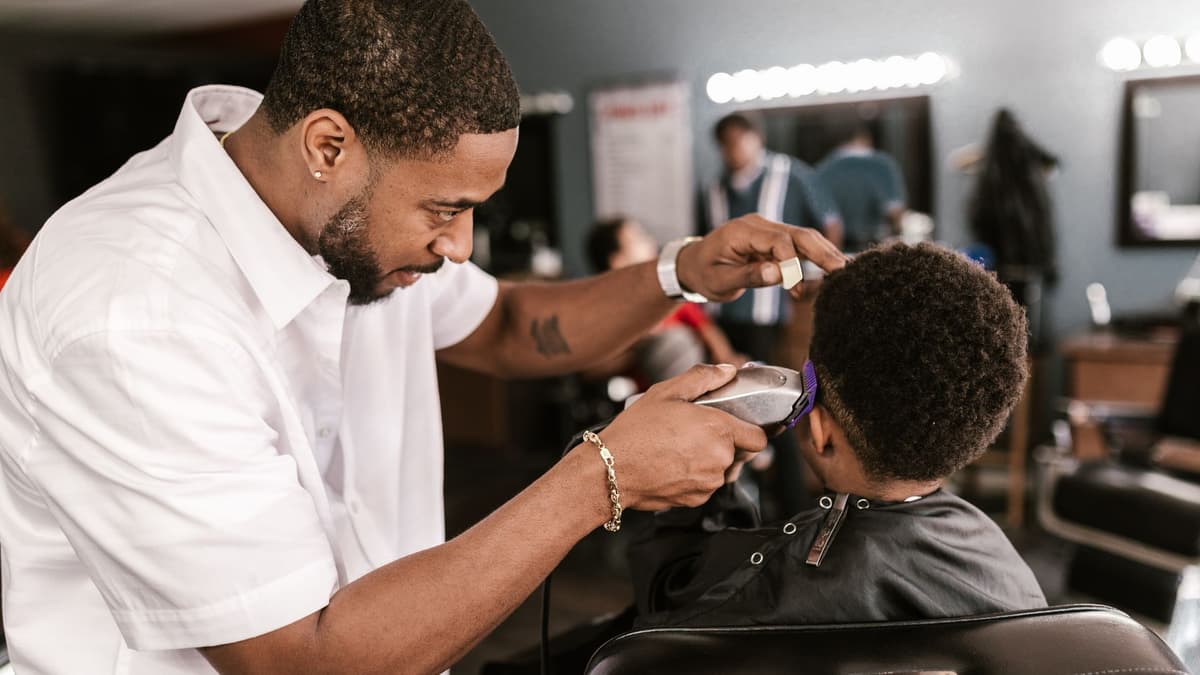
Most barbershops in the Gulf do best with a hybrid model: take bookings for most chairs and keep at least one chair, or certain hours, for barbershop walk-ins. Walk-ins bring new faces and fill gaps, while appointments protect your regulars and your evenings. The chaos starts when both compete for the same chair at the same time with no rule for who goes first.
Picture a Thursday at 8 p.m. in a shop in Riyadh or Sharjah. Six men on the bench, two of them with bookings. A regular who has come every two weeks for three years walks in at 8:05 for his 8:00 slot and sees a stranger in his barber's chair. That regular may not complain. He may just book somewhere else next time. Everything below is about making sure that scene doesn't happen.
Barbershop walk-ins: the pros and cons
Walk-ins are part of barbershop culture here. Plenty of men decide on a haircut while driving past, and many still see booking a trim as unnecessary.
What walk-ins give you
- New clients who would never have found your booking page.
- Revenue in the gaps between appointments.
- A full-looking shop, which pulls in more passers-by.
What they cost you
- Unpredictable waits, and men who leave after 20 minutes on the bench.
- Barbers rushing cuts to clear the queue.
- No contact details, so no way to bring them back.
- Peak hours you can't plan staffing around.
Appointments: the pros and cons
What appointments give you
- Regulars who know they will be seen on time.
- Staffing you can plan by the hour.
- A phone number and a visit history for every client, so you can send reminders and win them back later.
What they cost you
- No-shows, which hurt more in a shop with short services. A missed 30-minute fade at 9 p.m. on a Thursday can't be resold.
- Empty chairs if a barber is fully "booked" on paper but clients turn up late or not at all.
- Some walk-in clients feel unwelcome if every chair says "booked".
If no-shows are what's stopping you from moving to appointments, our guide on how to cut no-shows covers reminders, deposits and confirmation rules.
How does a hybrid barbershop model work?
There are two common ways to split it. Pick one and stick to it long enough to learn from it.
Option 1: reserved walk-in chairs
One or two chairs take walk-ins only, all day. The rest are bookable. This is easy for clients to understand, and works best in shops with four or more chairs. Rotate barbers through the walk-in chair so nobody is stuck on it permanently, and so regulars aren't split.
Option 2: walk-in hours
All chairs are bookable at peak times, and walk-ins only between, say, 1 p.m. and 5 p.m. on weekdays. This suits smaller shops and fills the quiet afternoon.
Many shops combine the two: one walk-in chair all day, plus open walk-in hours on weekday afternoons when bookings are thin.
The one rule that makes it work
A booked client is never bumped for a walk-in. If a booked client is more than 10 or 15 minutes late, his slot can go to the queue and he joins it. Write this rule down, put it on your booking page, and train every barber to follow it.
A digital queue and WhatsApp "your turn" messages
The bench is the worst part of being a walk-in. A digital queue takes it away. The client gives his name and mobile number at the door or by scanning a QR code, gets an estimated wait, and goes to buy coffee next door. When he's two clients away, he gets a WhatsApp message.
A short message works best:
Hi Khalid, you're next at the shop in about 10 minutes. Reply 1 if you're on your way, or 2 to give up your place.
Three things to get right:
- Be honest about the wait. Overpromise once and he won't trust the estimate again.
- Hold the place for a few minutes after the message, then move on to the next man.
- Ask permission before marketing. A queue message is service. Adding him to promotions needs his consent, especially in Saudi Arabia, where direct marketing requires opt-in under the PDPL.
There's a bonus here. Every walk-in who joins the queue leaves a phone number, so your walk-ins stop being anonymous. We wrote more about this channel in our piece on salon software with WhatsApp in MENA.
When are barbershop peak hours in the Gulf?
The pattern is similar across most of the region:
- Evenings, especially after work and after the last prayer.
- Thursdays, before the weekend, often the busiest night of the week.
- The days before Eid, when men want a fresh cut for family visits and the queue runs late into the night.
- Before weddings and national occasions. With Saudi National Day on 23 September, shops in the Kingdom will feel it this week.
During these peaks, consider switching to bookings only for most chairs and keeping one chair for the queue. Before Eid, open bookings early, send a WhatsApp message to regulars a week or two ahead, and add extended hours.
How to protect your regulars
Your regulars are your rent. A few habits that keep them:
- Let them book their next cut before they leave. Most men who come every two or three weeks will happily lock in the same slot.
- Give them first access to Eid and pre-wedding slots before you open them to everyone.
- Keep their notes. Clipper guard, beard shape, how he likes his neckline. Any barber in the shop should be able to read it.
- Don't make them wait for walk-ins, ever.
Should you charge for priority slots?
Some shops charge a little more for guaranteed slots at peak hours, or for a "skip the queue" booking on a Thursday night. It can work, as long as:
- The extra charge is clearly shown before booking.
- It applies to the slot, not to the client, so regulars aren't penalised for booking ahead.
- Walk-in prices stay unchanged and visible.
An alternative is a small deposit for peak-time bookings, refunded against the service. This cuts no-shows without feeling like a surcharge.
A weekly hybrid schedule for a four-chair barbershop
Adjust the days to your country's weekend. This example uses a Sunday-to-Thursday working week with Friday and Saturday as the weekend.
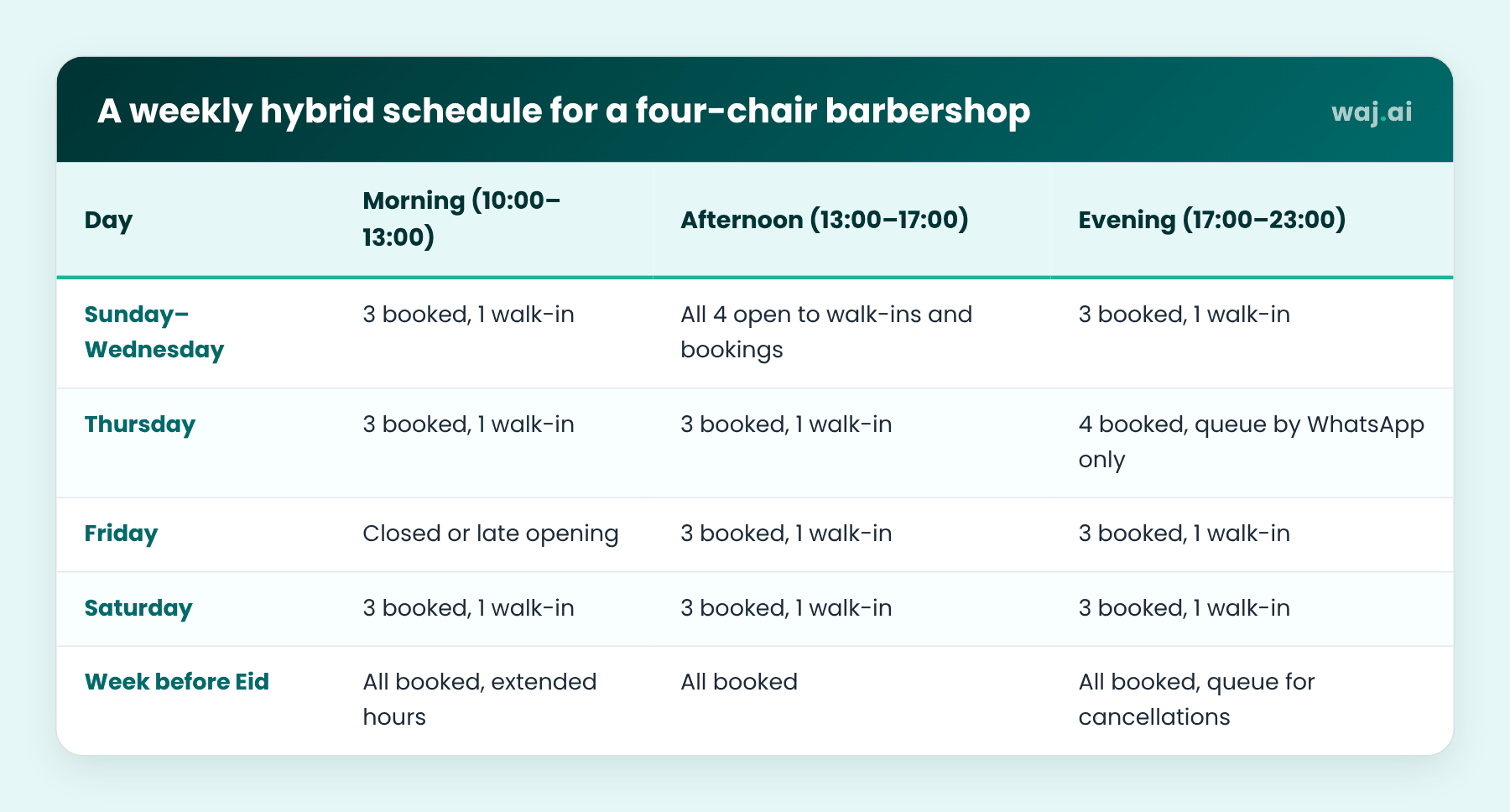
- Sunday–Wednesday
Morning (10:00–13:00): 3 booked, 1 walk-in
Afternoon (13:00–17:00): All 4 open to walk-ins and bookings
Evening (17:00–23:00): 3 booked, 1 walk-in - Thursday
Morning (10:00–13:00): 3 booked, 1 walk-in
Afternoon (13:00–17:00): 3 booked, 1 walk-in
Evening (17:00–23:00): 4 booked, queue by WhatsApp only - Friday
Morning (10:00–13:00): Closed or late opening
Afternoon (13:00–17:00): 3 booked, 1 walk-in
Evening (17:00–23:00): 3 booked, 1 walk-in - Saturday
Morning (10:00–13:00): 3 booked, 1 walk-in
Afternoon (13:00–17:00): 3 booked, 1 walk-in
Evening (17:00–23:00): 3 booked, 1 walk-in - Week before Eid
Morning (10:00–13:00): All booked, extended hours
Afternoon (13:00–17:00): All booked
Evening (17:00–23:00): All booked, queue for cancellations
Review it after a month. If the walk-in chair has a queue all evening, add a second one. If it's empty every afternoon, open that chair to bookings.
Where WAJ fits
Creators Barbers is one of the barbershops running on WAJ; you can read their story in our Creators Barbers spotlight. WAJ gives a shop online booking, a staff calendar per barber, a client CRM with notes and history, WhatsApp reminders and messaging, a POS and reports, with no booking commission. Walk-ins can be added to the calendar as they arrive, so they show up in your client list rather than disappearing.
If you want to see how your chairs would look in it, book a free WAJ demo: waj.ai/demo.
FAQ
Are walk-ins or appointments better for a barbershop?
Most shops do better with both: appointments for regulars and peak hours, walk-ins for new clients and quiet times. The key is a clear rule about who goes first.
How many chairs should I keep for walk-ins?
In a shop of four or more chairs, one walk-in chair is a good starting point. Add a second if the queue stays long.
How do I stop walk-ins leaving because of the wait?
Use a digital queue that sends a WhatsApp message when it's nearly their turn, so they don't have to sit on the bench.
What happens if a booked client is late?
Set a grace period, often 10 to 15 minutes, and publish it. After that, the slot goes to the queue and the late client joins it.
Is it fair to charge more for Thursday night slots?
It can be, if the price is shown before booking and walk-in prices stay unchanged. A refundable deposit is a softer alternative.
Follow WAJ on Google
Add WAJ as a preferred source to see more of our articles in your Google Search results, marked with a "preferred" badge.