
AI Voice Agents: What They Are and How They Are Changing the Way Businesses Talk to Customers
WAJ Team
September 9, 2026
.jpg&w=1200&q=75)
For decades, the phone has been both a lifeline and a bottleneck for business. Calls come in when no one is free to answer, callers wait on hold, and after hours the line simply goes dead, and every missed call is a missed customer. AI voice agents are changing that. These are software systems that answer the phone, hold a natural spoken conversation, understand what the caller wants, and actually get it done booking an appointment, answering a question, or passing the call to the right person. This guide explains what an AI voice agent is, how it works, what it can and cannot do, and why it is becoming one of the most practical uses of artificial intelligence for everyday business.
What is an AI voice agent?

An AI voice agent is a program that speaks and listens like a person on a phone call. Unlike the old automated menus "press 1 for sales, press 2 for support" a modern voice agent lets the caller just talk naturally, and it responds in a natural voice of its own. It is the difference between navigating a rigid phone tree and having an actual conversation. The goal is not to trick anyone into thinking they are talking to a human, but to handle routine calls quickly and around the clock, so a real person's time is saved for the things that truly need it.
How an AI voice agent works
Behind a smooth conversation, four things happen in the space of a second or two:
- It listens. The caller's speech is converted into text in real time a technology called speech recognition, or speech-to-text.
- It understands. That text is interpreted by a language model (the same kind of AI behind today's chat assistants), which works out what the caller actually means and what they want to happen.
- It acts. The agent does something useful checks a calendar and books a slot, looks up an answer, records the caller's details, or decides the call needs a human and routes it.
- It speaks. Its reply is turned back into a natural-sounding voice text-to-speech and the caller hears the response.
This loop repeats for every back-and-forth in the conversation. Because each step now happens fast and accurately, the exchange feels far closer to a real conversation than the clunky systems most people remember.
What AI voice agents can do well
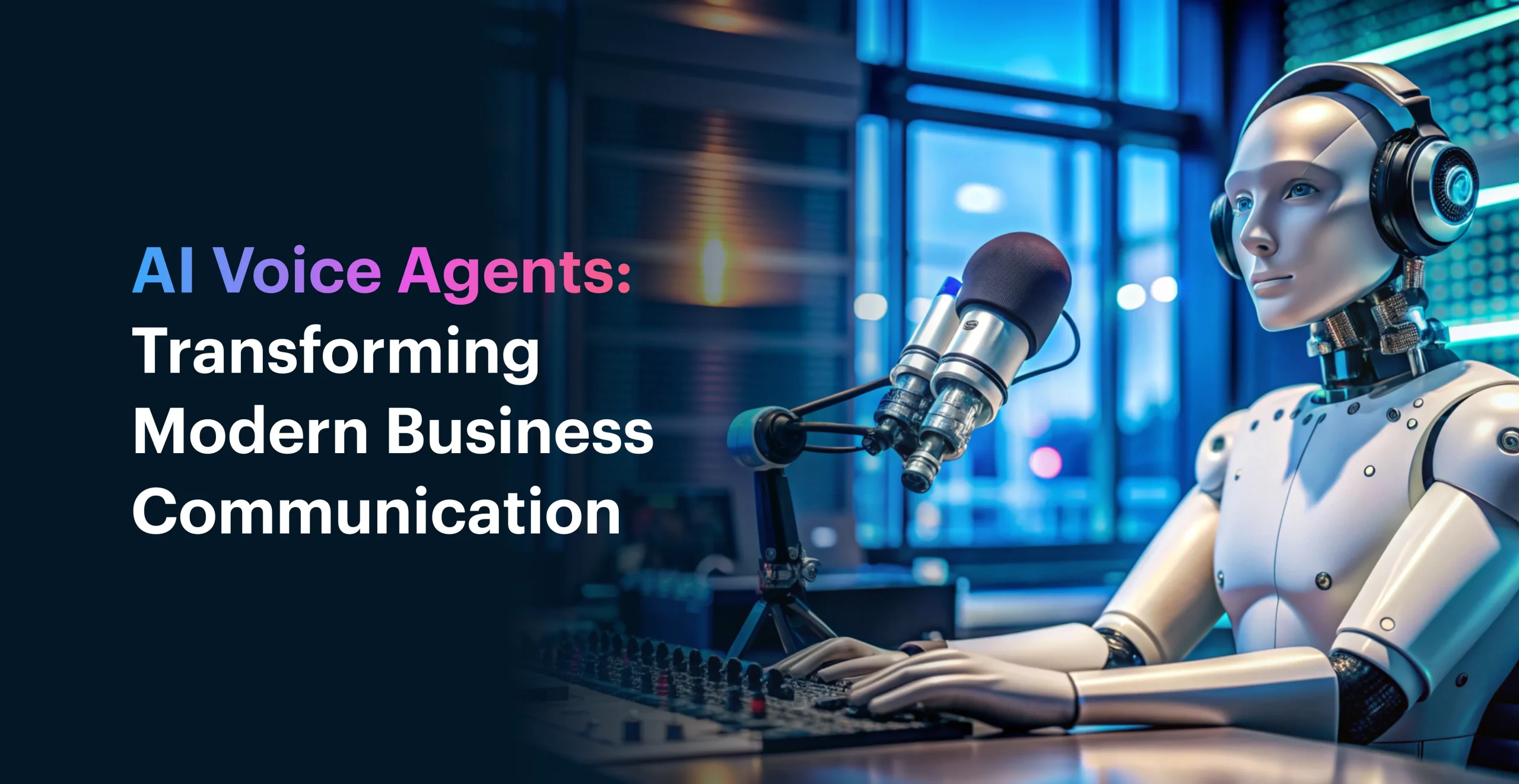
The strength of a voice agent is handling high-volume, repetitive calls consistently, without tiring and without ever being "busy." In practice, that includes:
- Answering every call, instantly. No hold music, no voicemail, no missed calls at 9pm or during a rush.
- Booking, rescheduling, and cancelling appointments by checking availability live.
- Answering common questions opening hours, location, pricing, availability the same way every time.
- Capturing and qualifying enquiries, taking the caller's details and passing on organized information instead of a missed-call notification.
- Working around the clock, in multiple languages, which matters enormously in regions where customers speak several.
- Freeing your team from the phone so they can focus on the work in front of them.
The common thread is that the agent removes the friction of the phone the waiting, the missing, the repetition rather than replacing genuine human relationships.
What they cannot (and should not) do
An honest look matters too. AI voice agents are not a fit for every call. They can struggle with highly complex, emotional, or unusual situations that need real human judgement or empathy. A frustrated customer with a delicate complaint should reach a person, and a well-designed system knows when to hand off rather than trap someone in a loop. The best deployments are deliberately narrow: let the agent own the routine, repetitive calls it handles reliably, and route everything else to a human quickly and gracefully. Used that way, a voice agent raises service quality; used to wall customers off from people entirely, it damages it.
Why this matters now
Two things have converged to make voice agents genuinely useful rather than a gimmick. First, the underlying AI has improved dramatically, language models now understand messy, real-world speech and respond conversationally, and voices sound natural rather than robotic. Second, customer expectations have shifted: people expect instant responses and round-the-clock availability, and a business that only answers "sometimes, during working hours" feels behind. For any operation that runs on phone calls and appointments, the math is compelling a missed call is often a lost sale, and a voice agent means calls simply stop being missed.
What to look for in a voice agent
If you are considering one, a few things separate a good deployment from a frustrating one. It should sound natural and respond quickly, because long pauses break a conversation. It should handle interruptions and follow-up questions, not just single commands. It should connect to your actual systems, your calendar, your customer records so it can do things, not just talk. It should support the languages your customers speak. And crucially, it should hand off to a human smoothly whenever a call goes beyond its scope.
The bottom line
An AI voice agent is not about removing the human touch it is about making sure the routine, repetitive calls that clog up a phone line get handled instantly, accurately, and at any hour, so your people are free for the conversations that actually need them. As the technology keeps improving, answering every call 24/7 is shifting from a luxury to a baseline expectation.
At WAJ we build an AI Voice Agent designed to do exactly this for appointment- and service-based businesses answering calls, booking, and capturing enquiries in natural conversation, in Arabic and beyond. If you want to see what that looks like in practice, book a demo.
Follow WAJ on Google
Add WAJ as a preferred source to see more of our articles in your Google Search results, marked with a "preferred" badge.