Henna Salon Services: Bookings, Pricing and Safety
WAJ Team
July 22, 2026
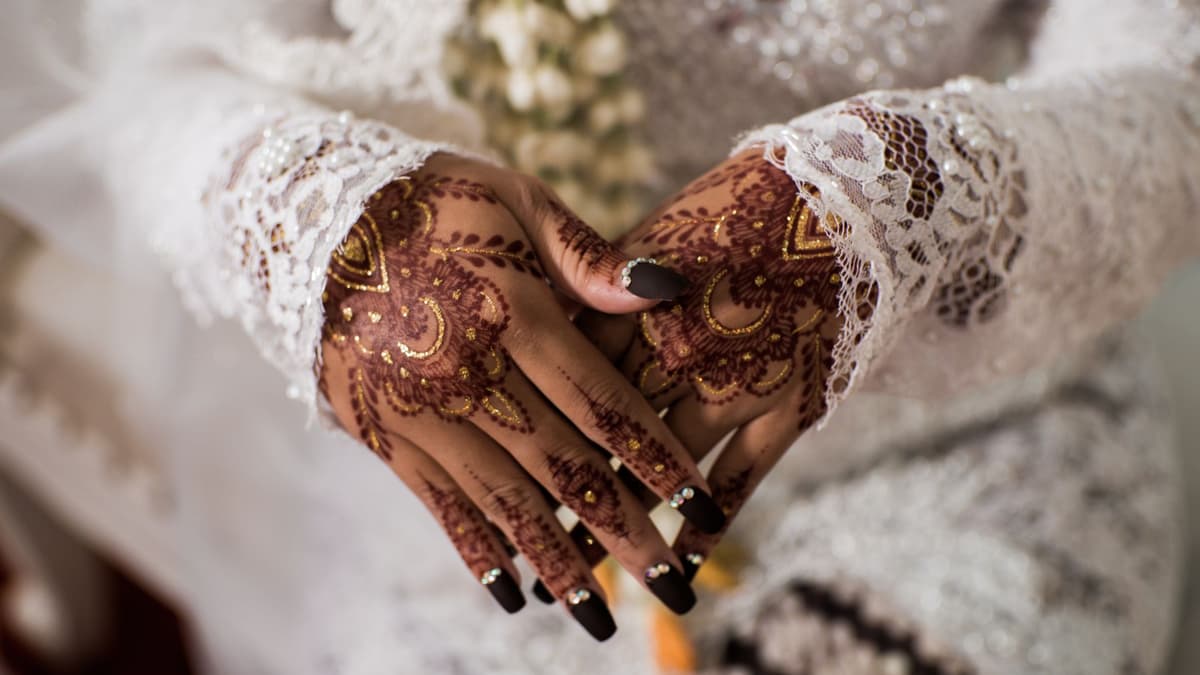
A henna salon service can be one of the most profitable lines on your menu, because demand is built into the calendar: weddings, Eid, henna nights and graduations. To run it well, use only natural henna or regulator-approved products, never "black henna", price by design tier and time, take deposits for bridal and event bookings, and charge a clear travel fee for home visits. Get those basics right and henna stops being something your artist "does when she's free".
Most Gulf salons run henna informally. The artist keeps her own WhatsApp, quotes on the spot and books home visits that never appear in the salon calendar. That works until a bride's mother calls to complain, or the artist leaves and takes your henna clients with her.
Where does henna demand come from?
Henna follows the social calendar more closely than any other beauty service:
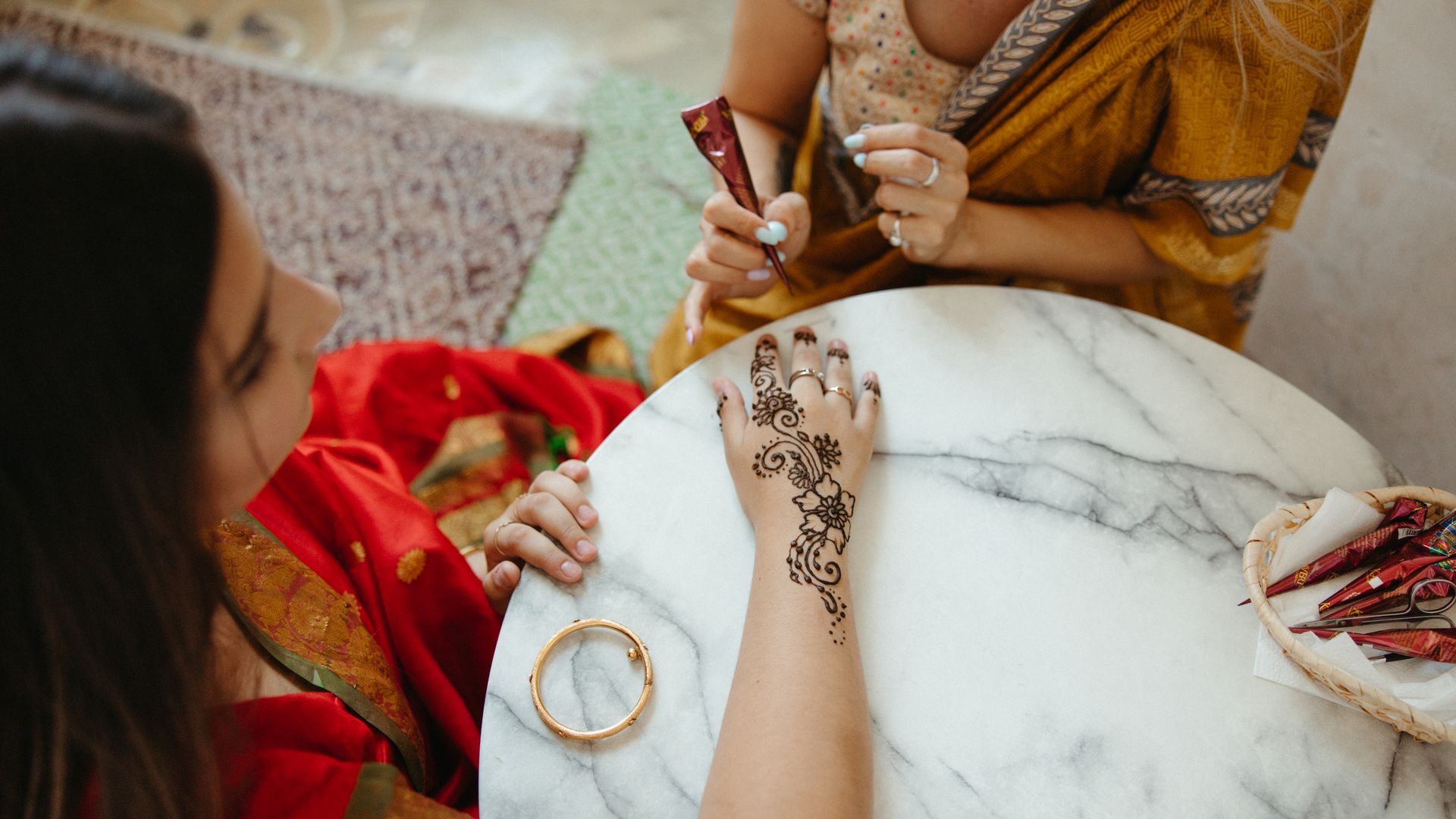
- Wedding season. Henna nights bring the biggest bookings: the bride plus her mother, sisters and friends, often at home or in a hall.
- The nights before Eid. Eid al-Adha fell around 27 May this year, and the last nights before any Eid fill fast with families, children and walk-ins.
- Graduations, baby showers and engagements. Smaller, but steady.
- Visitors. In Dubai and other tourist cities, simple designs sell to visitors who want the experience.
The quiet summer months are the time to build your portfolio, train a second artist and fix your price list before the autumn weddings. Festive peaks are also a good moment to sell henna gift cards, as we covered in our guide to Mother's Day and Eid gift cards for salons.
Natural henna vs "black henna": what is safe to use?
This is the part you cannot get wrong.
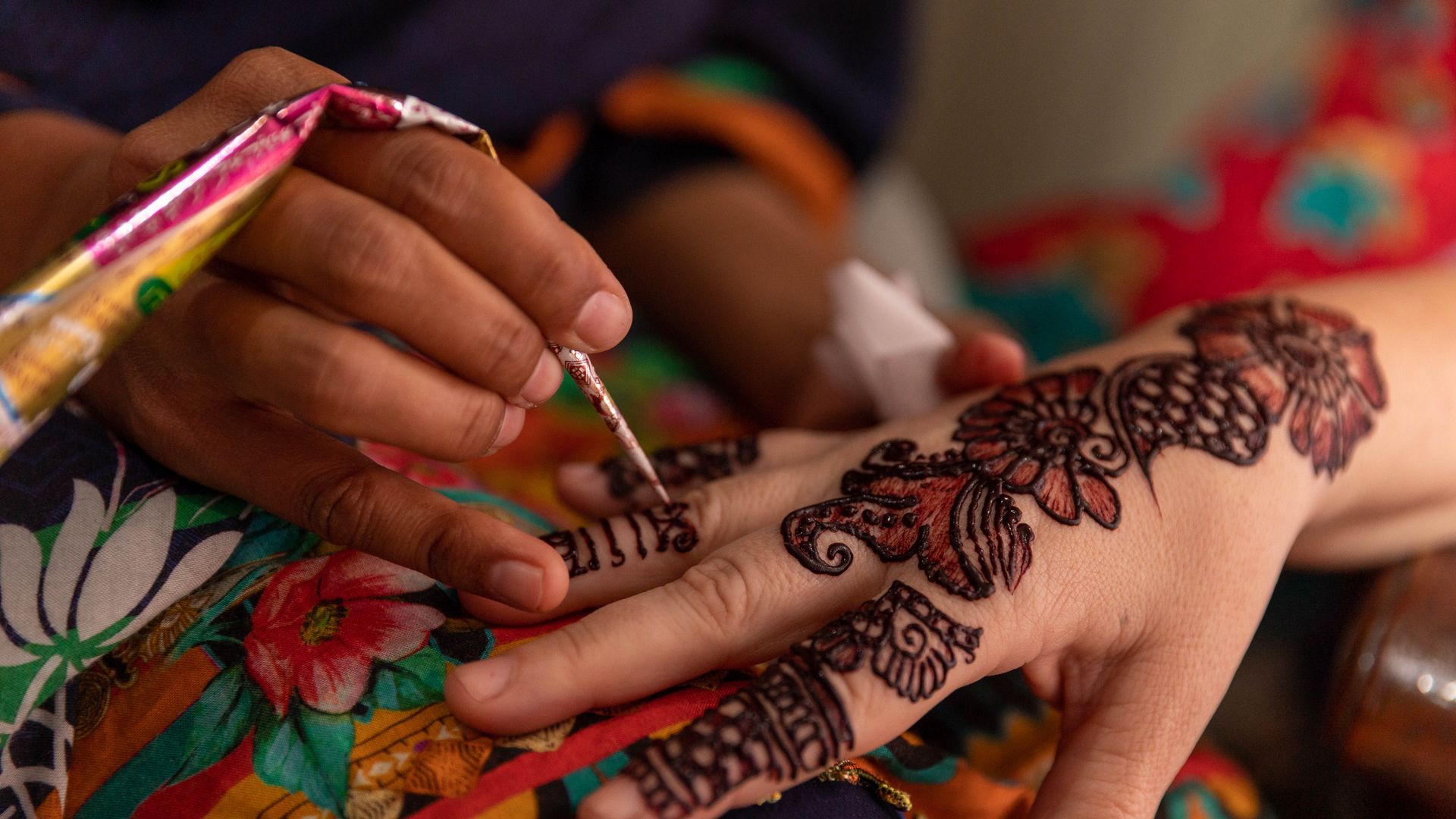
Natural henna is made from the dried leaves of the henna plant. It stains the skin orange to deep reddish-brown, darkening over a day or two. It is what your clients mean when they ask for henna.
"Black henna" is not really henna. Products sold under that name are often mixed with PPD (para-phenylenediamine), a chemical used in hair dye. On skin, PPD can cause serious allergic reactions, blistering and lasting scars, and can leave a person sensitised to hair dye for life. A jet-black stain that appears within an hour is a warning sign.
Your rules should be simple:
- Use only natural henna, or ready-made cones and products approved by your regulator.
- Never use or sell "black henna", however much a client wants a darker result.
- Buy from suppliers who show the ingredient list and expiry date. Avoid unlabelled cones.
- Label opened products with their first-use date and discard anything expired. Kuwait's Ministry of Health salon guide, for example, already requires approved products with expiry dates and opened items labelled this way.
- Confirm the rules on henna products with your municipality, health authority or ministry, and follow them.
If a client wants it darker, explain that good natural henna, left on longer and cared for afterwards, gives a deep brown. That conversation protects her and your licence.
Should you do a patch test?
Reactions to natural henna are less common, but they happen, and some pastes contain added essential oils that irritate sensitive skin. Ask every new client about allergies and past reactions to henna or hair dye. For anyone with sensitive skin, eczema or a previous reaction, offer a small patch test a day or two before, especially brides.
Record the answer in her client profile so the next artist sees it. If she has reacted to hair dye or black henna before, suggest she checks with a doctor first. Do not give medical advice yourself.
How should you structure henna design tiers and timing?
"A design" can mean ten minutes or four hours, which is why clients struggle with henna prices. Fix that with tiers, each tied to a time slot in your calendar.
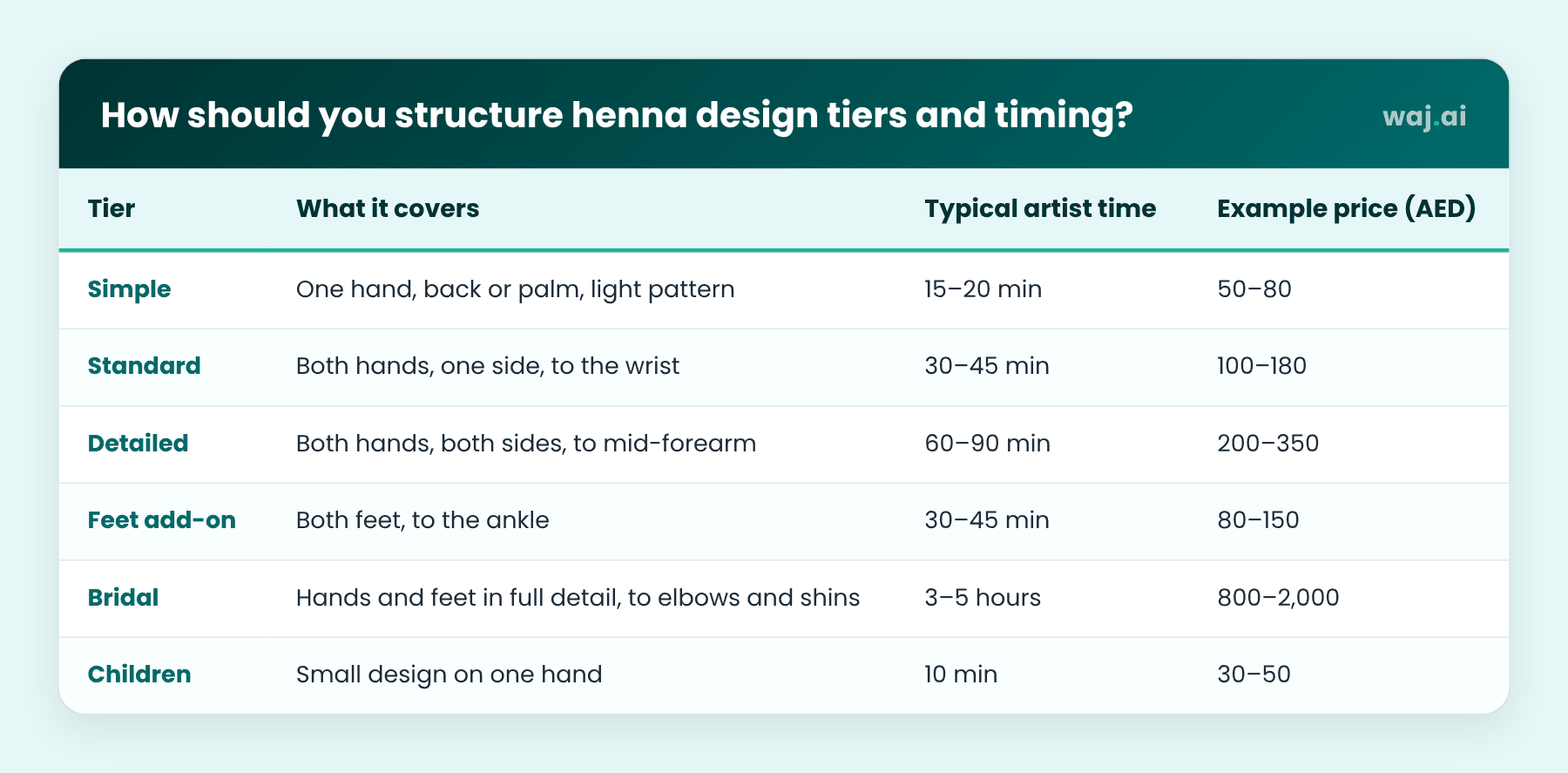
- Simple
What it covers: One hand, back or palm, light pattern
Typical artist time: 15–20 min
Example price (AED): 50–80 - Standard
What it covers: Both hands, one side, to the wrist
Typical artist time: 30–45 min
Example price (AED): 100–180 - Detailed
What it covers: Both hands, both sides, to mid-forearm
Typical artist time: 60–90 min
Example price (AED): 200–350 - Feet add-on
What it covers: Both feet, to the ankle
Typical artist time: 30–45 min
Example price (AED): 80–150 - Bridal
What it covers: Hands and feet in full detail, to elbows and shins
Typical artist time: 3–5 hours
Example price (AED): 800–2,000 - Children
What it covers: Small design on one hand
Typical artist time: 10 min
Example price (AED): 30–50
These prices are examples only, to show how tiers can work. Set your own based on your area, your artist's skill and your costs.
Set up each tier as its own service with its own duration. If bridal is booked as a one-hour slot, your artist runs late all evening. Leave a buffer after detailed and bridal work, because clients sit still while the paste dries and will ask for touch-ups.
How do you handle home and event bookings?
Much henna work happens at home or at the henna night itself. These bookings pay well if you treat them as services, not favours.
- Set a minimum number of guests or minimum spend for home visits.
- Charge a travel fee by distance or zone, shown on your menu so nobody argues on the day.
- Confirm the guest list and the tiers wanted in advance, so you send enough artists.
- Agree timings in writing: arrival, finish and the overtime charge.
- Send artists in pairs for larger events, with transport arranged.
Block the artist's time in the salon calendar for every home visit, so nobody books her in the salon at the same hour.
Should you take deposits for henna bookings?
Yes, for bridal, event and home bookings. A bride who cancels three days before the wedding leaves your artist with an empty Thursday night in peak season.
Keep it simple: a non-refundable deposit to hold the date, the balance on the day. Explain it at booking and in the confirmation message. A WhatsApp reminder a day or two before, with the address and time, cuts last-minute surprises. Our article on how to cut no-shows covers deposits and reminders in more detail.
In WAJ, henna tiers can be set up as separate services with their own durations and prices, booked through your online booking site and followed by automatic WhatsApp reminders, with each client's notes and history in her profile. In a busy wedding season, that beats a henna diary living on one artist's phone.
How should you pay henna artists?
Good henna artists are scarce, and many work freelance with their own following. You need pay that keeps them with you and keeps the clients with the salon.
- Commission per service, often a higher rate for bridal work. Simple and fair when demand swings.
- Base salary plus commission, for a full-time artist who does other services when henna is quiet.
- A fixed fee per event for home bookings, plus a share of the travel fee.
Whatever you choose, all bookings go through the salon, not the artist's personal number. Commission tracking in your salon software keeps month-end payouts clear. Write this into the employment contract.
Why does a henna salon need an Instagram portfolio?
Henna is chosen with the eyes. Before booking, a bride will scroll your Instagram and compare it with three other artists.
- Photograph finished designs in daylight against a plain background.
- Show the stain a day later, not only the fresh paste. Clients want to know how dark it goes.
- Group designs in highlights by tier: Simple, Bridal, Kids, Eid.
- Get written permission before posting any client's hands, and never show faces without consent. In ladies-only salons this matters even more, as we explained in our guide to ladies salon management in the Gulf.
- Put a booking link in your bio, so a bride can pick a date without waiting for a reply.
Related reading
- Female Therapist Spa Booking: How to Handle Therapist Gender Preferences
- Salon Insurance in the Gulf: What Cover Salons, Spas and Clinics Should Consider
- Eid Salon Bookings: How to Plan for the Eid al-Adha Rush
FAQ
Is black henna safe to use in a salon?
No. Products sold as "black henna" often contain PPD, a hair-dye chemical that can cause severe skin reactions. Use only natural henna or regulator-approved products.
How much should a henna salon charge?
It depends on your area, artist and design. Price by time-based tiers, from a simple one-hand design to full bridal work, and add travel fees for home visits. The table above shows example prices in AED.
Do clients need a patch test for henna?
Ask every new client about allergies first. Offer a patch test a day or two before for anyone with sensitive skin or a past reaction, and for brides if there is any doubt.
Should henna artists take bookings on their own phone?
No. Bookings should go through the salon's system so you control the calendar, deposits and client history, and the clients stay if the artist leaves.
How far ahead should brides book henna?
As soon as the wedding date is fixed, with a deposit, especially in peak wedding season and the weeks around Eid.
To see how WAJ handles henna tiers, home bookings and reminders in one calendar, book a free WAJ demo: waj.ai/demo.
Follow WAJ on Google
Add WAJ as a preferred source to see more of our articles in your Google Search results, marked with a "preferred" badge.