
Female Therapist Spa Booking: How to Handle Therapist Gender Preferences
WAJ Team
May 30, 2026
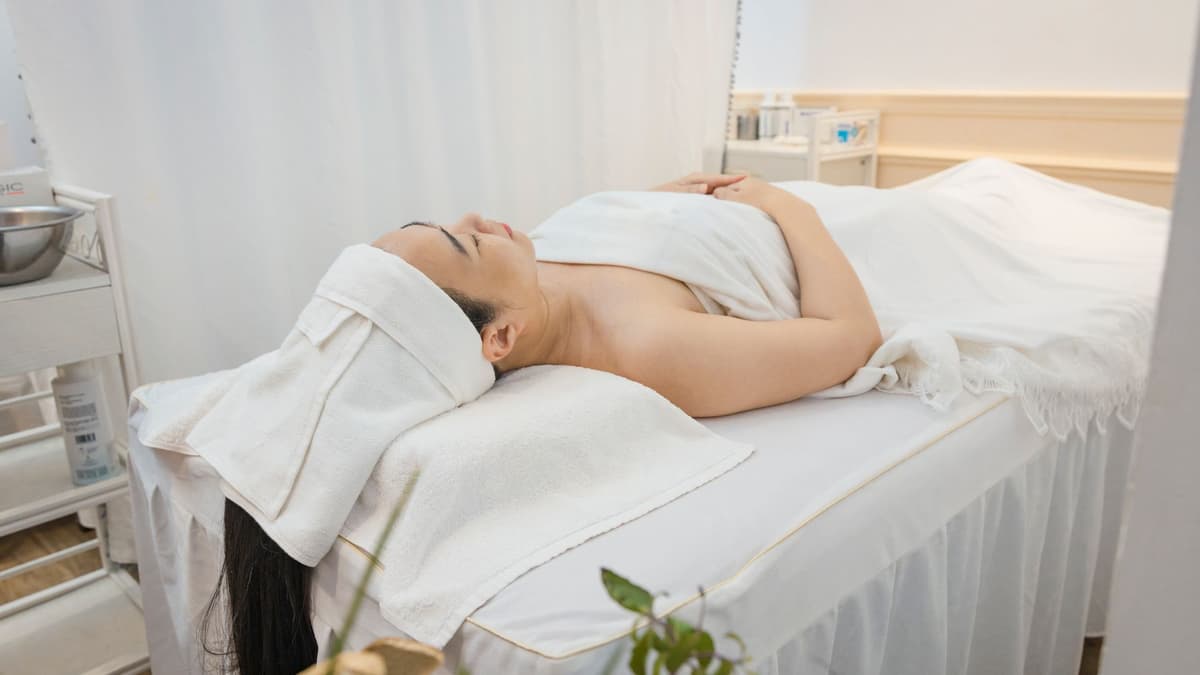
The simplest way to handle a female therapist spa booking request is to ask every guest about their preference at the moment of booking, record it in their client file, and roster enough therapists to honour it at busy times. When it's built into the booking flow, the question feels like care rather than an awkward conversation. When it's left to chance, it becomes a complaint at the treatment-room door.
Any spa manager in Dubai, Riyadh or Doha has seen it go wrong. A guest arrives for her 7 pm massage, is greeted by a male therapist, and quietly asks to cancel. She isn't being difficult. Nobody asked her, and now she is embarrassed, the therapist is embarrassed, and the room sits empty for an hour.
Why therapist gender matters in Gulf spas
In much of the Gulf, a therapist's gender is not a small detail. For many guests it touches privacy, religious practice and personal comfort, and these overlap. A Saudi guest may prefer a female therapist for religious reasons. A European visitor may simply feel more relaxed with one. A male guest may prefer a male therapist for a deep-tissue massage. All of these are legitimate, and none should need explaining.
Tourism makes this more varied, not less. Dubai welcomed 19.59 million international overnight visitors in 2025, according to Dubai's Department of Economy and Tourism, so a hotel or city spa might see guests from a dozen countries in a week, each with different expectations. A preference question that works for everyone is better than guessing based on someone's name or nationality.
How to ask about therapist preference at booking
The goal is to ask once, early, and neutrally.
On your online booking site
Add a simple optional choice to each massage and body treatment: "Therapist preference: Female / Male / No preference". Keep the wording plain. Don't add explanations or assumptions, and don't hide it in a notes field that nobody reads. If your spa only has female therapists for a service, say so in the service description instead of offering a choice you can't keep.
On the phone and WhatsApp
Give receptionists one sentence to use with every guest: "Do you have a preference for a female or male therapist?" When everyone gets the same question, nobody feels singled out. The awkwardness comes from asking some guests and not others.
For walk-ins
Ask before assigning a room, not after. It takes five seconds at reception and avoids the scene at the door.
Licensing and local rules on cross-gender treatments
Before you offer cross-gender treatments at all, check your trade licence and local regulations. Rules on who can treat whom, and in which kind of premises, vary between countries, emirates and even types of licence. Some spas are licensed for one gender of guest only, and some activities need extra approvals. Confirm what your licence allows with your municipality, economic department or health authority, or a lawyer, and train your team on it.
If the rules allow cross-gender treatments, guest preference still decides. If the rules don't allow them, the booking system should not offer them, so receptionists aren't left to remember the rule.

How to roster enough female therapists for peak times
A preference policy is only as good as your rota. Most Gulf spas see demand bunch up in the evenings and at weekends. If most of your female therapists work mornings, you'll be refusing requests at 8 pm.
A practical approach:
- Pull three months of bookings and note the preference chosen for each.
- Map preference against time of day and day of week.
- Schedule female therapists to match the busiest windows first.
- Keep at least one therapist of each gender on every shift if your licence allows mixed treatments.
- Review monthly, and more often around holidays and tourist peaks.
This is also worth revisiting before summer. Our guide to the salon summer slow season in the Gulf covers how to plan rotas and leave when demand drops, and the same thinking applies to spas.
What to do if the preferred therapist is unavailable
Sometimes the slot simply isn't there. Handle it in this order:
- Offer another time with a therapist who matches the preference.
- Offer another branch if you run more than one location.
- Offer a different treatment that a matching therapist can do in that slot.
- Offer a waitlist and message the guest if a matching slot opens.
- Only then, ask if the guest is open to another therapist, and accept "no" without pressure.
Never switch the therapist on the day without telling the guest first. If a therapist calls in sick, message the guest by WhatsApp before she leaves home and give her the choice.
Record preferences in the client file
Once a guest has told you, she shouldn't have to tell you again. Save the preference in her client profile so it shows up every time she books, whether online, by phone or at reception. Note other comfort details in the same place: pressure, areas to avoid, whether she prefers to keep music low.
Treat these notes with care. They are personal, sometimes connected to religion or health, and should be visible only to the staff who need them. If you use client data for marketing, keep preference notes out of it. Confirm your approach with SDAIA in Saudi Arabia, or with a lawyer familiar with the UAE's data-protection law (Federal Decree-Law No. 45 of 2021).
Staff dignity matters too
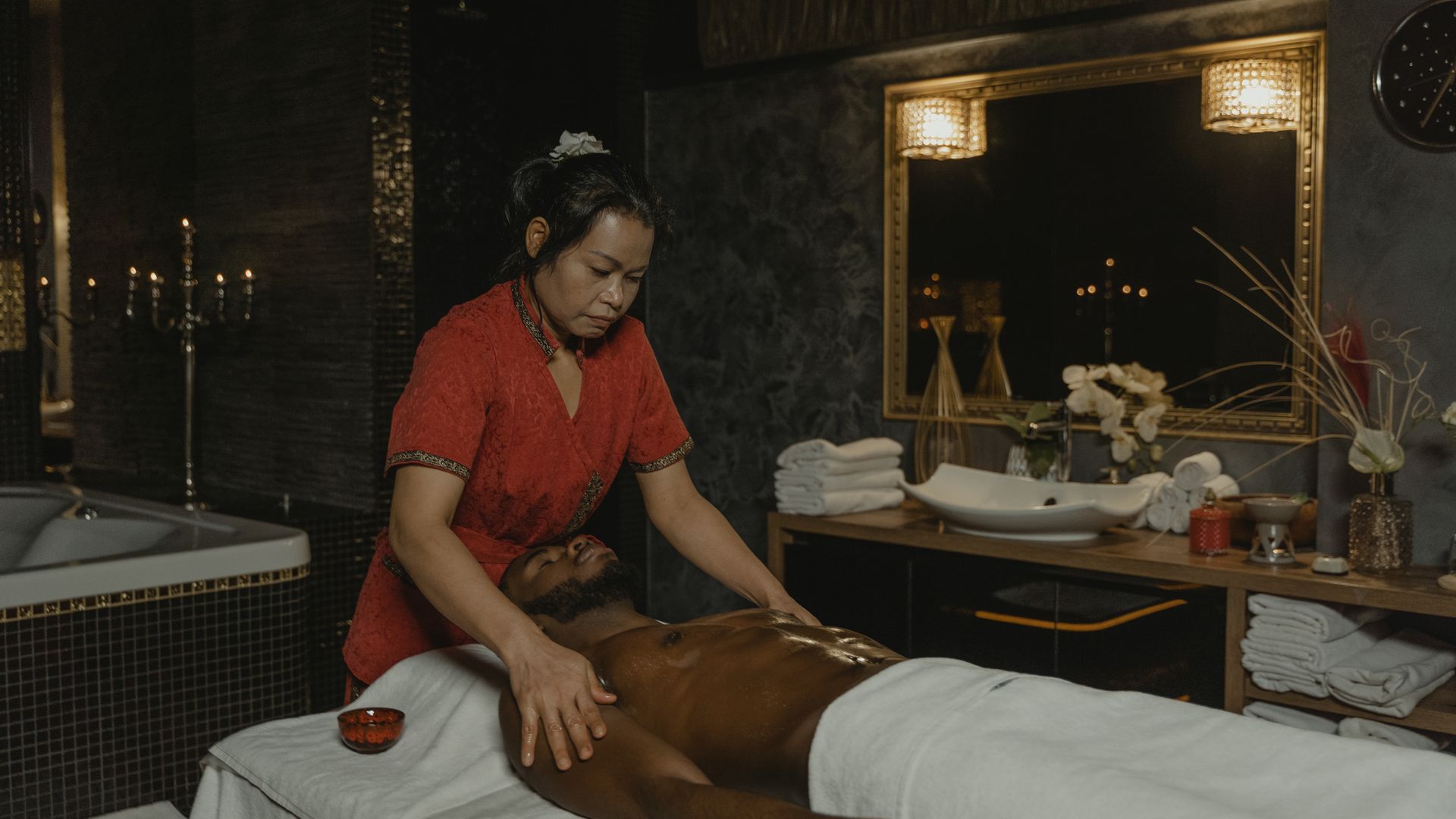
Preference policies can go wrong for the team. A male therapist who is refused several times an evening can feel rejected, and a female therapist who is booked back to back because of demand can burn out.
- Explain the policy to staff as guest comfort, never as a judgement about anyone's skill.
- Don't let receptionists say "the male therapist is all we have" in a tone that sounds like an apology for the person.
- Balance workloads and commissions so therapists aren't penalised for demand they don't control.
- Never let guests make comments about a therapist that you wouldn't accept about any other staff member.
Booking rules: a quick reference table
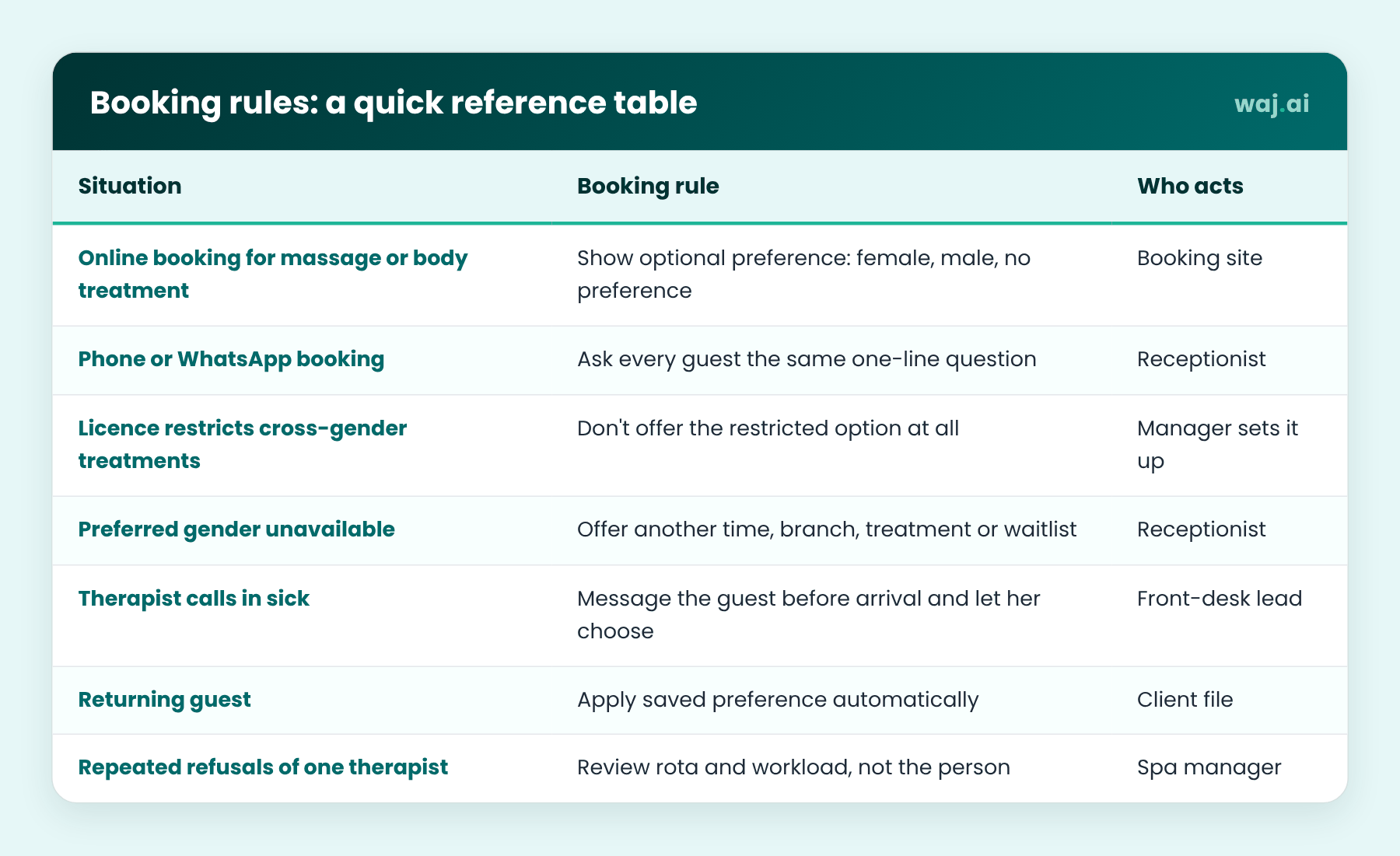
- Online booking for massage or body treatment
Booking rule: Show optional preference: female, male, no preference
Who acts: Booking site - Phone or WhatsApp booking
Booking rule: Ask every guest the same one-line question
Who acts: Receptionist - Licence restricts cross-gender treatments
Booking rule: Don't offer the restricted option at all
Who acts: Manager sets it up - Preferred gender unavailable
Booking rule: Offer another time, branch, treatment or waitlist
Who acts: Receptionist - Therapist calls in sick
Booking rule: Message the guest before arrival and let her choose
Who acts: Front-desk lead - Returning guest
Booking rule: Apply saved preference automatically
Who acts: Client file - Repeated refusals of one therapist
Booking rule: Review rota and workload, not the person
Who acts: Spa manager
Making it easy with your system
When preferences live in the booking flow and the client file, the receptionist doesn't have to rely on memory. In WAJ, the online booking site, staff calendar and client CRM with notes and history work together, so the team can see a guest's preference when she books, and WhatsApp messaging helps when a change is needed. If you're building loyalty around regular guests, preferences matter even more, as we discussed in our piece on the spa membership model in the Gulf. Spas with separate ladies' sections can also borrow ideas from our ladies salon management guide.
If you'd like to see how this works in practice, book a free WAJ demo: waj.ai/demo
FAQ
Is it awkward to ask guests about therapist gender?
Only when some guests are asked and others aren't. Ask everyone the same neutral question, or offer it as an option online, and it feels like good service.
Can spas in the Gulf offer cross-gender massage?
It depends on your licence and local regulations, which vary between countries and emirates. Check with your licensing authority or a lawyer before offering it.
What if a guest wants a female therapist and none is free?
Offer another time, another branch, a different treatment or a waitlist. Ask about another therapist only after that, and accept a no politely.
Should therapist preference be saved in the client profile?
Yes. Saving it means the guest doesn't have to repeat herself. Limit who can see it and keep it out of marketing.
How many female therapists does a Gulf spa need?
There's no fixed number. Look at your bookings by preference and time of day, then roster to cover the busiest evening and weekend windows first.
Follow WAJ on Google
Add WAJ as a preferred source to see more of our articles in your Google Search results, marked with a "preferred" badge.