
Spa Ambience That Clients Remember: Music, Scent, Lighting and Temperature
WAJ Team
June 11, 2026

Good spa ambience is consistent, quiet and planned zone by zone. Write a short sensory brief for reception, the relaxation lounge and the treatment rooms that sets the music, scent, light and temperature for each. Then train your team to keep it the same every day, because clients remember how the place made them feel long after they forget which oil you used.
Most spas get one or two senses right and leave the rest to chance. Here is all of it, with a checklist for your spa manager.
Why does spa ambience matter so much?
A client can get a decent massage in many places. What brings her back to yours is the whole visit: the cool air when she walks in from a scorching car park, the low music, the smell she starts to associate with you, the therapist who speaks softly and never rushes.
Ambience also protects your prices. A calm, cared-for spa can charge more than one with the same menu and a television in reception, and a competitor cannot copy it from your price list.
What should a sensory brief cover for each zone?
Treat your spa as three zones. Reception welcomes, the lounge slows people down, and the treatment room is where the client switches off.
Reception
Reception can be a little brighter and livelier than the rest, because bookings and payments happen here. Keep it cool and uncluttered, and make sure the first thing a client hears is a greeting, not a ringing phone.
In many Gulf spas a light touch of bakhoor or oud at reception feels like hospitality. If you use it, keep it subtle, keep smoke away from the treatment corridor, and ventilate well.
Relaxation lounge
This is where many spas lose the mood. Bright downlights, staff carrying laundry through and a loud phone call undo the treatment. Dim the lights, soften the music, offer water or tea, and ask politely for phones on silent. In a ladies-only or mixed facility, the layout must give women the privacy they expect. Our guide to ladies salon management in the Gulf covers how to plan separate areas.
Treatment rooms
The quietest, dimmest space. The therapist should control light and music without leaving the client, and every room should feel the same so nobody feels downgraded to Room 3.
How loud should spa music be, and what should you play?
Quiet enough that two people can talk softly without raising their voices. If the therapist leans in to hear the client, it is too loud. A few rules:
- No vocals in treatment rooms. Lyrics pull attention.
- No adverts. A free streaming tier can play one mid-massage. Use a paid or business service.
- Long playlists, so regulars do not hear the same track every visit.
- Match tempo to zone. Slightly lighter at reception, slower in the lounge, slowest in treatment rooms.
- Respect the calendar. Many Gulf spas lower or change music in Ramadan or at prayer times. Decide in advance.
On licensing: playing music in a business is usually a public performance, and the rules on licences differ between countries and providers. Check with your music service and the relevant authority in your country before you rely on a personal account. Ask a lawyer if you are unsure.
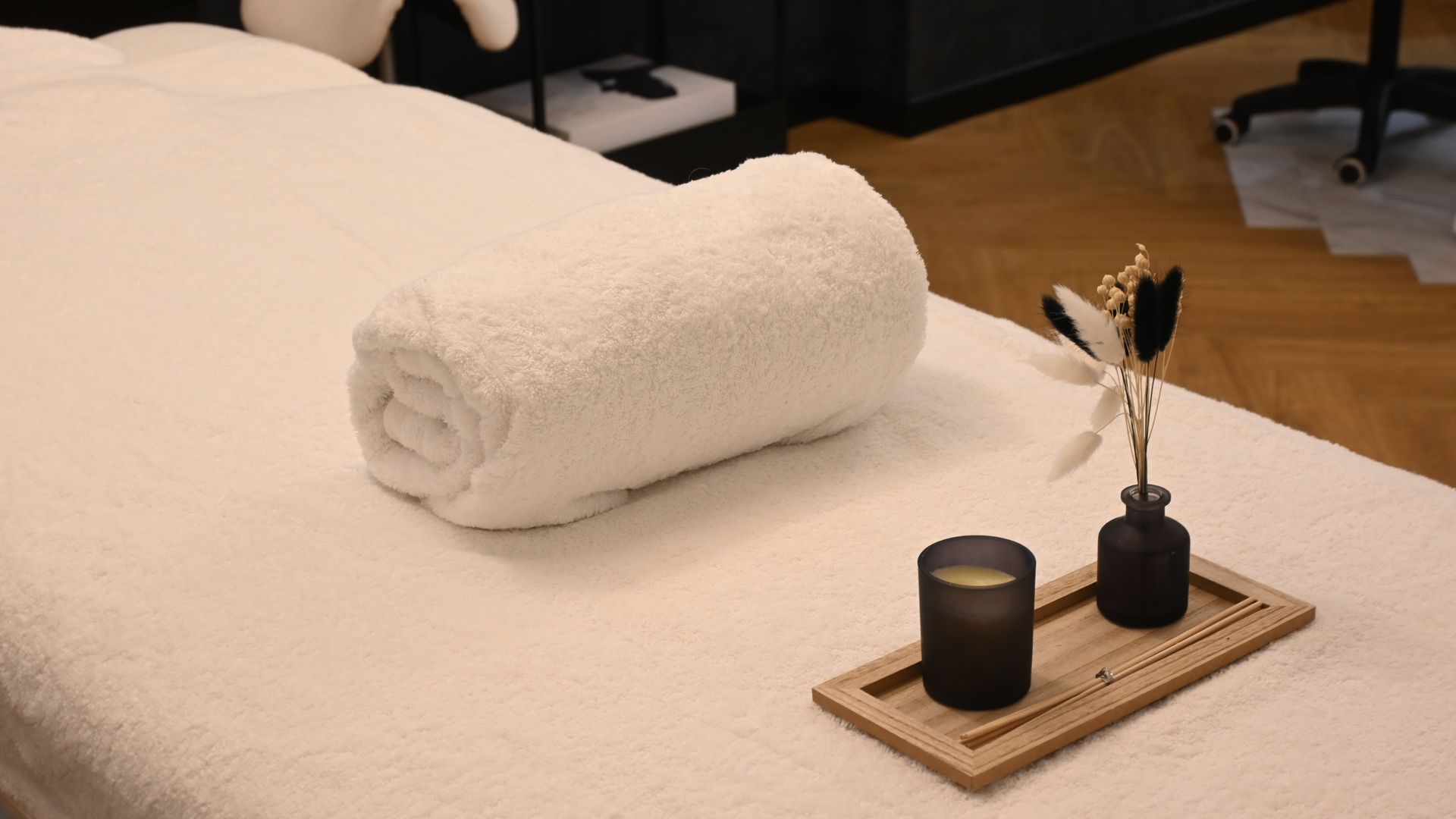
How do you choose a spa scent without overwhelming clients?
Scent is the sense clients remember most, and the easiest to get wrong.
- Keep it subtle. Noticed on arrival, forgotten after a minute. If staff smell it from the car park, it is too much.
- Pick one signature for reception and common areas, and keep it. Changing monthly blurs the memory you are building.
- Be allergy-aware. Strong fragrance gives some clients headaches or breathing trouble. Skip heavy diffusers in treatment rooms and offer a fragrance-free option.
- Do not layer. A room fragrance on top of lavender oil and a citrus scrub is a mess.
- Record dislikes on the client file so the next therapist knows.
What lighting levels work best in a spa?
Think in layers rather than a single brightness.
- Reception: warm, even light, bright enough to read a menu and a card machine screen.
- Corridors: low, warm light near the floor so clients in robes see their step without glare.
- Lounge: dimmed, warm, with lamps or indirect lighting instead of downlights.
- Treatment rooms: dimmable, warm, never shining into the eyes of a client lying face up, plus a brighter task light for setup and cleaning.
Warm white beats cool white almost everywhere except back-of-house.
What temperature should a spa be in the Gulf summer?
This is the hardest balance in our region. Clients arrive hot and want strong air conditioning, then lie still and partly undressed and get cold within ten minutes. The answer is different temperatures per zone:
- Reception and lounge: cool, for clients arriving from the heat.
- Treatment rooms: noticeably warmer than the lounge, with the therapist controlling the setting inside each room.
- Bed warmers or heated blankets for clients who feel the cold, especially during wraps and long massages.
- Avoid air blowing directly onto the bed. Check vent positions before you install treatment beds.
- Ask the client at the start whether she is comfortable, and check again halfway.
July and August, when bookings may be lighter, are a good time to service units and fix the room that always runs cold. Our post on the Gulf summer slow season has more ideas for using those weeks well.
How do you keep a spa quiet?
Sound problems usually come from the building, not the music.
- Fit door seals and solid-core doors on treatment rooms.
- Keep laundry, ice makers and staff rooms away from treatment corridors, or insulate them.
- Use rugs and acoustic panels in the lounge to absorb echo.
- Put felt pads on chair legs and soft-close hinges on cupboards.
- Move phone calls and payments to reception, away from the lounge.
In a new fit-out, spend on insulation before decoration.
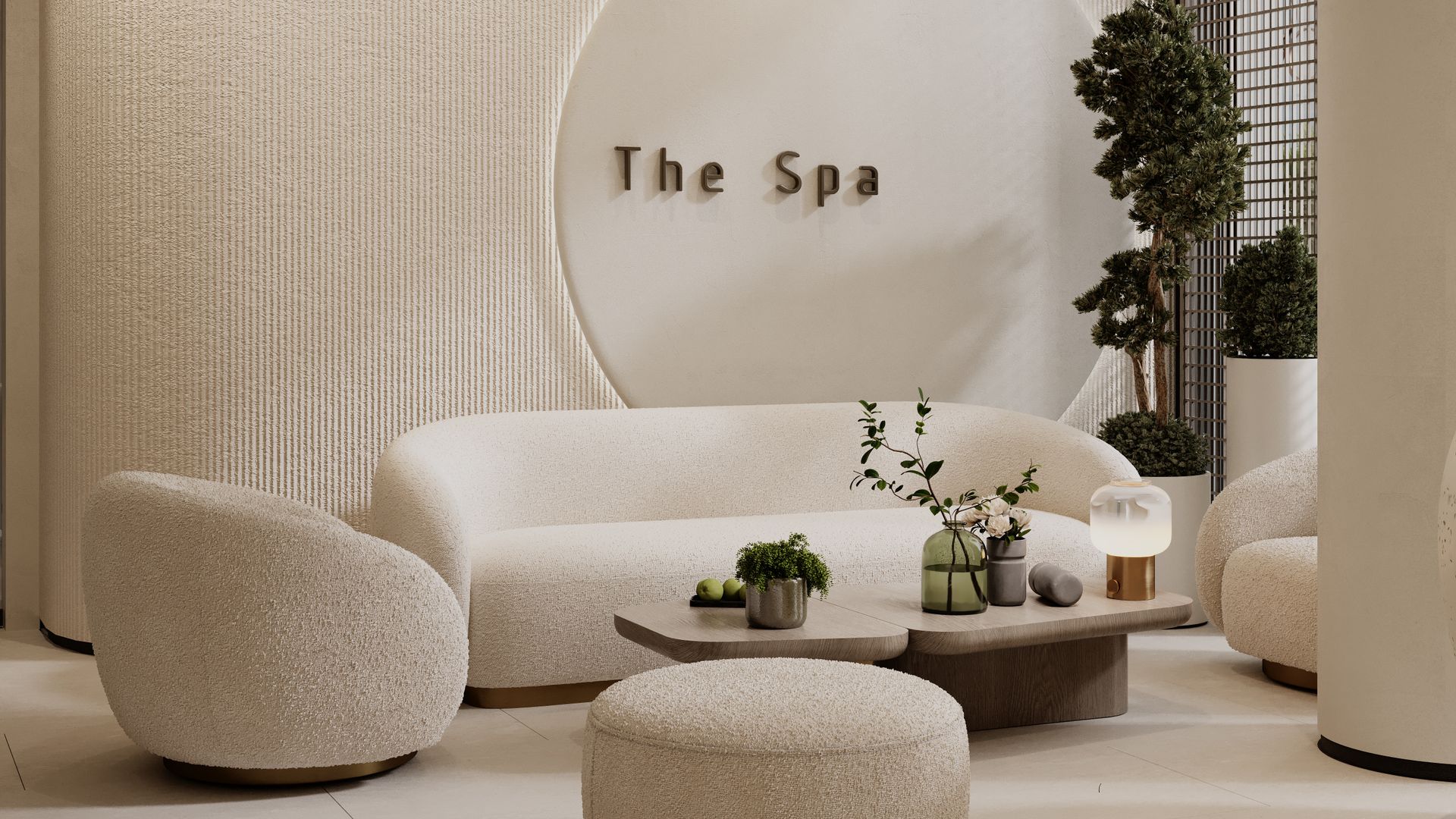
Why do staff voice and pace matter?
Ambience is not only equipment. Your team carries it.
Train staff to lower their voices past reception, walk rather than hurry, and keep personal chat out of the corridors. Greet clients by name, explain what happens next, and never rush anyone out because the next booking is waiting. That last one is a scheduling problem as much as a behaviour one, so leave buffer time between treatments.
Spa ambience checklist
Hand this to your spa manager and check it at opening every day.
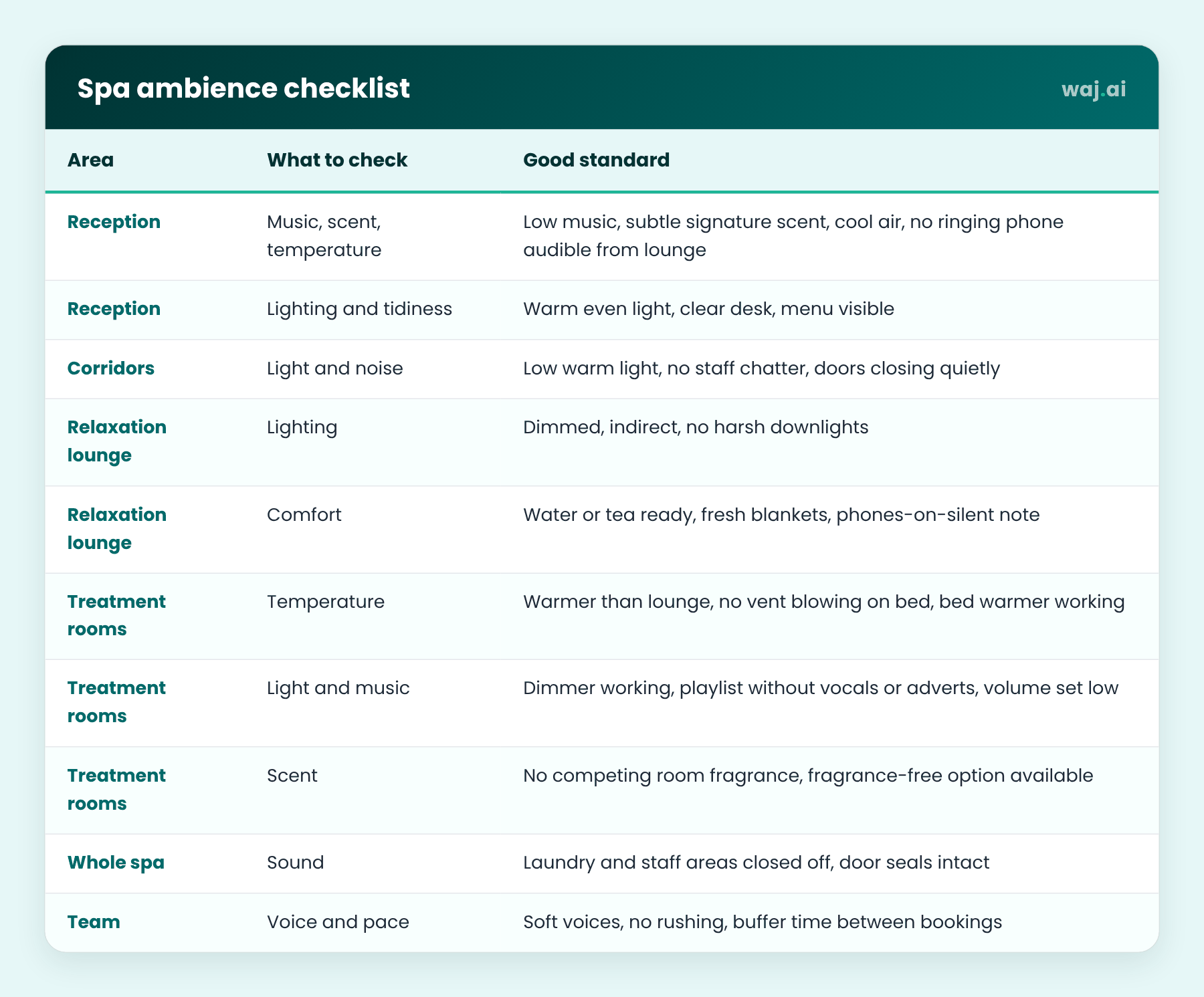
- Reception
What to check: Music, scent, temperature
Good standard: Low music, subtle signature scent, cool air, no ringing phone audible from lounge - Reception
What to check: Lighting and tidiness
Good standard: Warm even light, clear desk, menu visible - Corridors
What to check: Light and noise
Good standard: Low warm light, no staff chatter, doors closing quietly - Relaxation lounge
What to check: Lighting
Good standard: Dimmed, indirect, no harsh downlights - Relaxation lounge
What to check: Comfort
Good standard: Water or tea ready, fresh blankets, phones-on-silent note - Treatment rooms
What to check: Temperature
Good standard: Warmer than lounge, no vent blowing on bed, bed warmer working - Treatment rooms
What to check: Light and music
Good standard: Dimmer working, playlist without vocals or adverts, volume set low - Treatment rooms
What to check: Scent
Good standard: No competing room fragrance, fragrance-free option available - Whole spa
What to check: Sound
Good standard: Laundry and staff areas closed off, door seals intact - Team
What to check: Voice and pace
Good standard: Soft voices, no rushing, buffer time between bookings
Where WAJ fits
Software will not dim your lights, but it protects the calm. With bookings, reminders and payments in WAJ, reception spends less time on the phone and more time greeting people. The staff calendar shows the whole day, so gaps between treatments are easy to keep. Client preferences, such as "dislikes strong scents" or "feels the cold", live in the client's CRM record where every therapist can see them. If you also run memberships, our guide to the spa membership model in the Gulf explains why consistent experience matters even more for members.
Book a free WAJ demo to see how it fits your spa: waj.ai/demo.
FAQ
What music is best for a spa?
Long instrumental playlists without vocals or adverts, played quietly, slower in treatment rooms than at reception.
Do I need a licence to play music in my spa?
Often yes, because playing music in a business is usually treated as a public performance. The rules vary by country and provider, so check with your music service, the relevant authority or a lawyer.
Why do clients feel cold during spa treatments in summer?
They arrive hot, then lie still and partly undressed under strong air conditioning. Keep treatment rooms warmer than the lounge, avoid vents over the bed and offer bed warmers.
What is the quickest way to improve spa ambience?
Put the treatment-room lights on dimmers, switch to an ad-free instrumental playlist at low volume, and train staff to speak softly past reception. Those three changes are cheap and clients notice them immediately.
Follow WAJ on Google
Add WAJ as a preferred source to see more of our articles in your Google Search results, marked with a "preferred" badge.