Salon Staff Uniform and Grooming Standards That Match Your Brand
WAJ Team
May 19, 2026
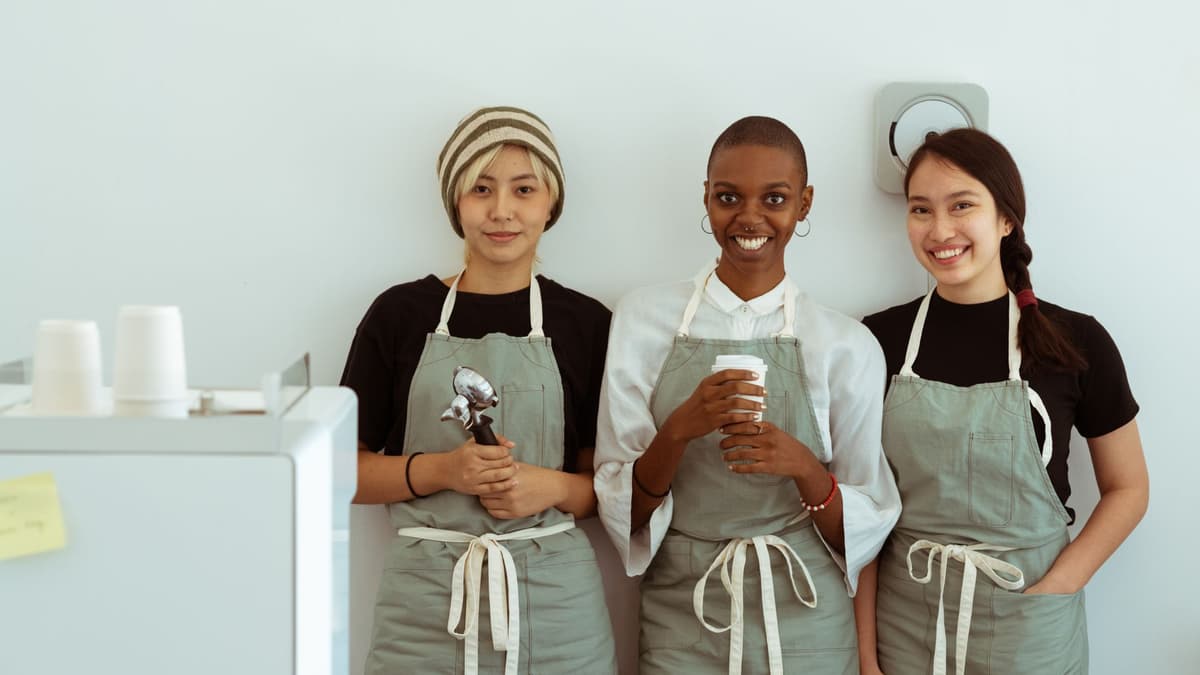
A good salon staff uniform is comfortable in 40-degree heat, survives bleach and colour splashes, offers modest options including a hijab-friendly version, and looks like your brand from the doorway. Pair it with a short written grooming standard, a clear rule on who pays for how many sets, and a respectful way to correct people, and the team will look consistent without you policing them every morning.
Why a salon staff uniform matters more than owners think
Clients judge hygiene by what they can see. A crisp tunic and clean nails tell a client in Abu Dhabi that the tools are probably clean too. A stained apron says the opposite, whatever your sterilisation routine looks like behind the scenes.
A uniform also lets a walk-in spot staff in two seconds, ends the quiet competition over outfits, looks good in the background of every client selfie, and saves your team's own clothes from lightener and oil.
How to choose a uniform for Gulf heat and salon chemicals
Comfort first, because they stand all day
Your team moves between an air-conditioned floor and a hot back area or car park. Look for breathable fabric with some stretch, a cut that allows full arm movement, and sleeves that don't drag through a bowl of colour. Ask two or three staff to wear a sample for a full Thursday before you order thirty pieces.
Fabric that resists chemicals and stains
For colour and treatment staff, ask suppliers specifically for fabric that resists bleach spots and repels liquid. Black and charcoal hide colour splashes. White and pastel look fresh in spas and clinics but show every mark, so budget for more sets if you choose them. A separate waterproof apron or colour cape over the tunic is the cheapest protection you can buy.
Modest and hijab-friendly options
A uniform that only works for one body type or one dress choice will cause problems. Offer:
- A long-sleeve and a short-sleeve version of the same tunic.
- Trousers and a longer tunic or modest dress option.
- A hijab in your brand colour, in a light breathable fabric, that matches the uniform. Let staff choose a plain style they're comfortable with, and don't force a single tying method.
- Loose fits in the size range, not just fitted cuts.
If you run a ladies' salon, your team may wear the uniform with or without a hijab inside and cover on the way out. Plan for both. Our guide to ladies' salon management in the Gulf covers privacy and staffing details that affect this choice.
Barbershops and men's grooming
Barbers often prefer a branded polo or shirt with a short apron or barber jacket. Creators Barbers, featured in our Creators Barbers spotlight, shows how much a consistent look adds to a men's shop's identity.
Name badges: small detail, big trust
Clients want to rebook the same person, so they need her name. A badge with logo and first name in Arabic and English is enough.
In Kuwait, visible staff ID badges are one of the requirements in the Ministry of Health's salon and beauty Health Requirements Guide, issued in August 2025 under Ministerial Resolution No. 194/2025. Rules differ elsewhere in the Gulf, so check your local health authority or municipality.
Magnetic badges are kinder to fabric than pins. Order spares; they disappear.
Personal grooming standards for salon staff
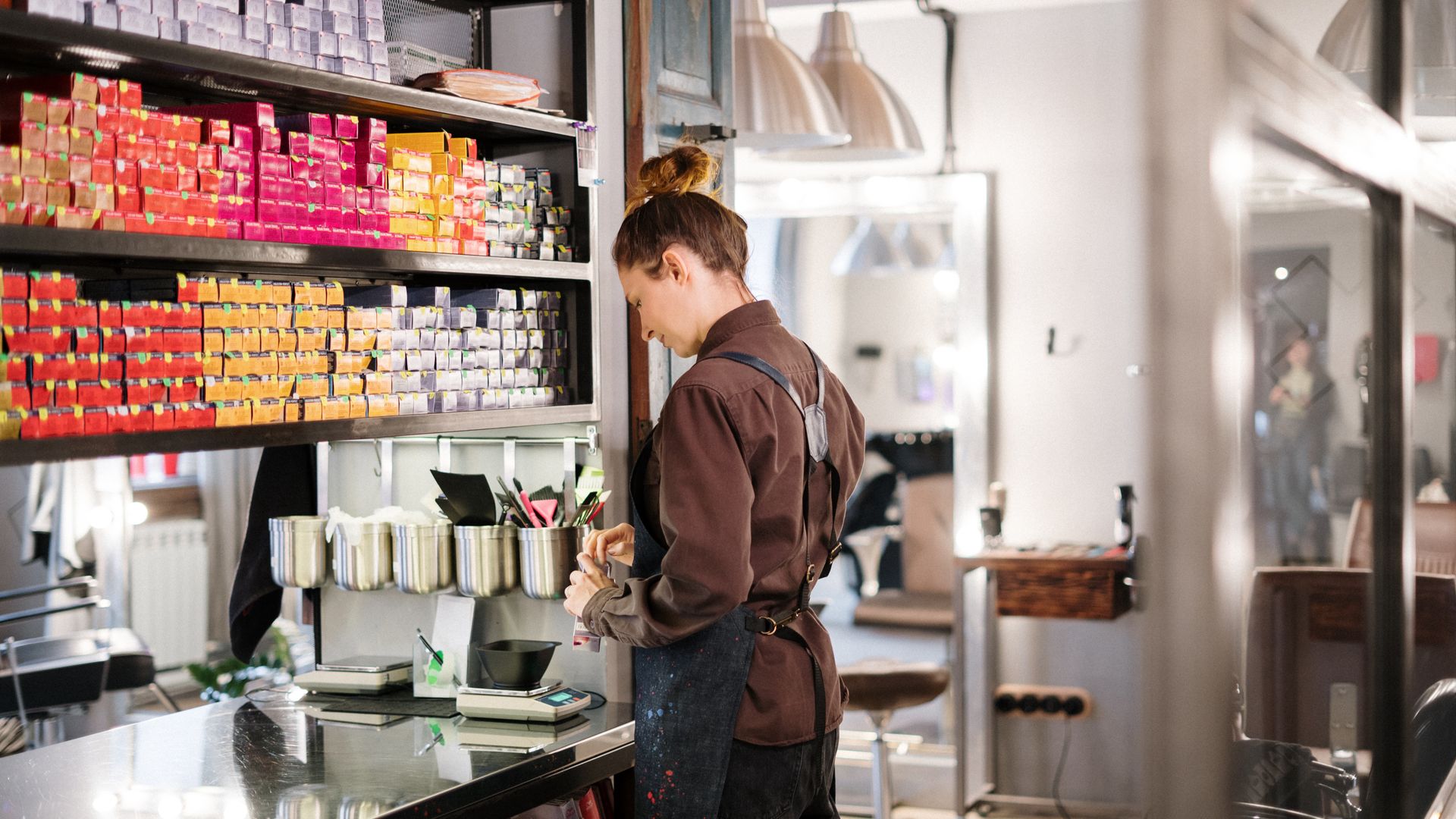
Grooming standards should be short, specific and the same for everyone in a role. Vague rules ("look professional") create arguments. Specific ones don't.
- Hair: neat and tied back for anyone working close to a client's face or with treatments.
- Nails: clean and filed. Nail technicians are a walking advert, so their own nails should be done. Treatment and clinic staff may need short nails for hygiene.
- Fragrance: light or none. Treatment clients are close to you for an hour.
- Breath and body: mints at the station, no strong food smells during shifts, and deodorant in the staff room.
- Makeup: for a beauty brand, a polished look sells the services. Don't demand it of everyone in every role, and never set rules that conflict with religious or personal choices.
- Jewellery: minimal on the hands for anyone washing hair or doing treatments.
- Facial hair for barbers: groomed. Your barber's beard is the menu.
Footwear: safety comes first
Floors in a salon are wet, oily and covered in cut hair. Require closed-toe, non-slip shoes with a low heel. A dropped blade on a bare foot is a real injury. You can let people choose their own brand within a colour rule (black or white, for example), which helps comfort.
Who pays for salon uniforms, and how many sets?
Whether the employer must provide uniforms depends on local labour rules and the employment contract, so check yours. In practice, most good salons provide them, and it's the right call. Making staff buy a uniform you chose feels like a pay cut.
A workable baseline:
- Three tunics or tops per person for a five or six-day week, so one is always being washed.
- Two aprons or capes for colour and treatment staff.
- Three matching hijabs for staff who want them.
- Replacement once a year, or sooner for stained or damaged items.
- A spare set in two common sizes in the back room for spills and new starters.
Log what you issue: name, items, sizes, date.
Laundry: salon washes or staff wash at home?
Both work if you write the rule down.
- Staff wash at home: cheaper for you, but standards vary.
- Salon or contracted laundry: more control and better hygiene, especially for spas and clinics with towels already going out.
Many owners do a mix: towels and capes go to the laundry; tunics go home.
How to enforce grooming standards with respect
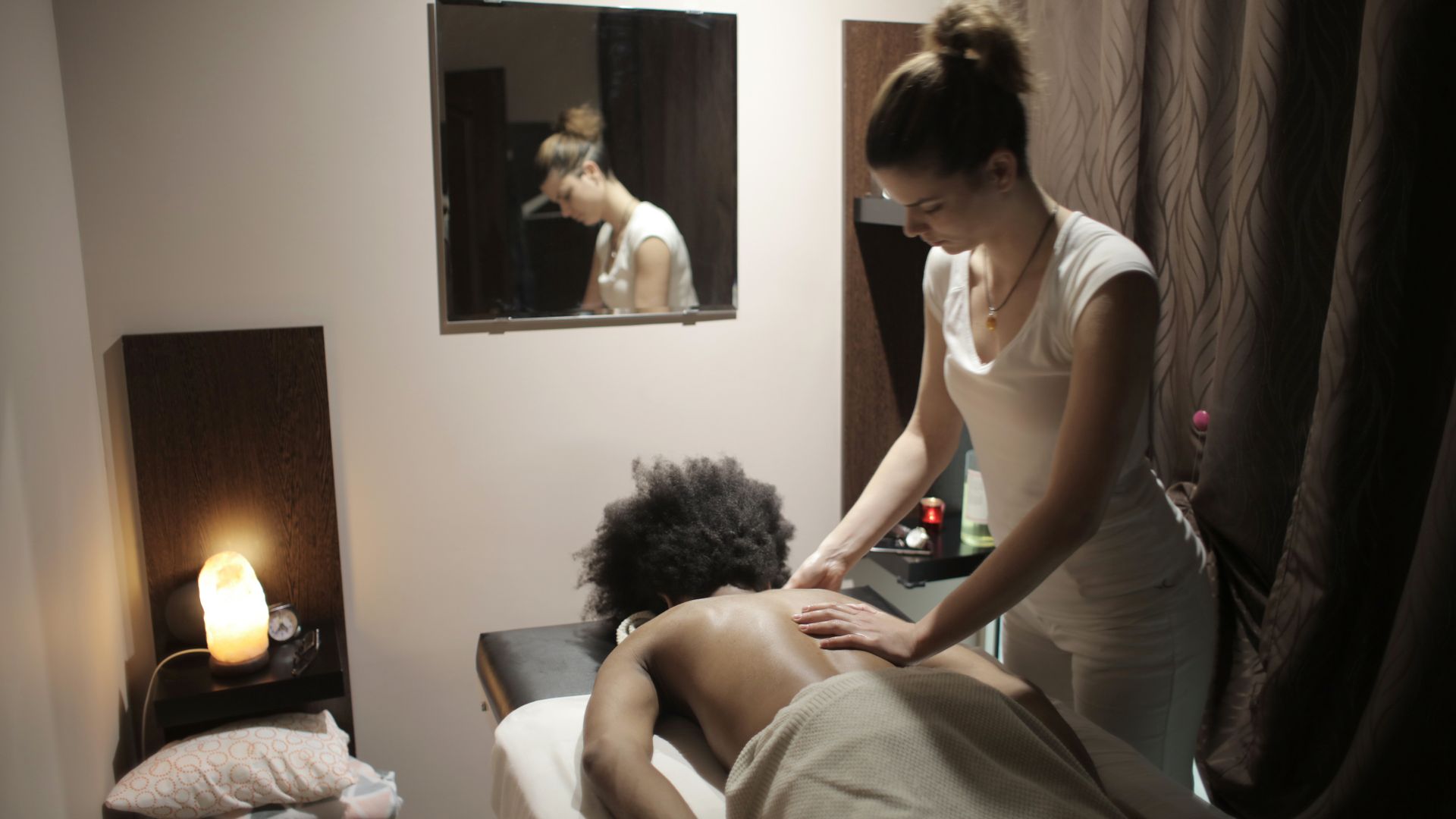
The fastest way to lose a good stylist is to correct her appearance in front of a client. Do it privately, briefly and kindly.
- Put the standard in writing and share it at hiring, in Arabic and English.
- Show, don't only tell. A one-page sheet with photos of the right look removes guesswork.
- Check at the start of the shift, not mid-service.
- Talk privately. "Your tunic has a colour mark; there's a spare in the back." Done.
- Treat repeated issues as a performance conversation, not public shaming.
- Apply the rule to everyone, including the senior stylist who brings in the most revenue. Inconsistency is what makes staff resentful.
Personal or religious choices are not grooming failures. Make sure your rules leave room for them.
Salon uniform and grooming standards checklist
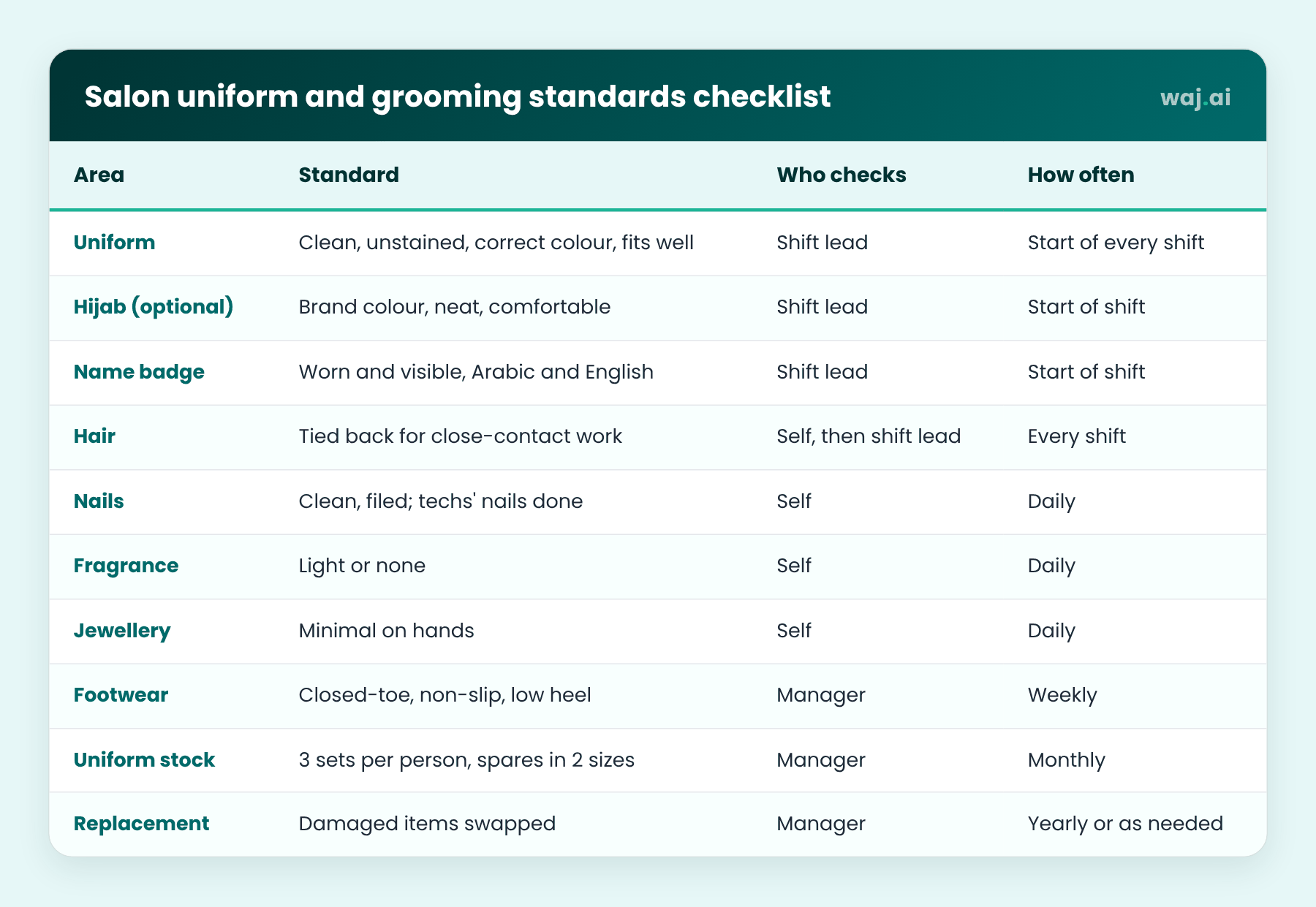
- Uniform
Standard: Clean, unstained, correct colour, fits well
Who checks: Shift lead
How often: Start of every shift - Hijab (optional)
Standard: Brand colour, neat, comfortable
Who checks: Shift lead
How often: Start of shift - Name badge
Standard: Worn and visible, Arabic and English
Who checks: Shift lead
How often: Start of shift - Hair
Standard: Tied back for close-contact work
Who checks: Self, then shift lead
How often: Every shift - Nails
Standard: Clean, filed; techs' nails done
Who checks: Self
How often: Daily - Fragrance
Standard: Light or none
Who checks: Self
How often: Daily - Jewellery
Standard: Minimal on hands
Who checks: Self
How often: Daily - Footwear
Standard: Closed-toe, non-slip, low heel
Who checks: Manager
How often: Weekly - Uniform stock
Standard: 3 sets per person, spares in 2 sizes
Who checks: Manager
How often: Monthly - Replacement
Standard: Damaged items swapped
Who checks: Manager
How often: Yearly or as needed
Where software helps
Uniforms are a people problem, not a software one. But a few admin pieces get easier with a system. In WAJ, the staff calendar shows who is working which shifts, so a shift lead knows exactly who to check at opening, and you can see a new hire's first day in time to order her sets. If you run more than one branch, multi-branch support lets you see every location's team in one place, which makes a shared standard easier to hold. For clinics, the same approach sits next to the routines in our clinic management and automation guide.
With Eid al-Adha expected around 27 May, now is a good week to check every set before the rush. Want to see how WAJ organises your team? Book a free WAJ demo: waj.ai/demo
FAQ
What is the best fabric for a salon staff uniform in the Gulf?
Breathable, slightly stretchy fabric that resists stains and bleach spots. Test samples over a full shift first.
Should salons provide hijabs as part of the uniform?
A matching hijab in your brand colour is a respectful option. Keep it optional.
How many uniform sets should each staff member get?
Three tops per person, two aprons for colour staff and a few spares in common sizes.
Can I ask staff to wear makeup at work?
For beauty roles, a polished look supports the brand, but rules should be reasonable, consistent and respectful of personal and religious choices. Confirm local labour rules if unsure.
Are name badges required in salons?
In Kuwait, the Ministry of Health's 2025 guide requires visible staff ID badges. Elsewhere, check with your local health authority or municipality; either way, they help clients rebook the right person.
Follow WAJ on Google
Add WAJ as a preferred source to see more of our articles in your Google Search results, marked with a "preferred" badge.