
How to Run a Salon Mystery Shopper Programme Your Team Will Respect
WAJ Team
May 21, 2026
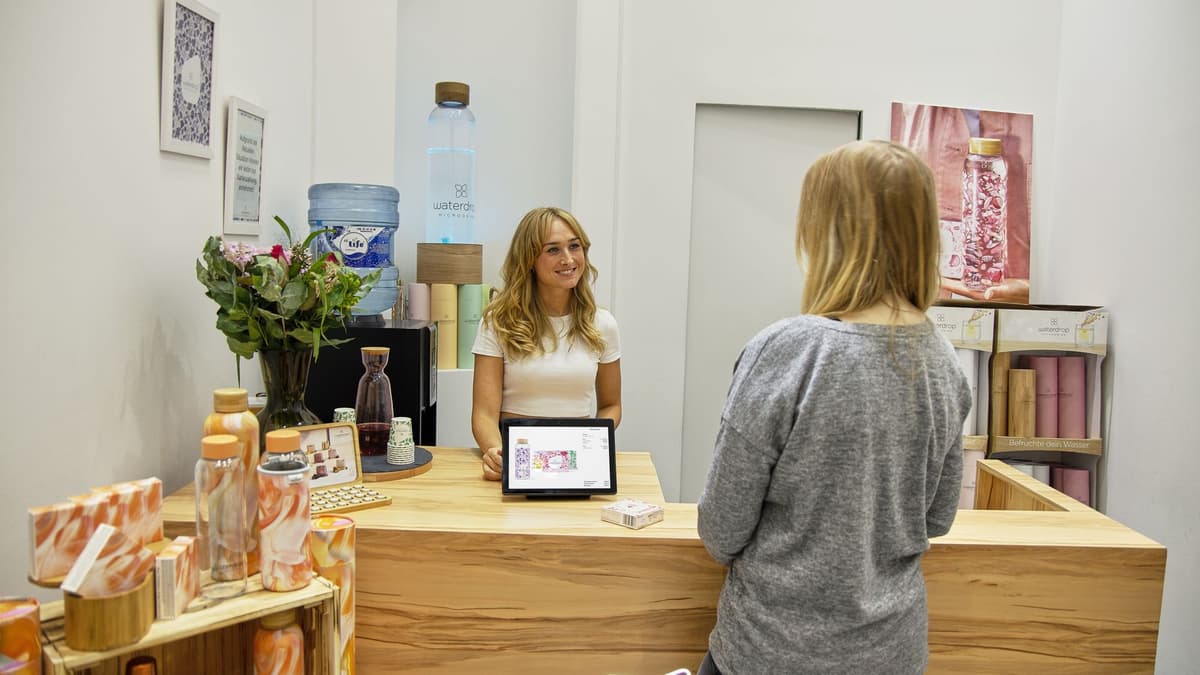
A salon mystery shopper programme sends a paying client you trust, unannounced, through the full journey (the WhatsApp enquiry, the greeting, the consultation, the service, the rebooking ask and the goodbye) and scores each step on a fixed sheet. Done well, it shows you what happens when you're not in the room, and it becomes a coaching tool for your team rather than a trap.
When you walk in, reception is warm and the coffee arrives. When a friend books on a Tuesday evening while you're at the other branch, nobody looks up from their phone for two minutes. Both visits happened. A mystery shopper tells you which one is normal.
What should a salon mystery shopper measure?
Measure the whole journey, not only the haircut. Most lost clients don't leave because of the service. They leave because nobody replied, nobody asked when they'd like to come back, or the goodbye felt rushed.
1. Phone and WhatsApp response
The visit starts before the visit. Ask the shopper to enquire by WhatsApp and, separately, to call. Note how long a reply takes, whether the answer is clear (price, duration, available times), and whether someone offers to book. If you've followed our guide to salon software and WhatsApp in MENA, this is where you see whether the process holds up on a busy evening.
2. Greeting
Was the shopper greeted within a few seconds, by name if booked? Offered water or coffee? Told how long the wait would be?
3. Consultation
This is the step most often skipped. Did the stylist or therapist ask about hair history, skin concerns, allergies or what the client disliked last time? Did they confirm the plan and price before starting?
4. Service quality
Was the result what was agreed? Was the timing right? Were tools and stations clean? Did the therapist check pressure or temperature? A shopper is not a technical examiner, so keep this simple.
5. Rebooking ask
Did anyone suggest a next date ("Your colour will need a touch-up in about six weeks; shall I hold a Thursday for you?")? This one question drives more repeat revenue than any discount.
6. Retail recommendation
Was a product suggested because it suits what the client needs, explained briefly, without pressure? Or was nothing mentioned at all?
7. Cleanliness
Reception, stations, floors, the washroom, towels and the waiting area. Shoppers notice what regulars stop seeing.
8. Payment and goodbye
Was the bill clear and correct? Was the client thanked, walked to the door or at least looked in the eye? A cold goodbye undoes an hour of good work.
How to choose mystery shoppers for a salon
You have three realistic options:
- Friends of friends. Cheap and easy, but they must be people your team doesn't know, and they need a briefing so their feedback isn't just "it was lovely".
- Loyal clients you invite. Some regulars enjoy it and give honest, detailed notes. Don't use the same person twice in a row; staff will recognise her.
- A professional mystery shopping agency. More consistent and better for multi-branch businesses, but it costs more. Ask for a quote.
Whoever you choose, brief them properly. Give them the scoring sheet in advance, tell them which service to book, and ask them to write notes within an hour of leaving while the details are fresh. Reimburse the service so they behave like a real client.
Match the shopper to your clientele. A ladies' salon in Riyadh needs a shopper who would normally book there. A barbershop in Dubai Marina needs a man who actually gets his beard done.
Should you tell staff about the mystery shopper programme?
Yes. Tell them it exists. Don't tell them when.
Announcing it lifts standards straight away, because everyone treats every new client as if she might be the shopper, which is exactly what you want. And it removes the feeling of being spied on. Staff who discover a secret programme later feel betrayed, and you lose more trust than the reports were worth.
Explain the purpose in plain words at a team meeting: "We want to see what clients see. The scores are for coaching and rewards, not for firing anyone." Share the scoring sheet with the team. There's no reason to hide the standard you're asking them to meet.

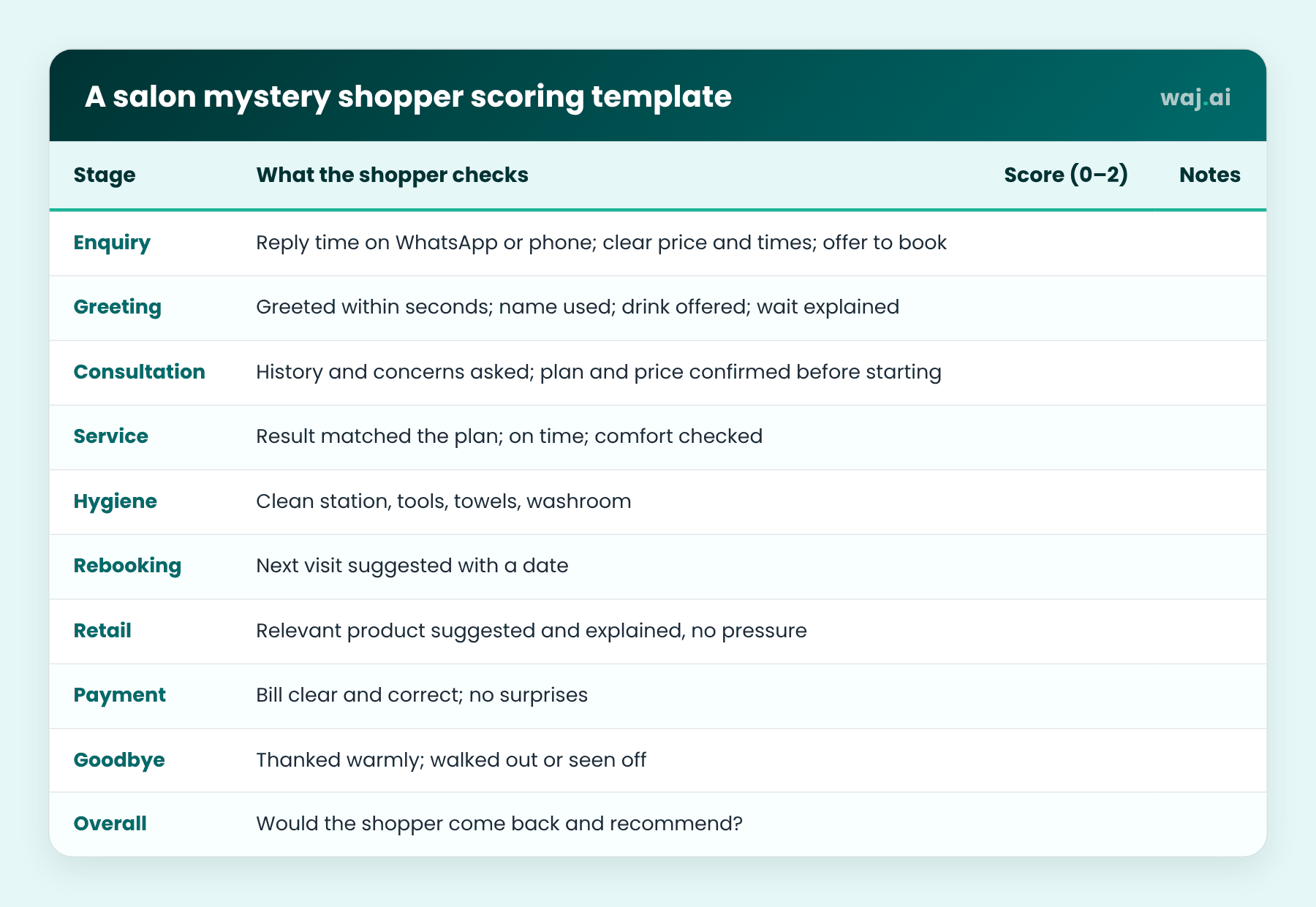
A salon mystery shopper scoring template
Keep it to one page. Score each item 0, 1 or 2 (0 = not done, 1 = partly done, 2 = done well). Leave a notes column, because the comments are where the coaching comes from.
- Enquiry
What the shopper checks: Reply time on WhatsApp or phone; clear price and times; offer to book
Score (0–2):
Notes: - Greeting
What the shopper checks: Greeted within seconds; name used; drink offered; wait explained
Score (0–2):
Notes: - Consultation
What the shopper checks: History and concerns asked; plan and price confirmed before starting
Score (0–2):
Notes: - Service
What the shopper checks: Result matched the plan; on time; comfort checked
Score (0–2):
Notes: - Hygiene
What the shopper checks: Clean station, tools, towels, washroom
Score (0–2):
Notes: - Rebooking
What the shopper checks: Next visit suggested with a date
Score (0–2):
Notes: - Retail
What the shopper checks: Relevant product suggested and explained, no pressure
Score (0–2):
Notes: - Payment
What the shopper checks: Bill clear and correct; no surprises
Score (0–2):
Notes: - Goodbye
What the shopper checks: Thanked warmly; walked out or seen off
Score (0–2):
Notes: - Overall
What the shopper checks: Would the shopper come back and recommend?
Score (0–2):
Notes:
A total of 20 points is easy to track over time. Look at the pattern across visits, not one score in isolation.
Coaching instead of punishing
This is where most programmes fail. The owner reads a weak score, calls the stylist in, and the stylist spends the next month defensive. Nobody improves.
A better routine:
- Share the report privately with the person involved, within a few days.
- Start with what went well. There is almost always something, and it shows you read the whole report.
- Pick one or two things to work on, not all ten.
- Ask what got in the way. Often it's a system problem: reception was alone, or nobody trained her to suggest a rebooking.
- Agree a small action and check it at the next shopper visit.
- Fix the system problems yourself. If the WhatsApp line goes unanswered every evening, that's a staffing or tools issue, not one person's fault.
Use team-wide patterns in your weekly huddle without naming anyone: "Three visits this month, nobody suggested a rebooking. Let's practise the line."
Rewarding high scores
Recognition is cheap and it works:
- A public thank-you in the team group and at the huddle.
- A small cash bonus or voucher for a top score.
- First pick of shifts or a preferred day off.
- A monthly "client experience" award across branches.
Tie rewards to the behaviours on the sheet, not just the total.

How often should you use a mystery shopper?
For a single salon, one visit a month is a good rhythm. Less often and it fades from memory; more often and staff start spotting shoppers.
For multi-branch businesses, aim for one visit per branch per month and rotate services (colour one month, nails the next).
Timing matters too. Send shoppers on your busiest evenings and your quietest mornings, because standards slip differently at each. With Eid al-Adha expected around 27 May, a visit during the pre-Eid rush tells you a lot about how the team copes under pressure. And as we covered in our guide to the salon summer slow season in the Gulf, the quieter summer months are the ideal time to run the coaching sessions the reports point to.
Where your salon software fits
A mystery shopper gives you a snapshot. Your booking data gives you the everyday picture. In WAJ, reports and staff commissions show retail sales by team member, and each client's history in the CRM shows who keeps coming back, so you can compare what the shopper saw with what happens every day. WhatsApp reminders and messaging keep the enquiry and confirmation side consistent, which also helps with cutting no-shows. And client notes in the CRM make the "consultation" step easier, because the stylist can see what the client had last time before she sits down.
If you'd like to see how this looks in practice, book a free WAJ demo: waj.ai/demo
FAQ
What is a salon mystery shopper?
A trusted person who books and pays like a normal client, without staff knowing, and scores the full experience on a fixed checklist from enquiry to goodbye.
How much does a salon mystery shopper cost?
Using friends or loyal clients usually costs only the service itself. Professional agencies charge more, so ask for a quote based on how many branches and visits you need.
Should staff know about the mystery shopper programme?
Yes, tell them it exists and share the scoring sheet, but never reveal when a visit will happen.
How often should a salon run mystery shopper visits?
About once a month per branch, rotating services and times of day.
What should I do with a low score?
Share it privately, start with what went well, focus on one or two fixes, and look for system problems behind the mistake before blaming the person.
Follow WAJ on Google
Add WAJ as a preferred source to see more of our articles in your Google Search results, marked with a "preferred" badge.