
Mall vs Street-Front: Choosing the Right Salon Location for Salons and Barbershops
WAJ Team
June 27, 2026

The right salon location depends on who your clients are and how they find you. A mall gives you footfall, air-conditioned access and parking, but you pay for it through service charges, often turnover rent, and the mall's opening hours. A street-front unit gives you control and more freedom over hours and signage, but you have to bring clients to the door yourself. The Gulf salons and barbershops that thrive in either spot chose by client type first and rent second.
I have seen owners in Riyadh, Dubai and Amman sign a beautiful lease and then spend two years fighting the location. Here are the questions to ask before you sign.
Footfall or destination: which kind of salon are you?
Start here, because everything else follows.
Footfall businesses live on walk-ins and impulse visits: express nails, brow bars, quick blow-dries, kids' haircuts while the family shops. They suit malls, where shoppers pass your glass all day and decide on the spot.
Destination businesses have clients who come specifically for them: a barber with a loyal following, a ladies' salon known for bridal work, a colourist booked weeks ahead. These clients will drive across town. They care about parking, privacy and getting in and out quickly, not passing traffic.
Be honest about which one you are. Many owners want a mall to be seen, when their real clients book by WhatsApp and would happily park outside a street unit.
How does rent work in a mall compared to a street unit?
The headline rent is only one line. Ask for the full cost of occupancy in writing.
Malls usually add:
- Service charges for common areas, cleaning, security and air conditioning
- Marketing or promotion contributions
- Turnover rent, where you pay a base rent or a share of sales, whichever is higher
- Fit-out rules and approval fees, plus mall-appointed contractors in some cases
Street units usually involve:
- A simpler base rent, often paid in cheques or instalments
- Your own utilities, including air conditioning, which matters in July
- Maintenance that may sit with you, not the landlord
Turnover rent means the mall sees your sales figures, and a good month costs you more. Make sure your POS reports sales cleanly, by branch and by period, so there are no arguments at reconciliation time.
Will mall opening hours work for your salon?
Malls set the hours, and you follow them. That can help or hurt.
- Late evenings are a gift. In the Gulf, many clients come after work or after Isha, and malls stay open late.
- Early mornings are harder. If your brides need to start at 6 am, a mall may not open its doors or its loading area that early.
- Ramadan hours shift, and you will follow the mall's schedule rather than your own.
- Fridays and public holidays follow the mall's rules too.
Street units let you set your own schedule within your licence. For a barbershop that does its best trade late at night, or a bridal salon with dawn starts, that freedom is worth a lot.
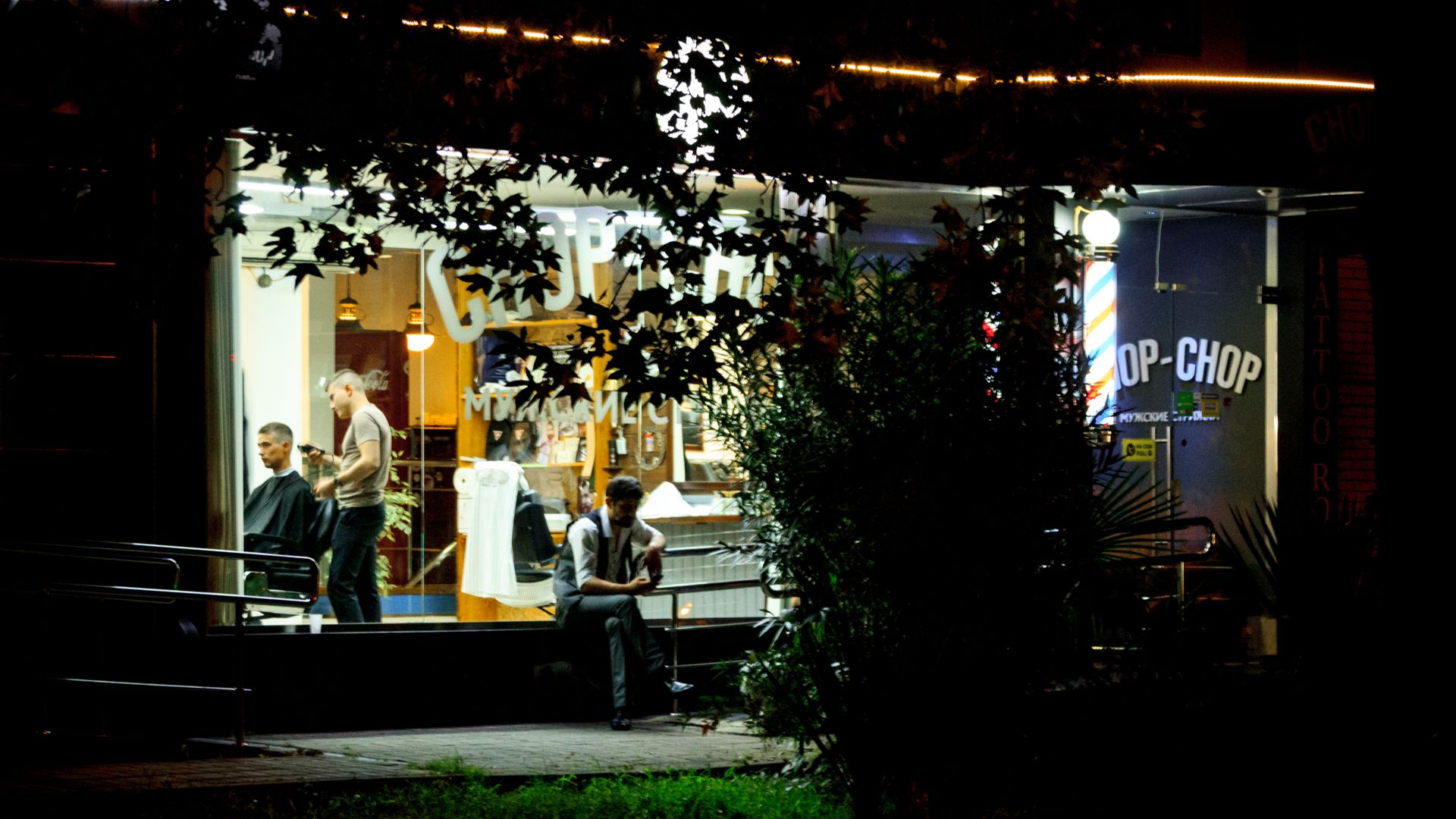
Parking and summer heat: the Gulf factor
In much of Europe, a short walk from the car park is nothing. In Riyadh in August, it is a reason to book somewhere else.
Malls win in summer. Covered parking and air-conditioned walkways mean a client arrives with her blow-dry intact and leaves the same way. Street units only compete with shaded parking right outside, valet, or a street quiet enough to stop at the door.
Visit your shortlist at peak hours in summer, not on a pleasant January evening. Can a client park within a few steps? Where will staff park? If the answer is "across the road in the sun", plan for it. Our guide to the Gulf salon summer slow season covers how to keep bookings steady when the heat bites.
Visibility and signage permits
Malls give you a shopfront and the mall's own signage rules. Your sign size, lighting and placement are approved by mall management, and changes need their sign-off.
Street units offer more freedom, but signage still needs a permit from the municipality in most Gulf cities. Before signing, check what the landlord allows and what the municipality will approve. A great unit with a sign no one can see from the road is a weak unit.
Online visibility matters as much as the sign. Google says local results depend mainly on relevance, distance and prominence, so a correct Google Business Profile with your exact address, photos and reviews helps clients find either type of location.
Privacy for ladies' salons
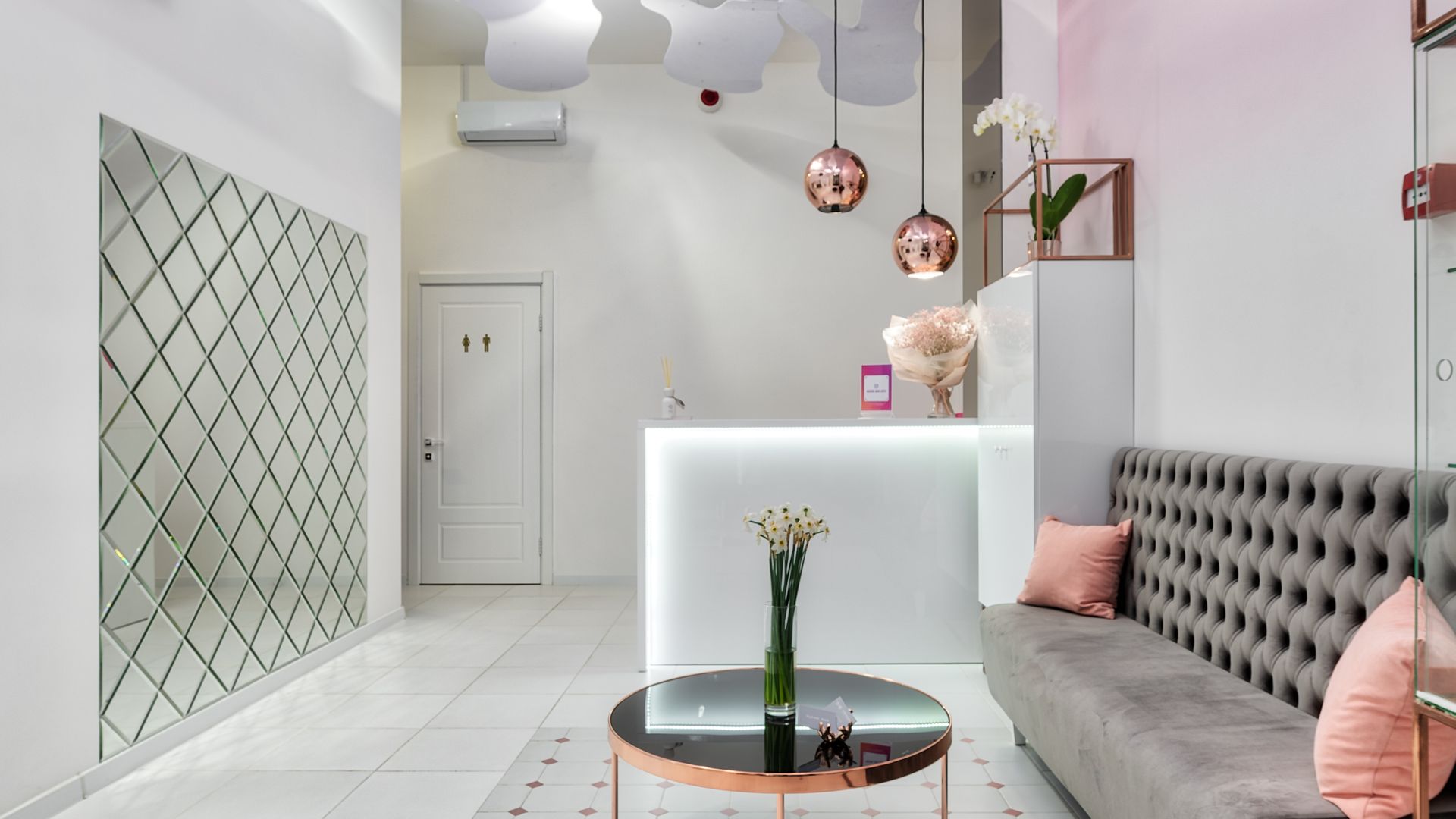
This is where many mall locations fail for ladies' salons. Glass fronts are built for display. Your clients want the opposite.
What to check:
- Can you frost, screen or wall off the front without breaking mall design rules?
- Is the entrance in a quiet corridor, or next to the food court?
- Can clients reach a private area without walking past the waiting area or the window?
- Are there male staff, deliveries or maintenance visits that need to be managed?
Street units, especially in villas or low-rise buildings, often give ladies' salons a calmer, more private entrance. We go into more detail in our guide to ladies' salon management in the Gulf.
Competition next door
Malls sometimes limit similar tenants close together. Ask directly whether another salon, barbershop or nail bar is planned nearby, and whether you can get an exclusivity clause.
On a street you have no such protection, which isn't always bad. A row of barbershops can turn a street into the place men go for a cut, and the best one wins. Barbershops like Creators Barbers, a WAJ client, show how a strong brand and loyal clients matter more than being the only shop in sight. You can read their story in our Creators Barbers spotlight.
Mall vs street-front: side-by-side comparison
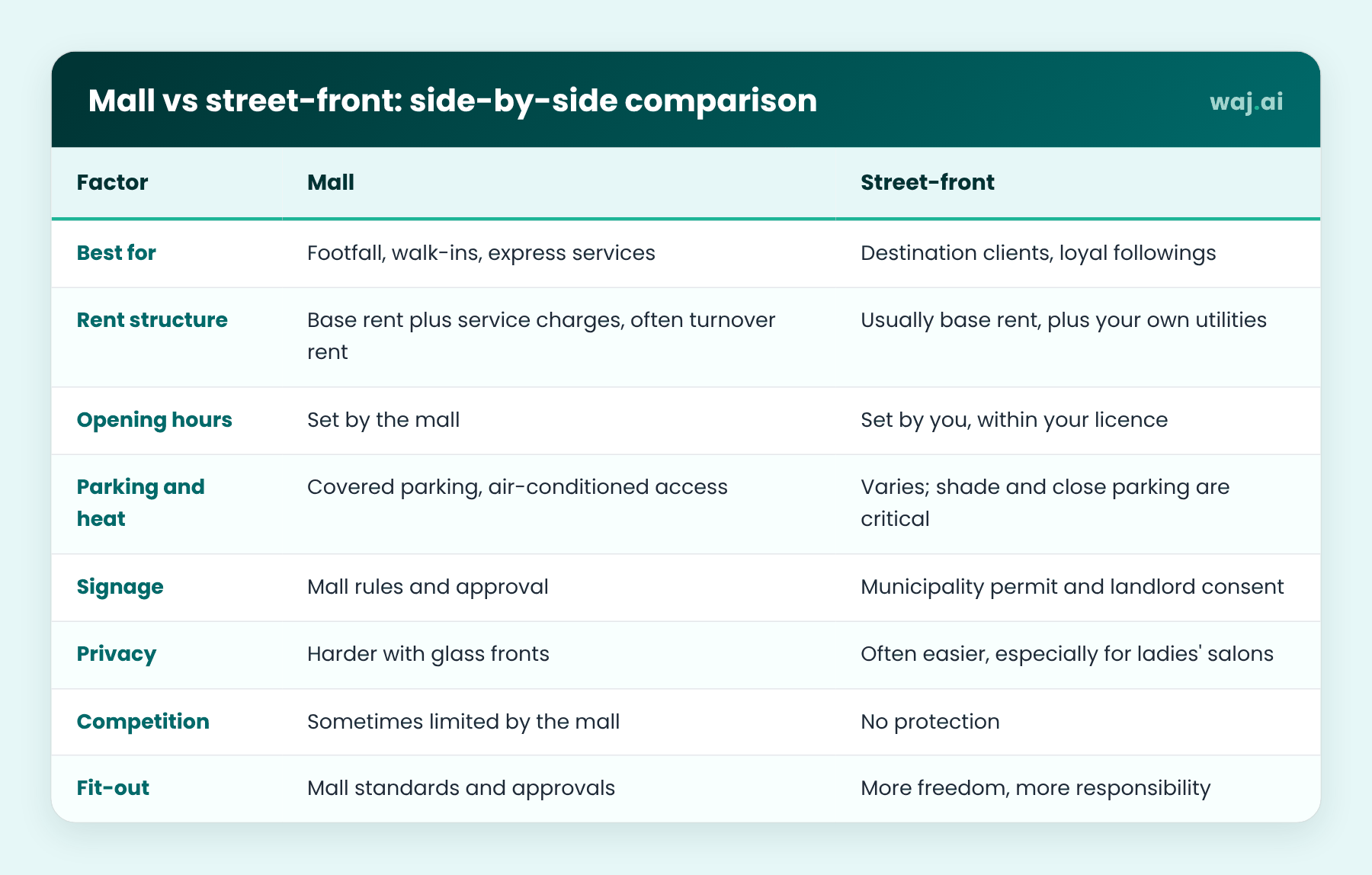
- Best for
Mall: Footfall, walk-ins, express services
Street-front: Destination clients, loyal followings - Rent structure
Mall: Base rent plus service charges, often turnover rent
Street-front: Usually base rent, plus your own utilities - Opening hours
Mall: Set by the mall
Street-front: Set by you, within your licence - Parking and heat
Mall: Covered parking, air-conditioned access
Street-front: Varies; shade and close parking are critical - Signage
Mall: Mall rules and approval
Street-front: Municipality permit and landlord consent - Privacy
Mall: Harder with glass fronts
Street-front: Often easier, especially for ladies' salons - Competition
Mall: Sometimes limited by the mall
Street-front: No protection - Fit-out
Mall: Mall standards and approvals
Street-front: More freedom, more responsibility
Lease terms to negotiate before you sign
Whatever you choose, these clauses matter more than a small rent discount:
- Rent-free fit-out period. Salons need plumbing, electrics and ventilation work. Ask for time to build before rent starts.
- Turnover rent definition. What counts as sales? Are retail, gift cards and packages included, and when?
- Service charge caps. Ask how increases are calculated.
- Renewal terms. Lock in the right to renew and limits on increases.
- Exit or assignment. Can you transfer the lease if you sell the business?
- Exclusivity. In malls, ask for a clause against a direct competitor nearby.
- Signage and hours. Get approvals and any agreed exceptions in writing.
Have a lawyer review the lease. This guide is general advice, not legal advice.
Test the location before committing
Sit in a café opposite on a weekday evening and a Friday afternoon, and count who walks past that would be your client. If you already run a branch on WAJ, your client records and booking history show where your regulars come from, which helps when picking a second site.
FAQ
Is a mall location better for a salon?
For footfall-driven services like express nails or brows, often yes. For destination salons and barbershops with loyal clients, a street unit with easy parking can work better and cost less to run.
What is turnover rent?
A rent model where you pay a base rent or a percentage of your sales, whichever is higher. Ask exactly which sales count and how they are reported.
Do I need a permit for a salon sign in the Gulf?
In most cities, yes. Street signage usually needs municipality approval, and mall signage needs mall management approval.
What is the best location for a ladies' salon?
One with a private entrance, no direct view inside, and parking close by. Many owners find this easier in street or villa units than in glass-fronted mall shops.
How long should a salon lease be?
Long enough to recover your fit-out cost, with a clear renewal right. Discuss the term with a lawyer before signing.
Opening a second branch or moving to a new site? WAJ handles bookings, POS and client records across every location with multi-branch support. Book a free WAJ demo: waj.ai/demo.
Follow WAJ on Google
Add WAJ as a preferred source to see more of our articles in your Google Search results, marked with a "preferred" badge.