
Salon Emergency Plan: AC Failure, Power Cuts and Client Incidents
WAJ Team
July 28, 2026
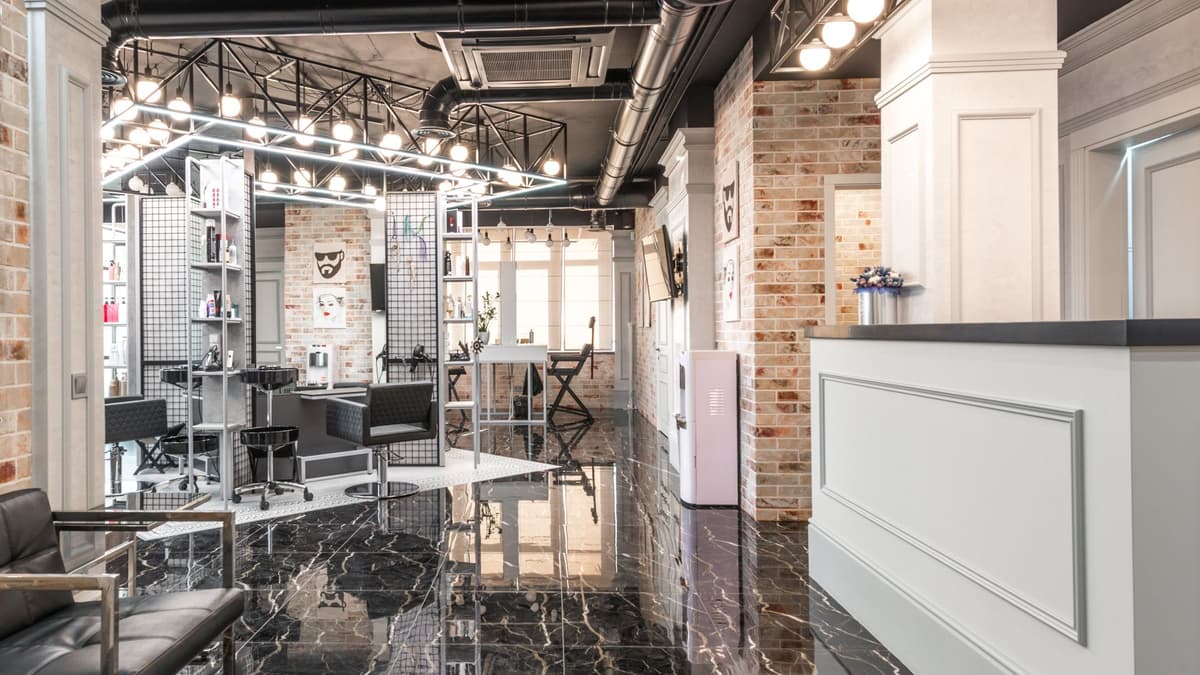
A salon emergency plan is a one-page set of decisions made in advance: who does what when the AC fails, the power cuts out, a client has a reaction or someone gets hurt. In a Gulf summer, the biggest risks are heat and electricity, so your plan should put client and staff safety first, then protect bookings and income. Write it down, train your team on it, and keep it by the reception desk.
It is a July afternoon in Sharjah. The AC has been struggling since noon, a client is under the dryer with foils in, and the receptionist is looking at you. That is not the moment to write a policy.
Why every salon needs an emergency plan, especially in summer
Salons combine heat, water, electricity, chemicals and hot tools in one room. Spas add steam, oils and slippery floors. When something goes wrong, a calm team with clear roles makes the difference between a bad hour and a bad review, or worse. Summer adds pressure: AC units run flat out and staff are tired. Our piece on the salon summer slow season in the Gulf covers the commercial side of these months. This one covers the moments that can't wait.
What to do when the AC fails in summer
Heat safety comes first. In Gulf summer temperatures, an indoor space without cooling can become unsafe quickly, especially for older clients, pregnant clients, anyone with a health condition, and staff working under dryers and steamers.
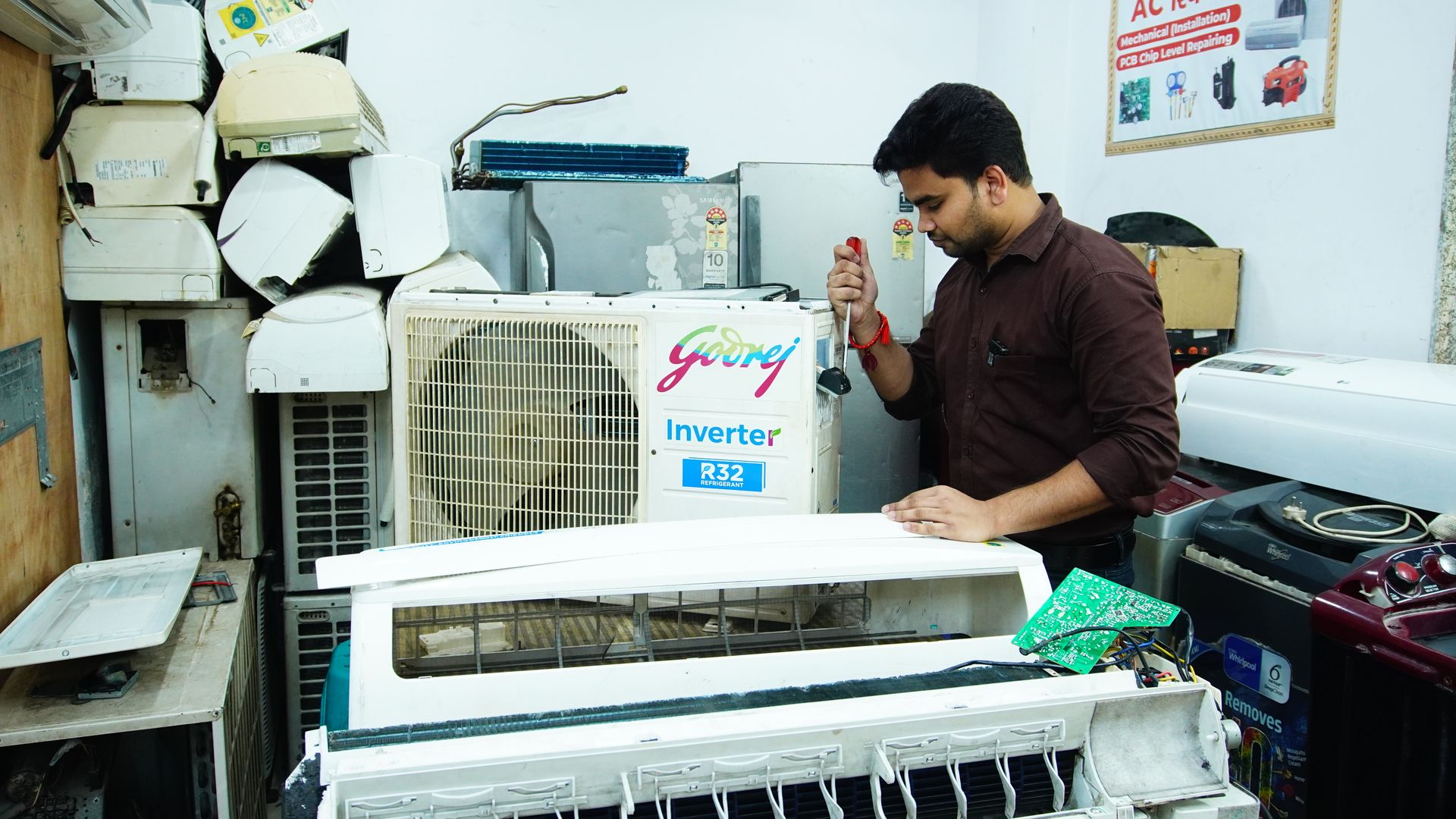
- Call your AC maintenance company immediately and ask for a realistic repair time.
- Finish only what must be finished. A client with colour or a chemical treatment on her hair needs it rinsed and neutralised. A client booked for a blow-dry can be moved.
- Stop starting new services that add heat: steam, hot stones, saunas, long dryer sessions.
- Offer water and a cool place to wait. Watch for dizziness, headache or nausea, in clients and staff.
- Decide by a set time. If cooling isn't back within an agreed window, cancel the rest of the day. Don't let it drift.
Prevention is cheaper than an emergency call-out. Book AC servicing before summer, not during it. Some regulators set AC requirements for salons; Kuwait's Ministry of Health guide, for example, sizes air conditioning at 1 ton per 12 m². Check what your own authority asks for.
What to do during a power cut
Stopping chemical services safely
Write this rule on your plan: no client leaves with chemicals on her hair or skin. If the lights go out:
- Note the time each chemical service started. Processing doesn't stop because the power did.
- Rinse with whatever water pressure is available. If water also stops, keep bottled water in the stockroom for exactly this.
- Unplug hot tools and dryers so they don't come back on unattended when power returns.
- Keep a torch or rechargeable lights at each station, not one locked in an office.
Taking payment without power
Card machines on Wi-Fi go down with the router. Keep one terminal charged and able to work on mobile data, plus a small cash float, and reconcile in your POS afterwards.
Keep an offline client list
A cloud system is out of reach when the internet goes down. Each morning, reception should keep today's appointment list with client phone numbers available offline, on a charged phone or a printed sheet kept securely and shredded after use. Then you can still reach the afternoon's clients.
First aid kit and trained staff
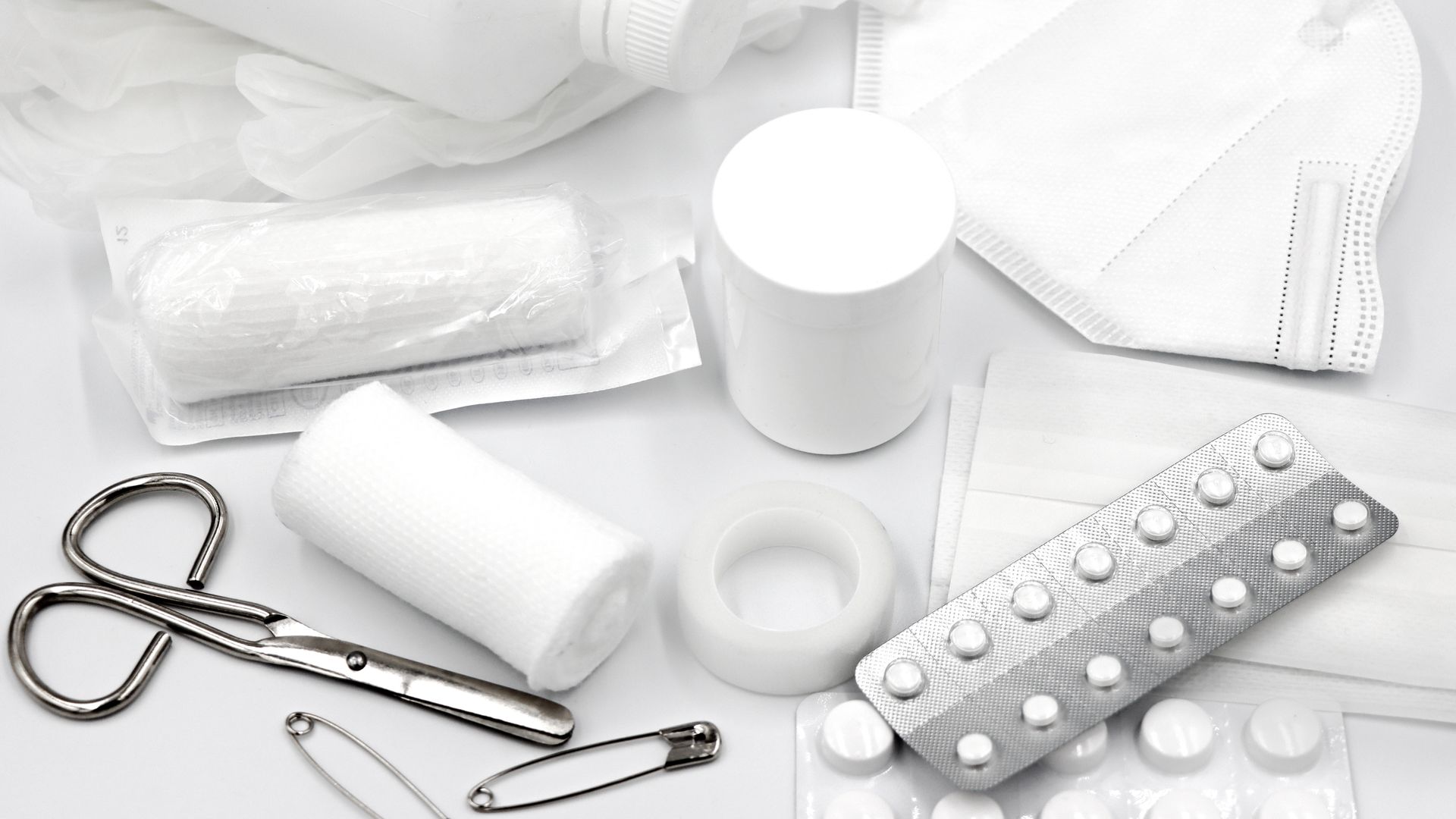
Keep a stocked first aid kit at reception and another in the treatment area if you have one. Include burn dressings, eye wash, gloves, plasters and cold packs, and check expiry dates monthly. Assign one person to own it.
At least one trained first aider should be on every shift, not only on weekdays. Put first aid training in your onboarding checklist and refresh it on the schedule your trainer recommends.
Allergic reactions: stop first
Reactions to colour, lash glue, waxes or skincare can range from mild redness to swelling and difficulty breathing.
- Stop the service immediately and remove the product.
- Rinse the area with cool water if appropriate.
- Watch the client closely. Swelling of the face, lips or throat, difficulty breathing or feeling faint are signs of a severe reaction.
- If the reaction is severe, call emergency services straight away. Don't wait to see if it settles. Don't give medication unless the client carries her own prescribed treatment and asks to use it.
- Record everything in the incident log.
Patch tests reduce the risk. Keep allergy notes on the client's profile so every stylist sees them before the service starts. And beauty therapists should never attempt medical treatment: injectables and medical lasers are medical acts for licensed clinics and qualified practitioners only, under DHA rules in Dubai and similar rules elsewhere.
Slips and burns
- Slips: wipe spills at once, use wet-floor signs, keep cables tidy, and give spa clients non-slip slippers.
- Burns: cool a burn under cool running water and cover it with a clean dressing. For anything more than a minor burn, get medical help.
- Check irons, wands and wax heaters at the start of each day. A frayed cable in July is a fire waiting to happen.
Fire safety and Civil Defence rules
Civil Defence (or your country's fire authority) sets the rules for extinguishers, alarms, exits and inspections, and premises approval often depends on them. Kuwait requires Kuwait Fire Force approval; Bahrain requires Civil Defence inspections. If you are still setting up, our guide to opening a salon or spa in Qatar covers the wider licensing picture.
Practical basics: keep exits clear of trolleys and stock, know where extinguishers are and who can use them, don't overload sockets, and run an evacuation walk-through with the team. Confirm the exact requirements with Civil Defence in your emirate or country.
Keep an incident log
Log every incident, however small: date and time, who was involved, what happened, what you did, witnesses and follow-up. Facts, not opinions. Record health details only as far as the incident requires and keep them private. A clear log protects the client, your staff and your business if a complaint or insurance claim follows.
Check your insurance
Ask your broker now whether you are covered for public liability, treatment-related claims, equipment breakdown and business interruption from power or AC failures, and what records an insurer would want after an incident.
WhatsApp template for cancelling the day
Send one clear, short message. Here is a template you can adapt:
Hello [Name], this is [Salon] in [Area]. We're very sorry, but due to a technical problem at the salon (air conditioning / power) we have to cancel today's appointments for your safety and comfort. Your [service] at [time] is cancelled. Reply to this message and we'll rebook you first, with priority on the times you prefer. Thank you for understanding.
Send it from your salon's number, not a staff member's phone. In WAJ, reception can see the day's bookings, message clients on WhatsApp and rebook them from the same calendar. For the set-up, our guide to salon software with WhatsApp in MENA helps.
Emergency roles table
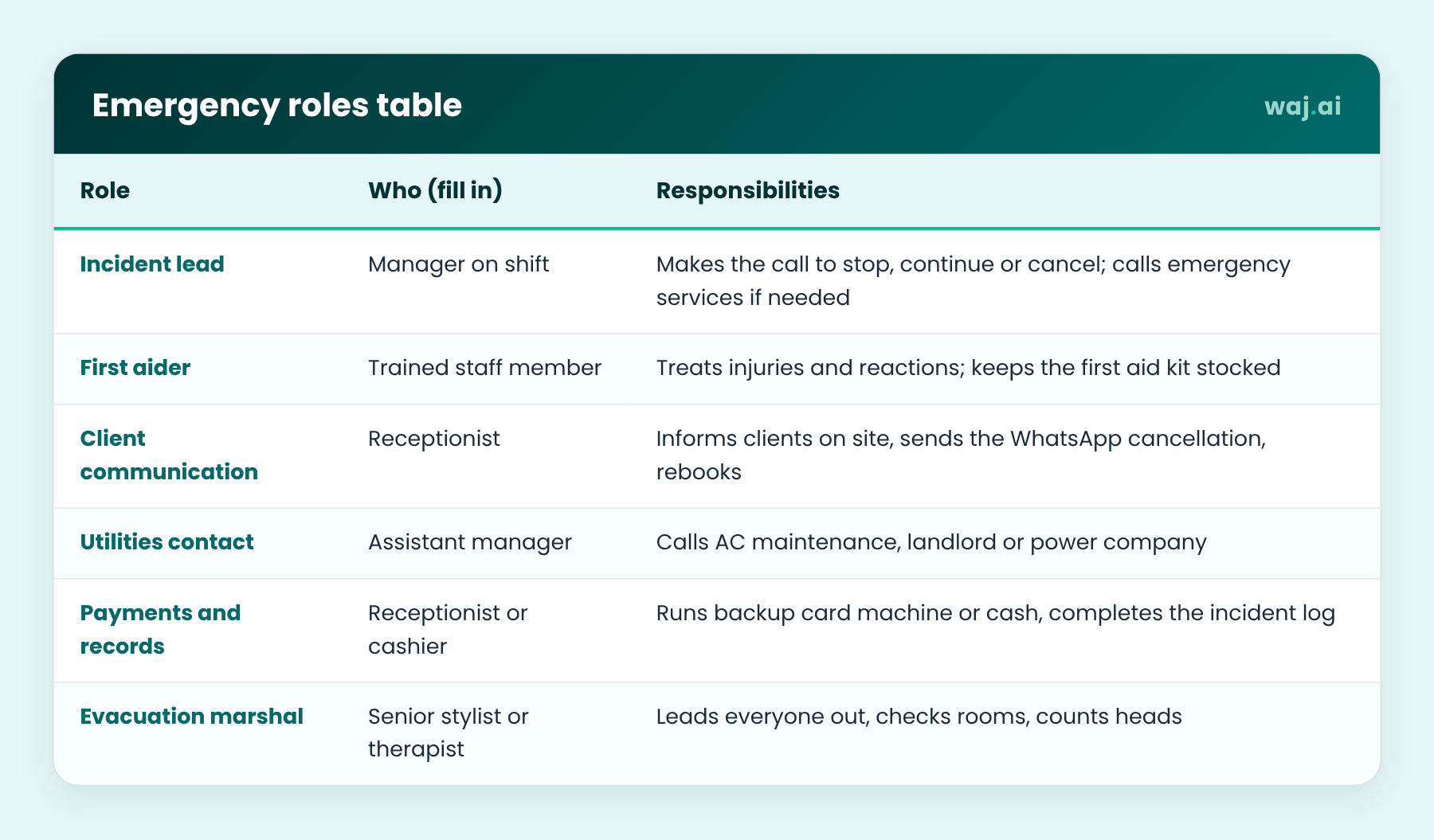
- Incident lead
Who (fill in): Manager on shift
Responsibilities: Makes the call to stop, continue or cancel; calls emergency services if needed - First aider
Who (fill in): Trained staff member
Responsibilities: Treats injuries and reactions; keeps the first aid kit stocked - Client communication
Who (fill in): Receptionist
Responsibilities: Informs clients on site, sends the WhatsApp cancellation, rebooks - Utilities contact
Who (fill in): Assistant manager
Responsibilities: Calls AC maintenance, landlord or power company - Payments and records
Who (fill in): Receptionist or cashier
Responsibilities: Runs backup card machine or cash, completes the incident log - Evacuation marshal
Who (fill in): Senior stylist or therapist
Responsibilities: Leads everyone out, checks rooms, counts heads
Print it, put names in, and review it whenever staff change.
Want bookings, client messages and rebooking in one place? Book a free WAJ demo: waj.ai/demo.
Related reading
FAQ
What should a salon emergency plan include?
Roles, steps for AC failure and power cuts, first aid, allergic reactions, fire evacuation, an incident log, insurance contacts and a client message template.
Should I cancel appointments if the AC breaks in summer?
If cooling can't be restored within a reasonable window, yes. Finish any chemical services safely, then cancel and rebook. Client and staff safety comes first.
What do I do if a client has an allergic reaction to hair colour?
Stop the service, rinse, and watch closely. If there is swelling of the face or throat or difficulty breathing, call emergency services immediately.
How can I take payments during a power cut?
Keep a charged card terminal that works on mobile data and a small cash float, then reconcile in your POS when power returns.
Who sets fire safety rules for salons?
Civil Defence or your country's fire authority. Confirm extinguisher, alarm and exit requirements with them directly.
Follow WAJ on Google
Add WAJ as a preferred source to see more of our articles in your Google Search results, marked with a "preferred" badge.