
Chair Rental vs Commission: Should Your Gulf Salon Rent Chairs to Freelance Stylists?
WAJ Team
September 3, 2026

Salon chair rental means a stylist pays you a fixed fee to use a station in your salon and keeps the money from their own clients. It gives the owner predictable income with less payroll risk, but it also means less control over prices, standards and who owns the client. In the Gulf it only works if the stylist holds the right freelance permit or licence, the contract is written properly, and your brand standards still apply at every chair.
I have seen chair rental save a salon with empty stations, and I have seen it quietly hollow out another one. What decided it each time was the contract, the permits and whether the owner still ran the floor.
How does salon chair rental work?
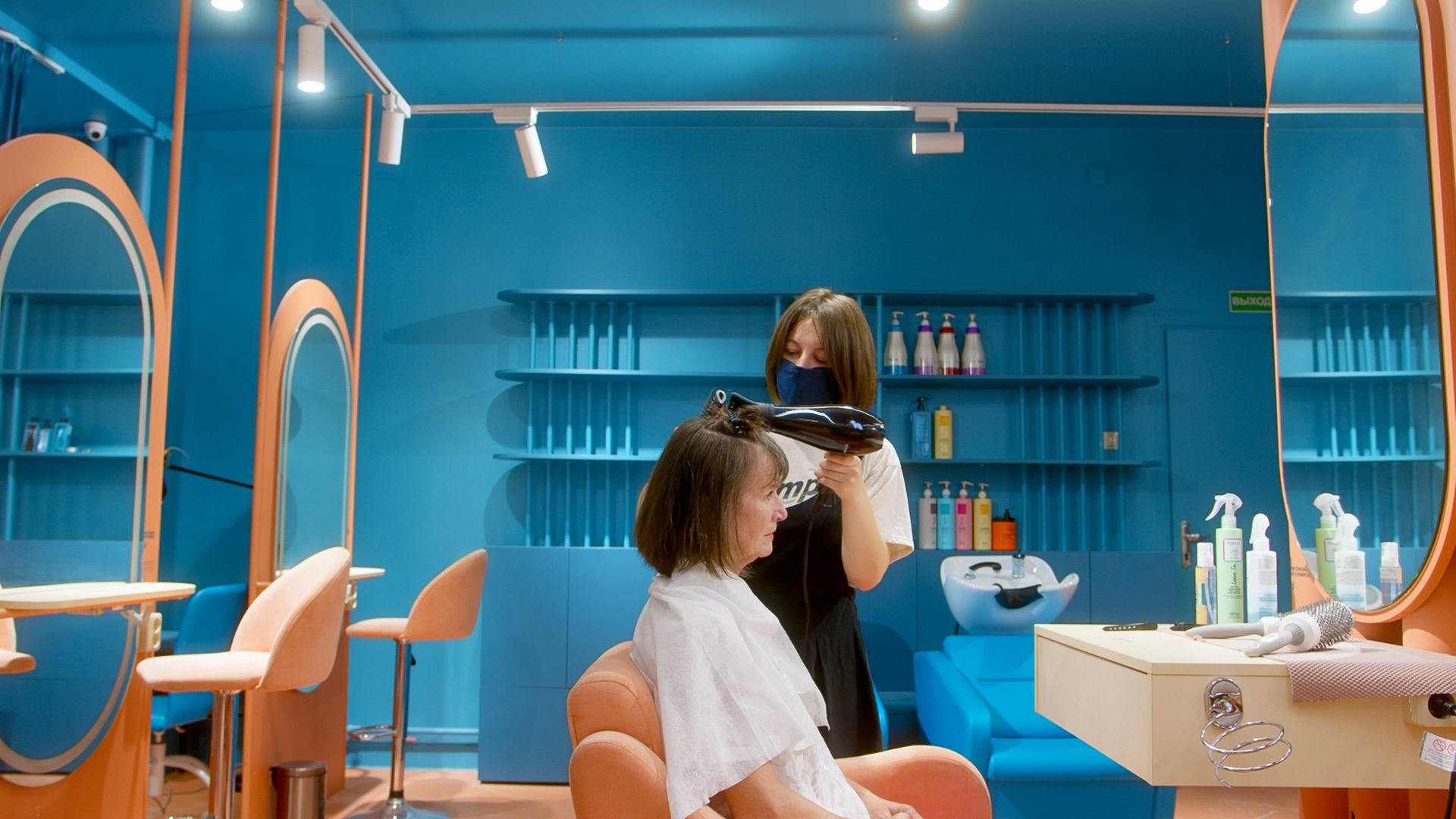
In a chair or booth rental arrangement, the salon provides the station, basins, utilities, reception and often laundry. The stylist brings their skill, their clients and usually their own tools and products.
The stylist pays rent weekly or monthly, works their own hours within your opening times, sets their own prices (sometimes within an agreed range) and keeps the service revenue.
That is different from the two models most Gulf salons already use:
- Salary plus commission. The stylist is your employee, on your visa, paid a base salary plus a percentage of what they sell. You set prices, hours and standards.
- Commission only. The stylist earns a share of each service but is still working under the salon's rules and brand.
Can freelance stylists legally rent a chair in the Gulf?
Ask this before anything else. A freelancer in your salon still needs the legal right to work, with a proper permit or licence covering the activity where you operate. A stylist working without one is a problem for them and possibly for you.
Rules differ between Gulf countries and Jordan, and they change, including conditions on who may work inside a licensed salon. In Bahrain, for example, work permits go through the LMRA. In Kuwait, owners already report staff shortages and visa and manpower challenges under the sponsorship system (Kuwait Times, October 2025), which is partly why freelance arrangements come up there.
Before you sign anyone, check three things with the relevant authority, free zone or a lawyer:
- Does the stylist hold a valid permit or licence that allows them to work freelance in this activity?
- Does your salon licence allow independent practitioners to work on the premises?
- Who is responsible if an inspector finds a problem at that chair?
This is not legal advice. Confirm current rules with your licensing and labour authorities or a local lawyer.
What are the pros and cons for salon owners?
Pros
- Predictable income. Rent arrives whether the stylist has a busy week or a quiet one.
- Lower payroll risk. No salary to cover in slow months like summer.
- Fills empty stations without the cost and delay of hiring.
- New clients. An established freelancer brings a following, and some will book your other services.
Cons
- Less control. You cannot easily dictate prices, techniques or which products they use.
- Client ownership disputes. When the stylist leaves, their clients usually follow.
- Brand inconsistency. One chair with a different standard affects how the whole salon is judged.
- Capped upside. If the stylist becomes very busy, your income stays the same rent.
What are the pros and cons for stylists?
Stylists with a loyal clientele often prefer rental: they keep more of each ticket, set their own schedule and build their own name. But they carry the risk, with no salary in a quiet month and their own product, marketing and permit costs. A newer stylist usually does better on salary plus commission while building a client base.
Commission vs salary plus commission vs chair rental
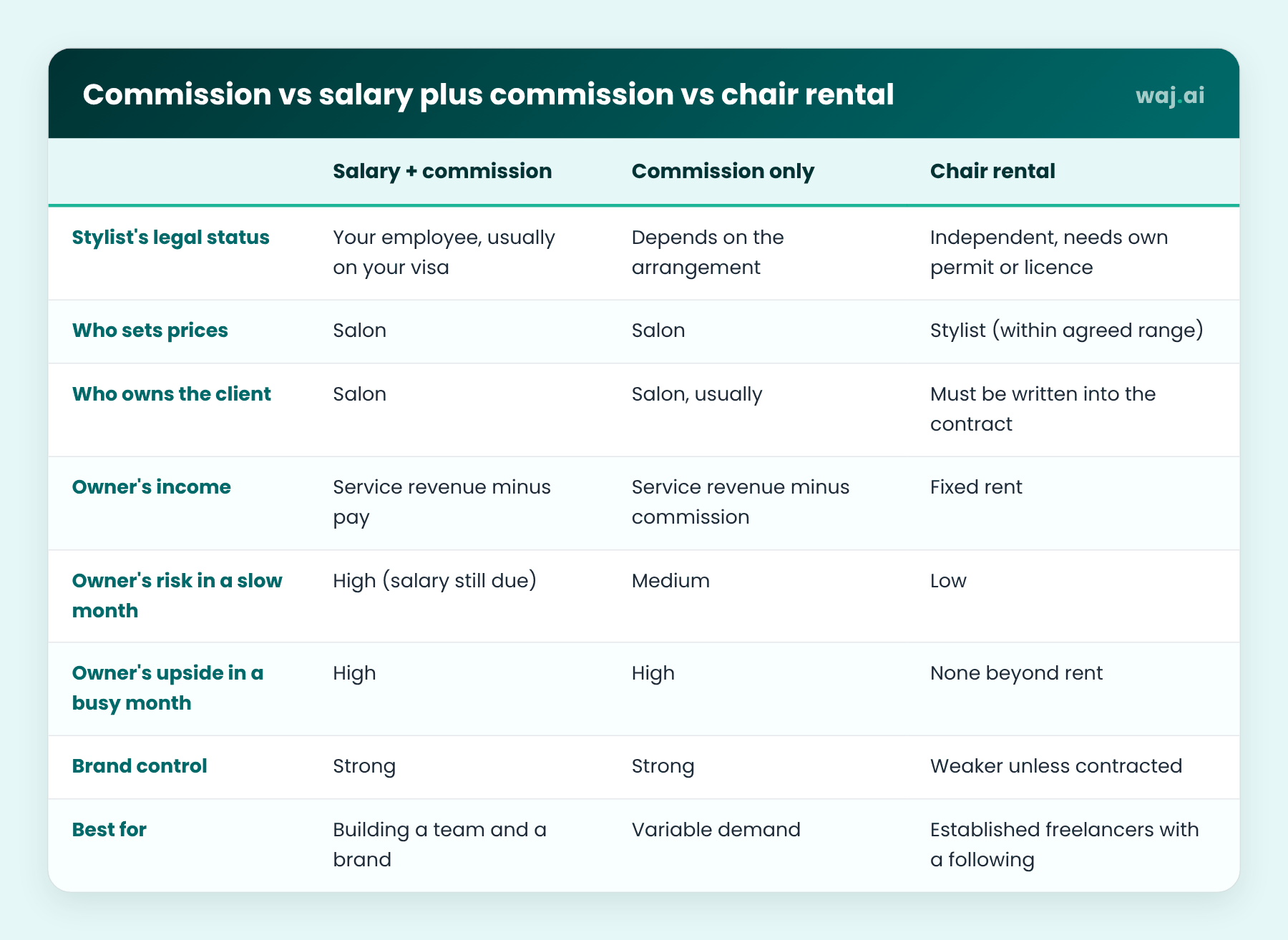
- Stylist's legal status
Salary + commission: Your employee, usually on your visa
Commission only: Depends on the arrangement
Chair rental: Independent, needs own permit or licence - Who sets prices
Salary + commission: Salon
Commission only: Salon
Chair rental: Stylist (within agreed range) - Who owns the client
Salary + commission: Salon
Commission only: Salon, usually
Chair rental: Must be written into the contract - Owner's income
Salary + commission: Service revenue minus pay
Commission only: Service revenue minus commission
Chair rental: Fixed rent - Owner's risk in a slow month
Salary + commission: High (salary still due)
Commission only: Medium
Chair rental: Low - Owner's upside in a busy month
Salary + commission: High
Commission only: High
Chair rental: None beyond rent - Brand control
Salary + commission: Strong
Commission only: Strong
Chair rental: Weaker unless contracted - Best for
Salary + commission: Building a team and a brand
Commission only: Variable demand
Chair rental: Established freelancers with a following
Many Gulf salons end up with a mix: a core team on salary plus commission, plus one or two chairs rented to specialists such as a bridal stylist.
How much should you charge for a salon chair?
Start from your cost, not from what the salon down the road charges. Work out what one station really costs you each month, then add a margin.
Example only. These figures are illustrative for a mid-market salon in Dubai. They are not market rates. Use your own numbers.
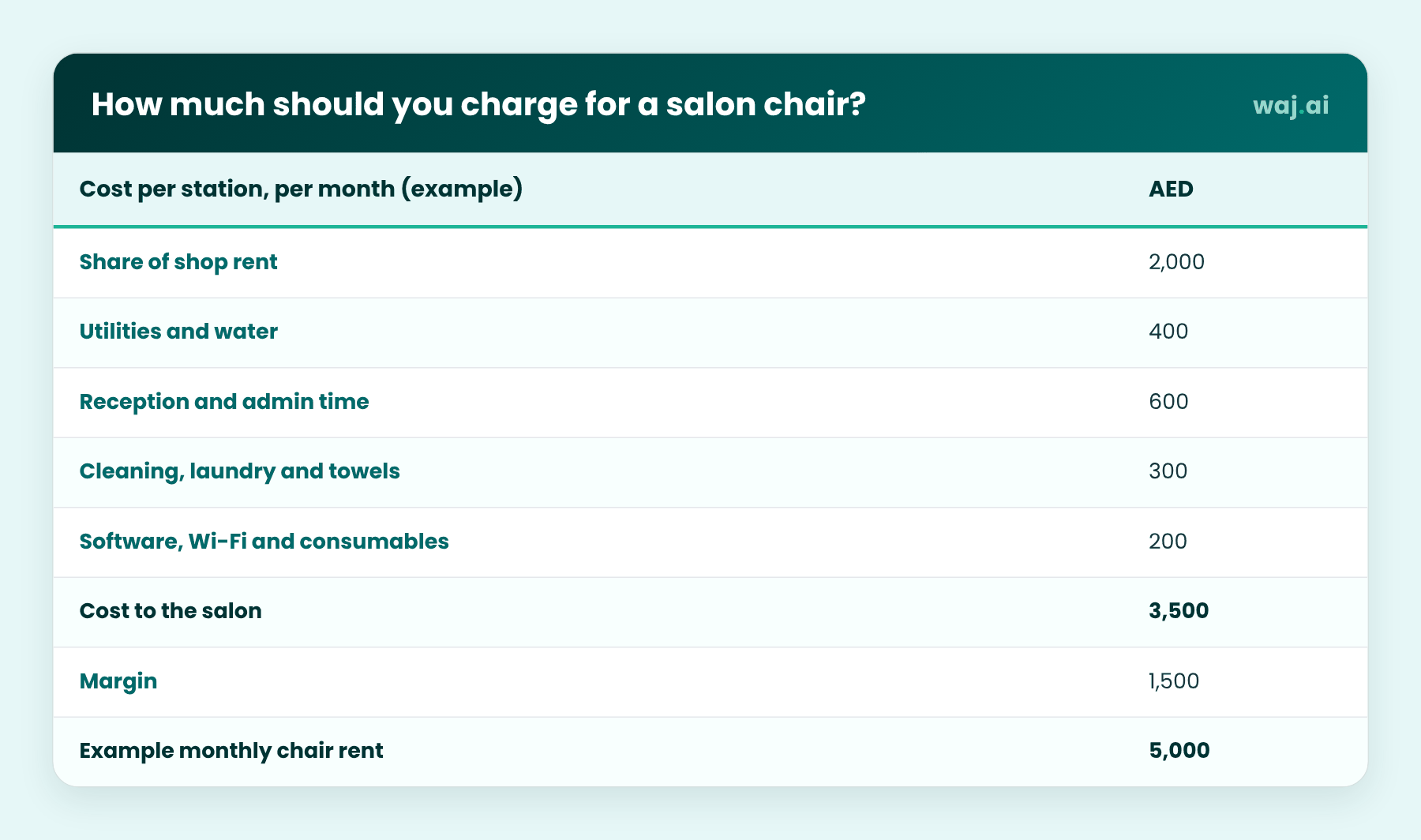
- Share of shop rent
AED: 2,000 - Utilities and water
AED: 400 - Reception and admin time
AED: 600 - Cleaning, laundry and towels
AED: 300 - Software, Wi-Fi and consumables
AED: 200 - Cost to the salon
AED: 3,500 - Margin
AED: 1,500 - Example monthly chair rent
AED: 5,000
Then sense-check it. If a busy freelancer could not cover AED 5,000 and still earn well, the price will not hold. If they could cover it in a week, you are probably undercharging. For more on working out true costs per service, see our guide on how to price salon services.
Some salons charge a lower base rent plus a small percentage of takings, which keeps some upside for the owner. Agree it in writing.
What should a salon chair rental contract include?
Never rely on a handshake. At a minimum, cover:
- Hours and access. Which days and hours the chair is theirs, and what happens outside salon opening times.
- Rent, payment date and late fees. Weekly or monthly, by which day, and what happens if rent is late.
- Products. Their own, yours, or approved brands only, and always in date for inspections.
- Client ownership and data. Whose clients are they? Can the stylist take the client list when they leave? Who can message clients? Write it down.
- Bookings. Through your system and reception, or their own? This decides a lot about client ownership.
- Brand standards. Dress code, hygiene rules, tool sterilisation, social media use of the salon's name and photos.
- Notice and cancellation. How much notice either side must give, and what happens to prepaid packages or gift cards.
- Permits and insurance. The stylist confirms they hold a valid permit or licence and keeps it current.
Have a lawyer review the template once. It costs far less than one dispute.

How do you keep brand standards with freelance stylists?
Clients do not distinguish between your employee and your renter. If chair four is late, the review names your salon.
- Set the non-negotiables: hygiene, punctuality, how reception greets their clients, and no smoking or eating at the station.
- Use one booking system. When renters book through the same calendar, reception sees the whole day, clients get the same WhatsApp reminders, and no-shows are handled consistently.
- Keep client notes in one CRM, with clear rules in the contract on who may use them.
- Hold a short monthly check-in with each renter. Small issues stay small.
If you manage a ladies' salon with tight privacy expectations, these standards matter even more. Our guide to ladies salon management in the Gulf covers the privacy side.
Where WAJ fits
Running salaried and freelance staff side by side gets messy in the admin. In WAJ, every stylist works from the same staff calendar and online booking site, client history sits in one CRM, WhatsApp reminders go out the same way for every chair, and staff commissions are calculated for your employed team. Reports show whether a chair earns more rented or staffed.
FAQ
Is salon chair rental legal in the UAE and Saudi Arabia?
It can be, provided the stylist holds a valid freelance permit or licence and your salon licence allows it. Rules vary and change, so confirm with your licensing authority or a lawyer before signing anyone.
Is chair rental more profitable than commission?
Not always. Rental is steadier and lower risk, while commission earns more when a stylist is busy. Many salons use both.
Who owns the client in a chair rental arrangement?
Whoever the contract says. If it says nothing, expect clients to follow the stylist when they leave.
How much is chair rent in Dubai?
There is no single rate. Work out what a station costs you each month, add a margin, then check a busy freelancer can afford it.
Decide with your numbers
Make the chair rental decision with real figures and a proper contract. If you want one calendar, one client CRM and clear reports across every chair, book a free WAJ demo.
Follow WAJ on Google
Add WAJ as a preferred source to see more of our articles in your Google Search results, marked with a "preferred" badge.