
Laser Clinic Scheduling: How to Book Rooms, Machines and Practitioners Without Gaps
WAJ Team
October 16, 2026
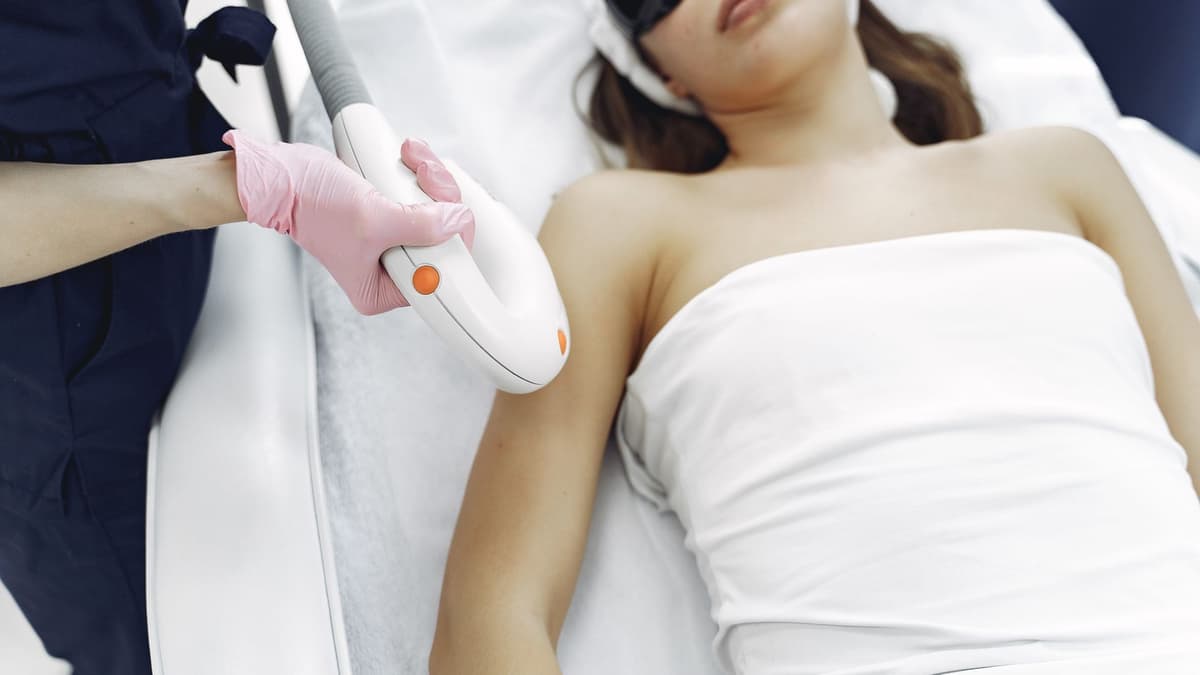
Good laser clinic scheduling means every booking reserves three things at once: a treatment room, a laser machine and a practitioner qualified to use it. When your calendar only tracks people, you get double-booked machines in one room and an idle machine in the next. Book by resource, set realistic session lengths with buffers for cooling and cleaning, and group treatments sensibly, and the gaps start to close.
I've seen a clinic in Jumeirah with two lasers and three practitioners run at what felt like full capacity, while one machine sat unused for most of the afternoon. Reception was booking the person, not the machine. Nobody noticed until they looked at the week on paper.
Why a laser clinic needs resource-based booking
In a salon, a service usually needs a stylist and a chair. In a laser clinic, a single appointment depends on several resources at the same time:
- The room, which may have a fixed machine in it or room for a mobile one.
- The machine, which may suit certain skin types or areas better than another device in the clinic.
- The practitioner, who must be qualified and licensed for that device and treatment.
A schedule that only looks at the practitioner will happily book two full-leg sessions at 4 p.m. when you have one suitable machine.
Resource-based booking fixes this. Each service is defined by what it needs, and the calendar only offers a slot when all of those resources are free.
What does an idle laser machine cost you?
A laser machine is often the most expensive thing in the clinic, whether you bought it, lease it or pay off a finance plan every month. Every empty hour still carries its share of the payment, the maintenance contract and the room.
You don't need a perfect formula. Take your monthly machine cost (lease or instalment plus service contract) and divide it by the hours the clinic is open. That gives you a rough cost per open hour. Now look at how many of those hours the machine actually treated someone. The difference is money you're paying for nothing, and it usually changes how seriously a team takes a half-empty afternoon.
How long do laser sessions take by body area?
Session length depends on the device, the practitioner's experience, the patient's hair and skin, and the protocol your medical director sets. The ranges below are approximate and meant as a starting point for building your service list, not a clinical standard.
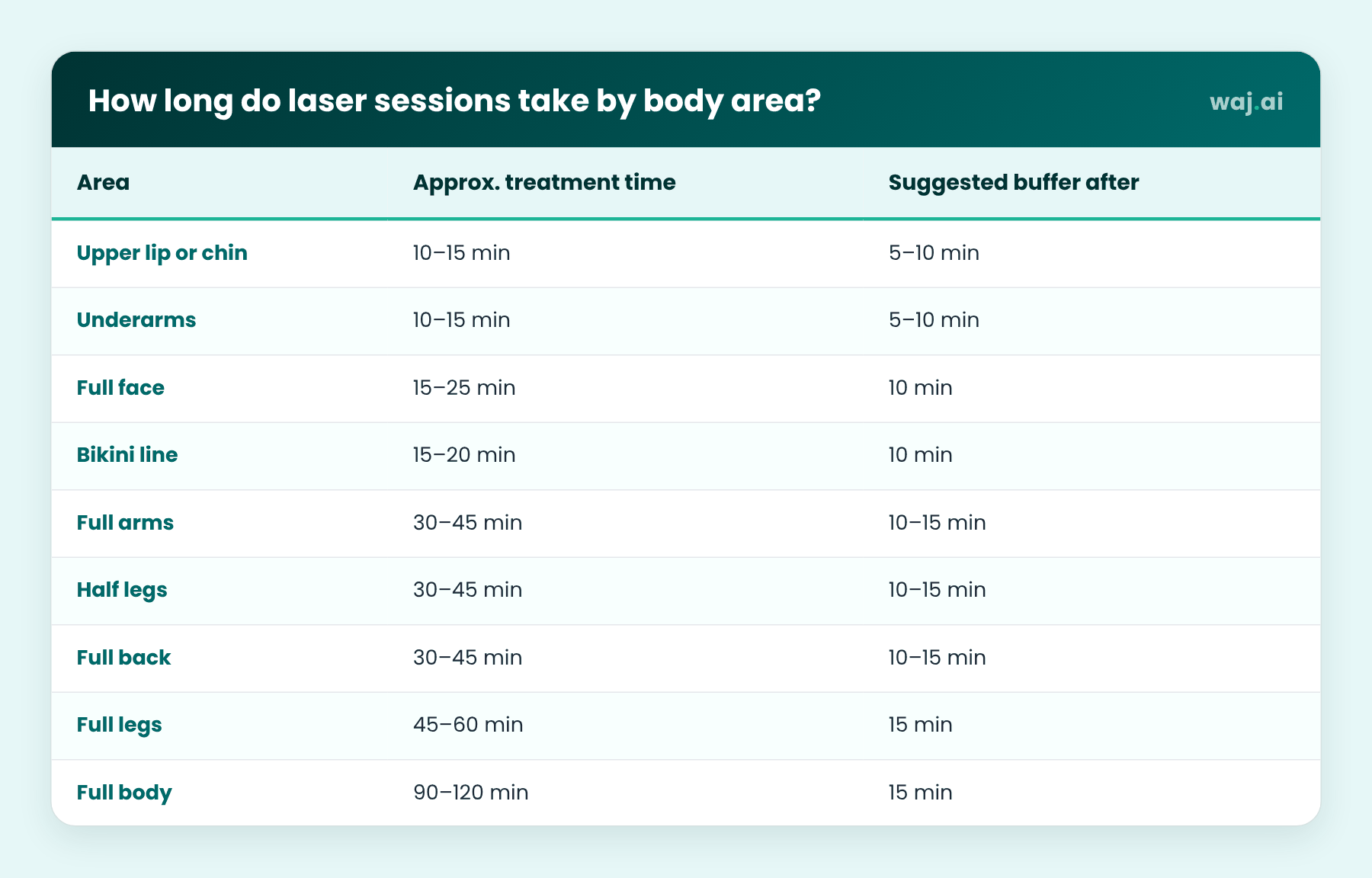
- Upper lip or chin
Approx. treatment time: 10–15 min
Suggested buffer after: 5–10 min - Underarms
Approx. treatment time: 10–15 min
Suggested buffer after: 5–10 min - Full face
Approx. treatment time: 15–25 min
Suggested buffer after: 10 min - Bikini line
Approx. treatment time: 15–20 min
Suggested buffer after: 10 min - Full arms
Approx. treatment time: 30–45 min
Suggested buffer after: 10–15 min - Half legs
Approx. treatment time: 30–45 min
Suggested buffer after: 10–15 min - Full back
Approx. treatment time: 30–45 min
Suggested buffer after: 10–15 min - Full legs
Approx. treatment time: 45–60 min
Suggested buffer after: 15 min - Full body
Approx. treatment time: 90–120 min
Suggested buffer after: 15 min
Time each service in your own clinic for two or three weeks and adjust.
Buffers for cooling and cleaning
The buffer after a laser session isn't wasted time. It covers things that have to happen:
- Patient aftercare: cooling the area, applying soothing products, giving aftercare instructions.
- Room cleaning: wiping the bed and handpiece, changing paper or covers.
- Machine checks: some devices need a short pause, a cooling check, or settings changed for the next patient's skin type.
Put the buffer inside the service duration in your booking system, so online booking can't squeeze a patient into the cleaning time. If reception has to remember to "leave ten minutes" by hand, it will be forgotten on the first busy Thursday.
Group long and short treatments on purpose
A schedule full of 15-minute slots scattered between long sessions creates gaps that are too small to sell.
- Block long treatments in fixed windows. Full-body and full-leg sessions in the morning or a set afternoon block on one machine.
- Run short treatments in clusters. Upper lip, underarms and chin booked back to back on another machine or in a "quick session" window.
- Keep peak hours for your most requested areas. After-work slots between 5 p.m. and 9 p.m. fill first in most Gulf cities, so don't let them go to low-value bookings by default.
Block-book courses from the first visit
Laser hair removal is sold as a course of sessions spaced weeks apart, with intervals set by the practitioner. The clinics with full calendars book the whole course early.
- At the first paid session, book the next two or three sessions on the spot, at the interval the practitioner recommends.
- Sell the course as a package, so the patient has paid and the clinic has committed time.
- Send a WhatsApp reminder before each session, and rebook straight away if the patient has to move.
For clinics thinking about recurring revenue beyond courses, our piece on the aesthetic clinic membership model looks at how membership tiers work in the Gulf.
How to handle patch tests
A patch test is short, but it still uses the machine, the room and a practitioner. Treat it as its own service.
- Create a "patch test" service with its own short duration.
- Schedule patch tests in the gaps around longer treatments, or in a fixed daily window.
- Book the first full session at the same time, timed after the waiting period your practitioner sets, so the patient doesn't drift away between the test and the treatment.
Cancellations and waitlists
Laser cancellations hurt more than salon cancellations because the slot is tied to an expensive machine.
- Confirm 24–48 hours before by WhatsApp, with an easy way to reschedule.
- Keep a waitlist of patients who want earlier slots, organised by area and preferred time.
- Fill same-day gaps with short treatments. A cancelled 45-minute full-leg session can become two or three small-area sessions.
Our guide on cutting no-shows covers deposits and confirmation rules in more detail.
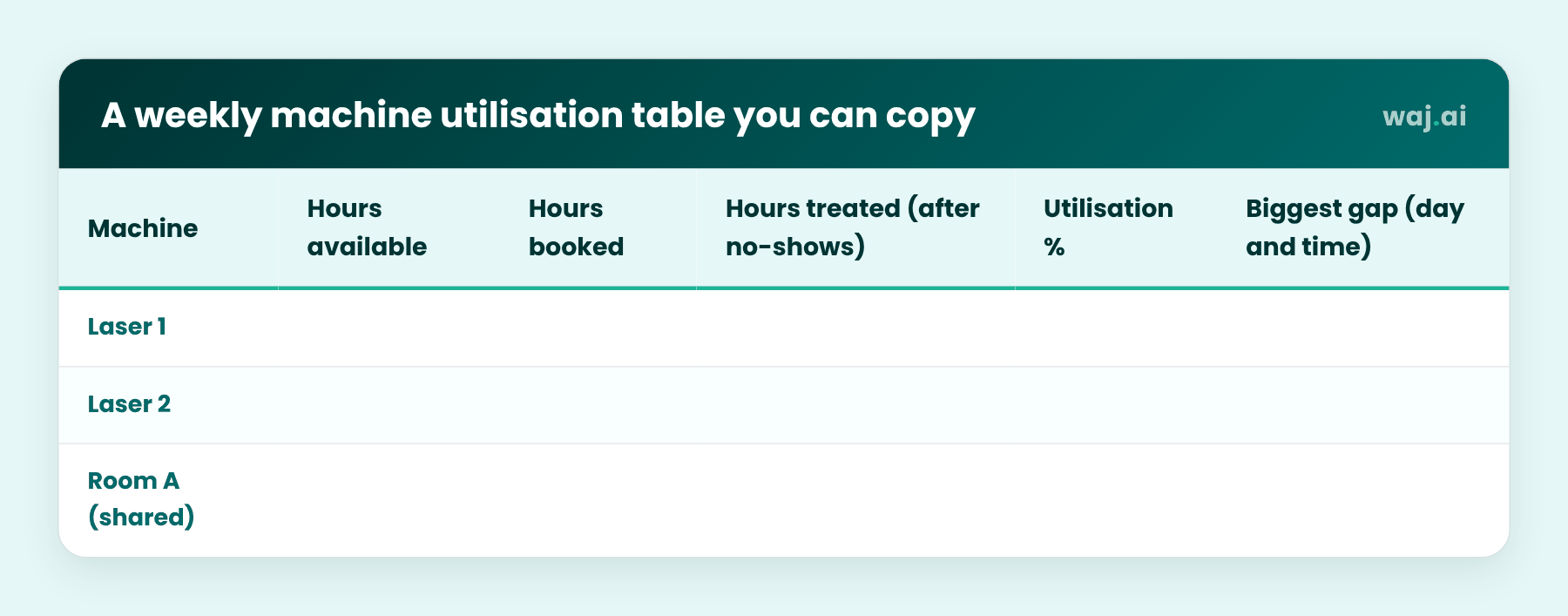
A weekly machine utilisation table you can copy
Fill this in every Monday for the previous week. It takes ten minutes.
- Laser 1
Hours available:
Hours booked:
Hours treated (after no-shows):
Utilisation %:
Biggest gap (day and time): - Laser 2
Hours available:
Hours booked:
Hours treated (after no-shows):
Utilisation %:
Biggest gap (day and time): - Room A (shared)
Hours available:
Hours booked:
Hours treated (after no-shows):
Utilisation %:
Biggest gap (day and time):
Utilisation is hours treated divided by hours available. Watch the gap between "booked" and "treated" too. A big difference there usually points to no-shows rather than weak demand.
Licensing: lasers are medical, so keep within scope
In Dubai, the DHA treats medical lasers as medical acts that may only be performed in licensed clinics. Practitioners should operate them within the scope of their licence, and beauty salons should not be offering medical laser treatments. Other emirates and countries have their own rules. Confirm your setup with the DHA, DOH or MOH, or your relevant national regulator, and with your medical director, before you build your service list.
Where WAJ fits
WAJ gives clinics online booking, a staff calendar, patient records with notes and history, packages for laser courses, WhatsApp reminders and reports, with no booking commission and no onboarding fee. We wrote about the wider picture in our guide to aesthetic clinic management and automation. WAJ's clinic product, Nabd, runs on the same platform. Bring your list of rooms, machines and practitioners to a demo and we'll walk through how your week would look.
Book a free WAJ demo: waj.ai/demo.
FAQ
How long is a laser hair removal appointment?
It depends on the area and the device. Small areas like the upper lip or underarms often take around 10 to 15 minutes, while full legs or full body can take an hour or more. Add a buffer for aftercare and cleaning.
What is resource-based booking in a clinic?
A booking method where each service reserves every resource it needs, such as the room, the machine and a qualified practitioner, so the calendar never offers a slot that one of them can't cover.
How do I reduce idle time on a laser machine?
Group long and short treatments, block-book courses from the first visit, keep a waitlist for short areas, and track utilisation weekly so you can see which hours sit empty.
Can a beauty salon in Dubai offer medical laser treatments?
DHA rules treat medical lasers as medical acts for licensed clinics only. Confirm the details for your activity with the DHA or your local regulator.
Follow WAJ on Google
Add WAJ as a preferred source to see more of our articles in your Google Search results, marked with a "preferred" badge.