How to Open a Salon or Spa in Kuwait (Licensing, Health Rules & Setup Guide 2026)
WAJ Team
October 2, 2026
To open a salon in Kuwait you need a commercial licence from the Ministry of Commerce and Industry (MOCI), approvals from Kuwait Municipality and the Kuwait Fire Force, and premises and operations that meet the Ministry of Health's salon Health Requirements Guide. Most foreign founders also need a Kuwaiti partner holding at least 51% of a WLL, unless they hold a foreign investment licence. Plan the health rules into your fit-out from day one, because inspectors now check them.
In August 2025 the Ministry of Health issued a Health Requirements Guide for salons and beauty centres under Ministerial Resolution No. 194/2025, with more than 130 requirements and a compliance deadline of 1 March 2026. That deadline has passed, so a salon opening now is expected to comply from day one.
Confirm with the authorities: this guide is not legal advice, and rules change. Before you sign a lease or pay a deposit, confirm each step with MOCI, Kuwait Municipality, the Kuwait Fire Force, the Ministry of Health, KDIPA where relevant, or a Kuwaiti lawyer.
Who can own a salon in Kuwait?
The common route: a WLL with a Kuwaiti partner. Foreign ownership in Kuwait generally requires a Kuwaiti partner holding at least 51% in a limited liability company (WLL). In practice the partnership agreement matters more than the percentage: who signs, who controls the bank account, how profits are split and how a partner exits should be written down before you spend a dinar on fit-out.
The alternative: a foreign investment licence. A foreign investor can apply to KDIPA (the Kuwait Direct Investment Promotion Authority) for a licence that allows a different ownership structure. Whether a salon or spa qualifies is a question for KDIPA or a lawyer.
Kuwaiti founders go straight to the licensing steps, though the health and location rules below apply to everyone.
How do you get a salon licence from MOCI?
The commercial licence from the Ministry of Commerce and Industry is the spine of your setup. The municipality, fire and health steps all hang off it.
- Choose the structure and partners (see above) and agree the company documents.
- Define the licensed activity carefully. Under the MoH guide, a salon cannot offer services beyond its licensed activity. If you might add massage, nails or children's cuts later, plan for it now.
- Secure premises that meet location rules before the licence is finalised, because the address and the approvals are tied together.
- Apply for the commercial licence with MOCI and keep copies of every document. You will be asked for them again at inspection.
Write your service menu before your licence application. Customers see the menu; inspectors check the licence. They need to match.
What municipality and fire approvals do you need?
Two more approvals sit alongside the MOCI licence:
- Kuwait Municipality approval for the premises and its use.
- Kuwait Fire Force approval for fire safety.
Ask your fit-out contractor, in writing, who handles the submissions and what happens if a drawing is rejected. Delays usually come from changes made on site after approval, so freeze the layout early.
What does the MoH Health Requirements Guide require?
This is where new owners get caught out. Joint inspection teams can fine, suspend or close a salon that falls short. The full text is the authority; below are the requirements most likely to affect your setup and routine.
Staff
- Health-fitness certificates for every staff member, issued through the Sahel app before a new hire starts work. Not in their first week. Before they start.
- Visible ID badges for staff on the floor.
Products
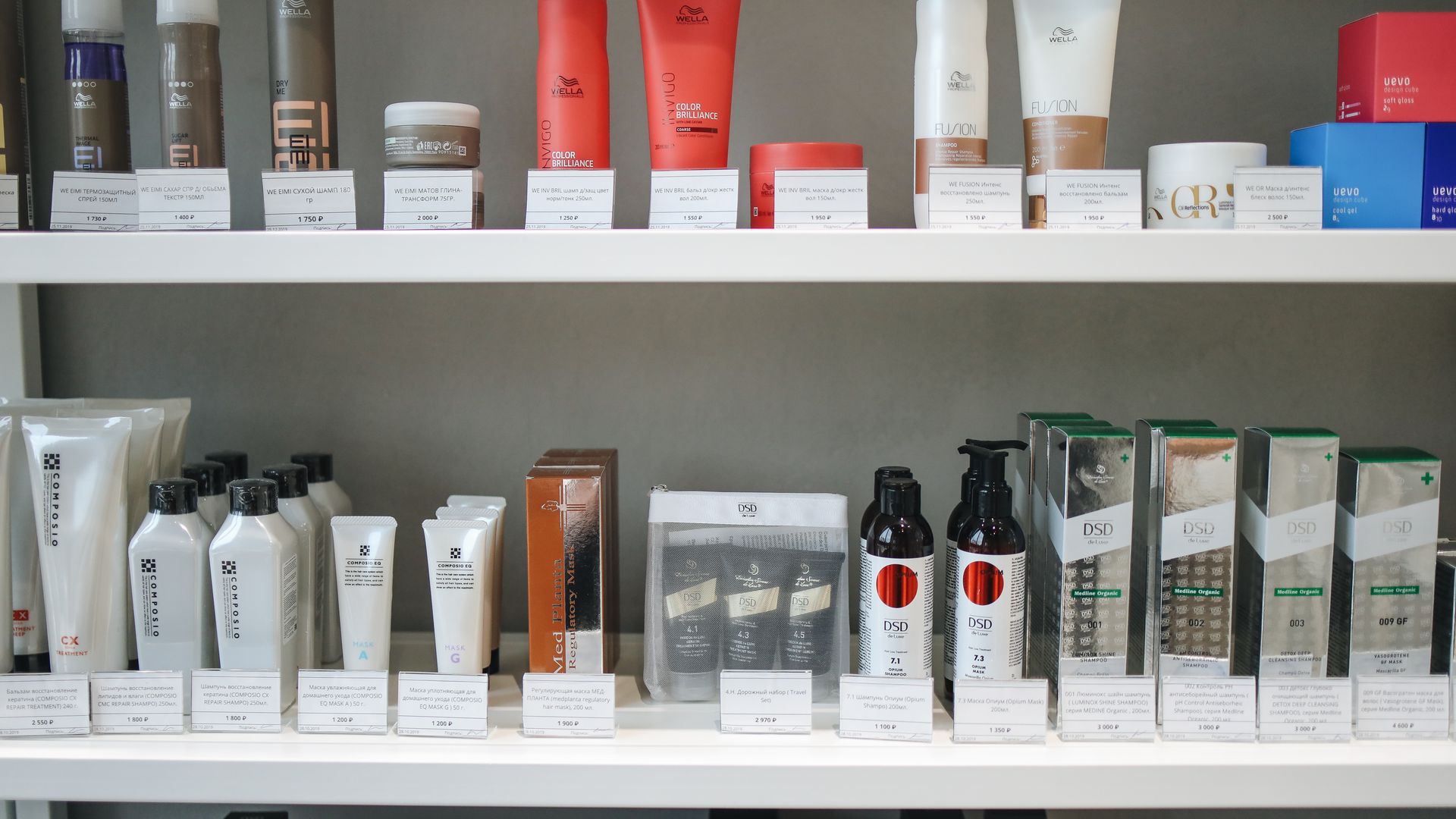
- Only ministry-approved products, each with an expiry date.
- Opened items labelled with their first-use date. Every opened bottle of developer, tub of wax and serum. Buy a label printer and make it part of opening routines.
Services
- A licensed price list displayed at reception.
- No services beyond the licensed activity.
- Banned: chemical and acid peels, and dyeing eyebrows with hair dye.
- Special permits needed for tattoo, permanent makeup, cupping and ear-piercing. If any of these are on your planned menu, ask about the permit before you print the menu.
Children's salons
- Mild, fragrance-free products only.
- No hair dye.
- A guardian must be present.
Premises and conduct
- Air conditioning sized at 1 ton per 12 m². Measure the floor area and give the number to your HVAC contractor before they quote.
- Washable walls. This affects your finishes. Some decorative wallpapers and textured plasters will not pass.
- No photographing or recording customers. Before-and-after photos and filming content in the salon are habits many owners bring from other markets. Check what is allowed before planning your Instagram.
- No living or cooking on the premises. No staff sleeping in the back room, and no kitchen cooking.
Staffing and visas: what to expect
Hiring is often the slowest part of opening. Owners report staff shortages and visa and manpower challenges under the sponsorship system, according to Kuwait Times reporting in October 2025.
What helps:
- Start recruiting early, in parallel with licensing rather than after it.
- Build the health certificate into onboarding. A stylist who has arrived but has no Sahel certificate cannot work, so a start date is only real once the certificate is issued.
- Plan commissions and schedules before day one. New teams settle faster when they know how they are paid. Our guide to running a ladies' salon in the Gulf covers staffing structures that work in women-only settings.
Confirm visa and work permit requirements with the relevant authorities, as procedures depend on nationality and role.
Where can you open a salon in Kuwait?
Location rules are simple to state and easy to break: shops are not allowed in private residential areas. A home salon or a converted villa in a residential block is not a licensable option.
Beyond that, think like a client. Parking and easy evening access usually matter more than footfall, and for ladies' salons a discreet entrance is worth paying for.
How much does it cost to open a salon in Kuwait?
Costs vary too much by area, size and concept for a useful single figure. Budget by category and get real quotes for each:
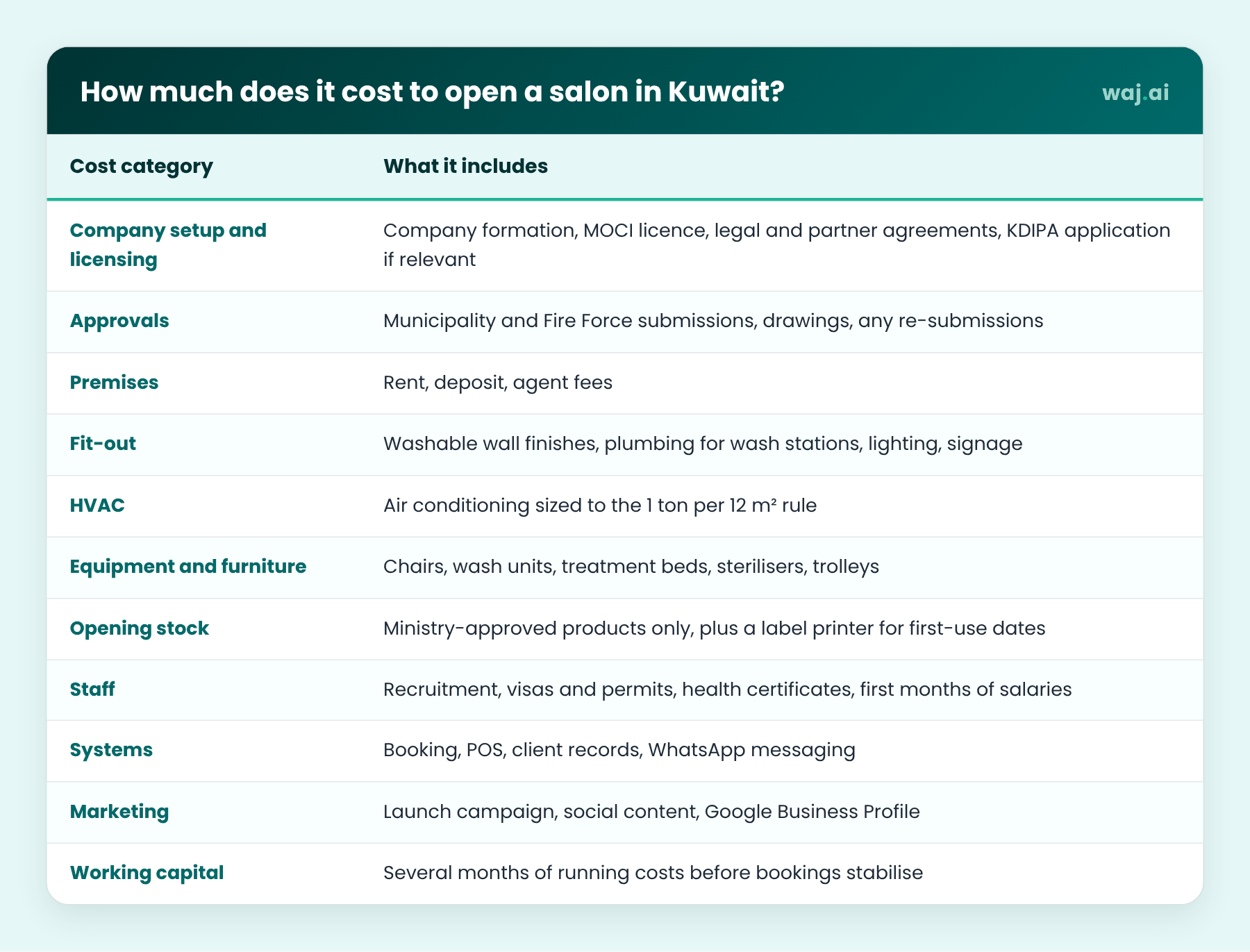
- Company setup and licensing
What it includes: Company formation, MOCI licence, legal and partner agreements, KDIPA application if relevant - Approvals
What it includes: Municipality and Fire Force submissions, drawings, any re-submissions - Premises
What it includes: Rent, deposit, agent fees - Fit-out
What it includes: Washable wall finishes, plumbing for wash stations, lighting, signage - HVAC
What it includes: Air conditioning sized to the 1 ton per 12 m² rule - Equipment and furniture
What it includes: Chairs, wash units, treatment beds, sterilisers, trolleys - Opening stock
What it includes: Ministry-approved products only, plus a label printer for first-use dates - Staff
What it includes: Recruitment, visas and permits, health certificates, first months of salaries - Systems
What it includes: Booking, POS, client records, WhatsApp messaging - Marketing
What it includes: Launch campaign, social content, Google Business Profile - Working capital
What it includes: Several months of running costs before bookings stabilise
When you set your prices, work back from these costs. Our guide on how to price salon services shows how to build a price list from your real cost per hour, which helps when the licensed price list goes up at reception.
Launch checklist for a Kuwait salon or spa
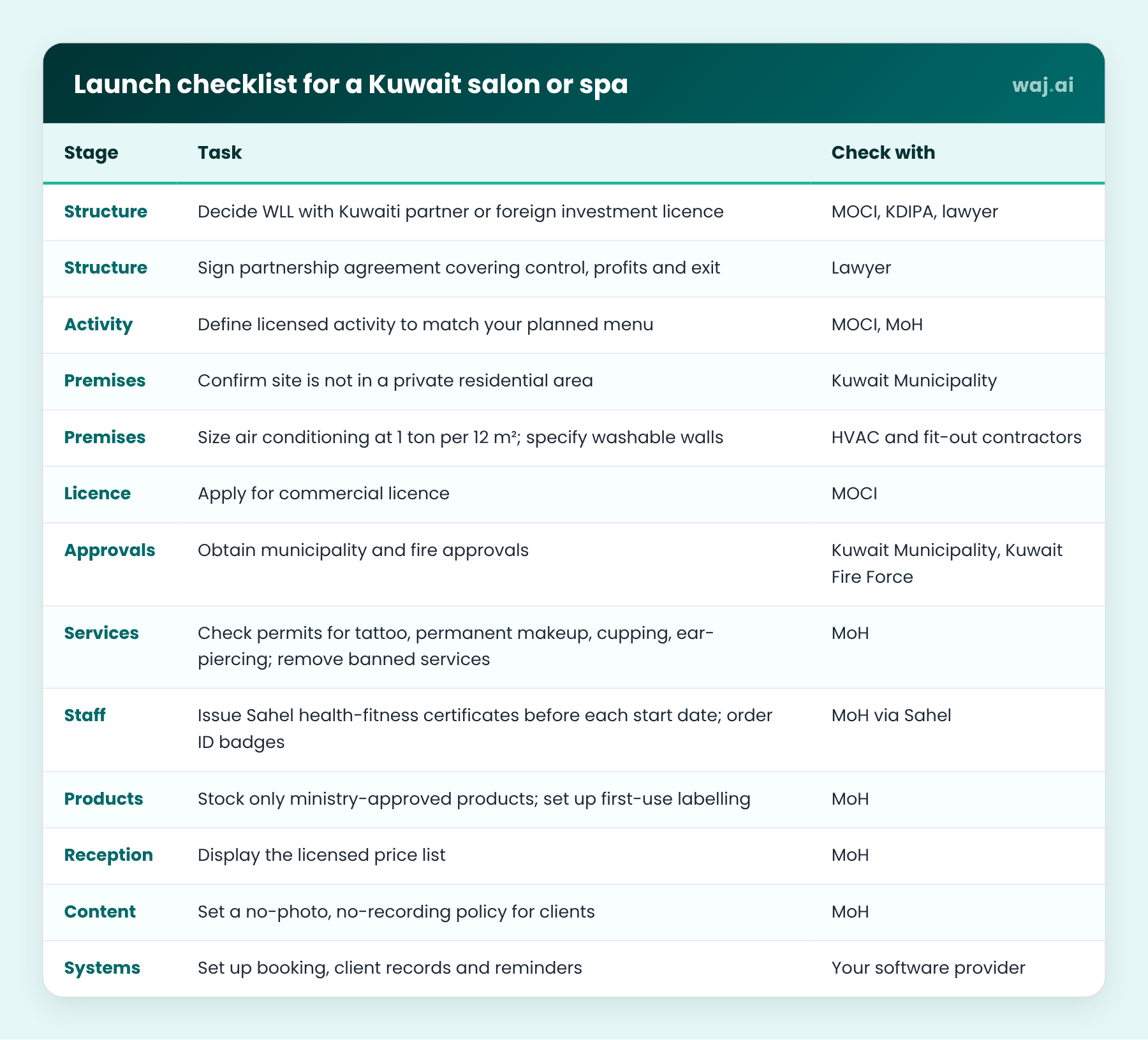
- Structure
Task: Decide WLL with Kuwaiti partner or foreign investment licence
Check with: MOCI, KDIPA, lawyer - Structure
Task: Sign partnership agreement covering control, profits and exit
Check with: Lawyer - Activity
Task: Define licensed activity to match your planned menu
Check with: MOCI, MoH - Premises
Task: Confirm site is not in a private residential area
Check with: Kuwait Municipality - Premises
Task: Size air conditioning at 1 ton per 12 m²; specify washable walls
Check with: HVAC and fit-out contractors - Licence
Task: Apply for commercial licence
Check with: MOCI - Approvals
Task: Obtain municipality and fire approvals
Check with: Kuwait Municipality, Kuwait Fire Force - Services
Task: Check permits for tattoo, permanent makeup, cupping, ear-piercing; remove banned services
Check with: MoH - Staff
Task: Issue Sahel health-fitness certificates before each start date; order ID badges
Check with: MoH via Sahel - Products
Task: Stock only ministry-approved products; set up first-use labelling
Check with: MoH - Reception
Task: Display the licensed price list
Check with: MoH - Content
Task: Set a no-photo, no-recording policy for clients
Check with: MoH - Systems
Task: Set up booking, client records and reminders
Check with: Your software provider
Setting up systems that make compliance easier
Much of the MoH guide is routine: certificates, labels, sticking to the licensed menu. Software will not do that for you, but it removes excuses. In WAJ, for example, your service menu and prices live in one place, so what clients book online matches what is on the wall at reception. Inventory tracking helps you see which products are opened and running low. Client records hold notes and history without anyone taking photos on a personal phone. WhatsApp reminders cut the no-shows that hurt every new salon in its first months. There is no booking commission and no onboarding fee, which helps when cash is tight before launch.
If you are also comparing other Gulf markets, our guide on opening a salon or spa in Qatar shows how the steps differ.
FAQ
Can a foreigner open a salon in Kuwait?
Yes, but foreign ownership generally requires a Kuwaiti partner holding at least 51% in a WLL, unless you obtain a foreign investment licence through KDIPA. Confirm your options with MOCI, KDIPA or a lawyer.
What is the Kuwait MoH Health Requirements Guide for salons?
It is a set of more than 130 requirements issued by the Ministry of Health in August 2025 under Ministerial Resolution No. 194/2025. It covers staff health certificates, approved products, banned services, premises standards and conduct. The compliance deadline was 1 March 2026.
Can I offer chemical peels or permanent makeup in a Kuwait salon?
Chemical and acid peels are banned under the guide. Permanent makeup, tattoo, cupping and ear-piercing need special permits. Check with the Ministry of Health before adding them to your menu.
Can I run a salon from home in Kuwait?
No. Shops are not allowed in private residential areas, so a home salon is not a licensable option.
What happens if a salon fails an inspection?
Joint inspection teams can fine, suspend or close salons that do not meet the requirements. Keep certificates, product records and your licensed price list ready at all times.
Opening in Kuwait takes patience, a solid partner agreement and a fit-out planned around the health rules. If you want to see how a booking, POS and client system can be ready before your first client walks in, book a free WAJ demo: waj.ai/demo.
Follow WAJ on Google
Add WAJ as a preferred source to see more of our articles in your Google Search results, marked with a "preferred" badge.