How to Run a Home-Service Beauty Business in the UAE and Saudi Arabia
WAJ Team
October 12, 2026
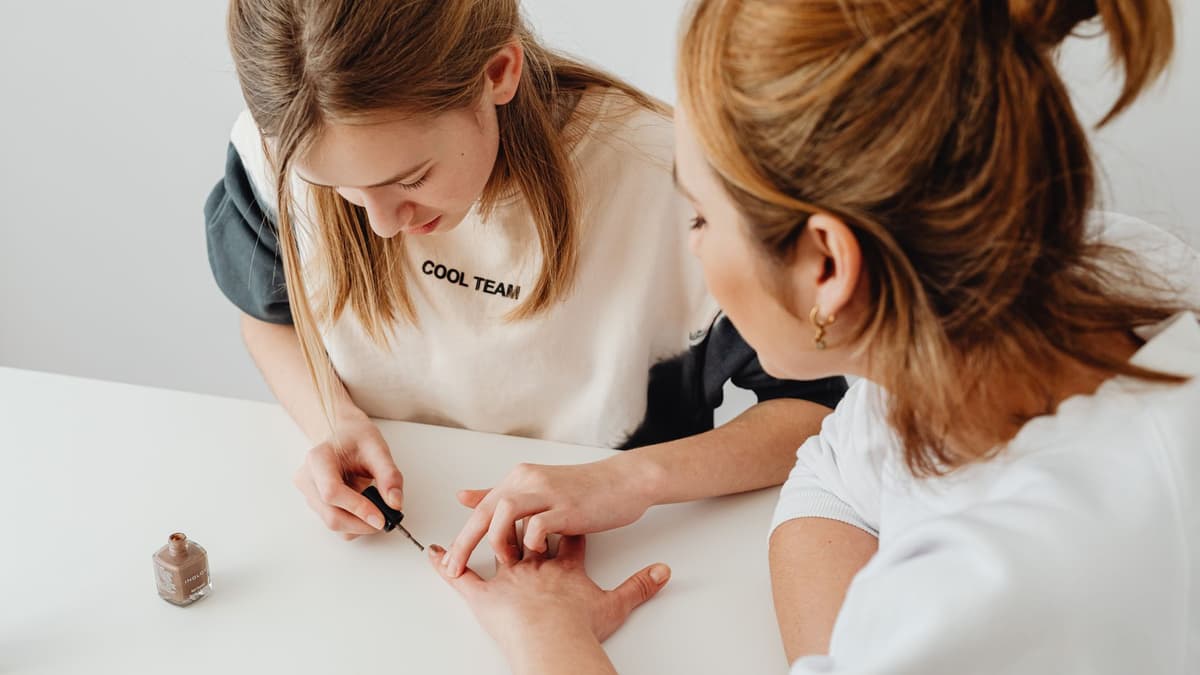
A home service salon in Dubai, Riyadh or Jeddah works when four things are tight: the right licence for a mobile model, a defined service area with travel time built into every booking, prices that include a fair travel fee, and clear rules that keep your staff safe inside clients' homes. Get those right and the rest is routing and good manners. Get them wrong and you spend your days stuck in traffic for appointments that barely cover fuel.
The demand is there: mothers with small children, brides getting ready at home, professionals in villas far from the nearest mall. But a home-service business is not a salon without rent. It is a logistics business that happens to do nails and hair.
What licence do you need for a home-service beauty business?
This is the first question and the one not to guess at. A home-service model generally needs the proper commercial licence for the activity, any municipality approvals that apply, and valid work permits and residency for every staff member who visits clients. Freelancing under someone else's licence, or sending out staff whose visas are tied to another employer, is a risk to you and to them.
The details differ by emirate and by city, and they change. Before you spend on a car or a kit:
- UAE: confirm the right activity and licence with the DED or the economic department in your emirate, and check municipality requirements.
- Saudi Arabia: confirm with the Ministry of Commerce for the commercial registration and with Balady for municipal licensing.
Ask specifically whether your activity covers services at the client's address, and what is needed for each employee. This is not legal advice, so confirm with the authority or a business-setup lawyer before you launch.
How to set service areas and travel buffers
The fastest way to lose money is to say yes to every address. Draw your map first.
- Pick a home zone. In Dubai that might be Jumeirah, Al Barsha and Umm Suqeim; in Riyadh, a cluster of northern districts. Stay where you can do three or four visits a day without crossing the city.
- Add an outer zone with a higher travel fee for areas you will cover, but not cheaply.
- Say no, politely, to the rest. Or accept them only for large bookings like bridal parties.
- Block travel time on the calendar. Every booking needs a buffer before and after for driving, parking, the building lobby and setting up. In a tower in Dubai Marina, getting from the car park to the apartment can take fifteen minutes on its own.
Never let a visit end at 4:00 with the next one booked at 4:00 across town. That is how staff end up rushing, late and stressed.
How to price home services with a travel fee
Home clients pay for convenience, and most expect a premium. Either add a separate travel fee by zone, or build a home-service uplift into each price and set a minimum booking value. A minimum matters more than people think: one express manicure 40 minutes away is a loss even at a high price.
For how to build the base prices, see our guide on how to price salon services.
Example pricing with travel (AED, illustrative only)
The figures below are an example to show the structure. They are not market rates. Set yours from your own costs.
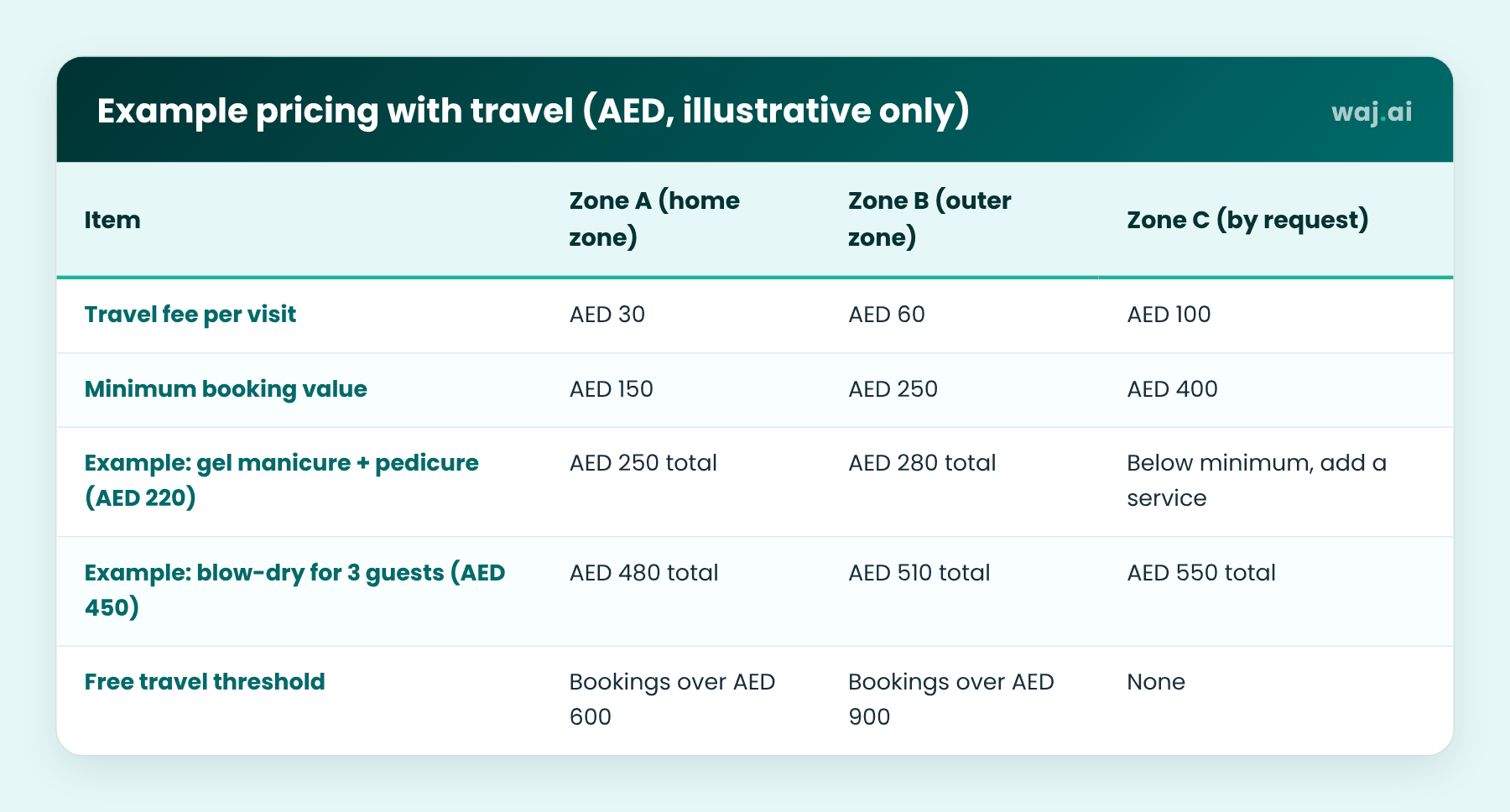
- Travel fee per visit
Zone A (home zone): AED 30
Zone B (outer zone): AED 60
Zone C (by request): AED 100 - Minimum booking value
Zone A (home zone): AED 150
Zone B (outer zone): AED 250
Zone C (by request): AED 400 - Example: gel manicure + pedicure (AED 220)
Zone A (home zone): AED 250 total
Zone B (outer zone): AED 280 total
Zone C (by request): Below minimum, add a service - Example: blow-dry for 3 guests (AED 450)
Zone A (home zone): AED 480 total
Zone B (outer zone): AED 510 total
Zone C (by request): AED 550 total - Free travel threshold
Zone A (home zone): Bookings over AED 600
Zone B (outer zone): Bookings over AED 900
Zone C (by request): None
Show the travel fee clearly at booking. Clients accept a fee they saw upfront. They argue about one that appears at the door.
The home-service kit list and hygiene standards
Your kit is your salon. Clients judge you in the first minute by what comes out of the bag.
- A hard case with labelled sections, cleaned every evening.
- Disposable towels, sheets, files and buffers, one set per client.
- Sterilised metal tools in sealed pouches, opened in front of the client.
- Surface disinfectant and a clean mat or sheet to work on.
- Products within date, with opened items labelled.
- A portable lamp, extension lead and a waste bag that leaves with you.
- Spare gloves, masks and hand sanitiser.
Train everyone on one setup routine: greet, lay the sheet, sanitise hands, open tools in view, work, wipe down, leave the space as you found it. Done the same way every time, it looks professional and protects you if a client complains.
Staff safety and privacy in clients' homes
This is the part that keeps owners awake, and it should.
Female staff for ladies' services. In the Gulf, ladies' home services are done by women, full stop. Confirm at booking who will be present at the address, and note any family preferences.
Check-in and check-out. Staff send a short WhatsApp message to a supervisor when they arrive, and again when they leave. If no check-out arrives within an agreed time after the expected finish, someone calls.
Share location during visits. Live location for the duration of the job, turned off afterwards.
A clear right to leave. Staff must know they can walk out of any situation that feels wrong, without losing pay, and that you will back them. Write it into your staff rules.
Verify new clients. A confirmed phone number, a full address with building and flat, and for first-time bookings at night, a deposit or a quick confirmation call.
Respect client privacy. No photos of the home or the client without permission, no social media posts from inside someone's house, and client addresses kept in your system, not in personal phone galleries. In Saudi Arabia, the PDPL has been fully enforceable since 14 September 2024 (SDAIA), and direct marketing needs the client's opt-in consent, so do not add home-service clients to promotional broadcasts unless they agreed.
Our guide to ladies' salon management in the Gulf goes deeper on privacy and female-only staffing.
How to schedule routes so the day works
Plan by area, not by time requested. If a client in Al Barsha asks for 11:00 and you already have someone in Al Barsha at 10:00, offer 11:30 nearby rather than 11:00 across town.
A simple routine:
- Group bookings by zone the evening before.
- Order visits to avoid crossing the city, and keep peak traffic hours for nearby jobs.
- Send each client a WhatsApp reminder with the arrival window, not an exact minute.
- Send an "on my way" message when staff leave the previous job.
A shared staff calendar where every visit shows the address and travel buffer stops double-booking. In WAJ, client CRM notes are a good place for the practical details: building access, parking, the client's preferences and who should be present.
Payments on site and cancellations
Decide how you take money before the first visit: a card terminal, prepayment or a first-visit deposit. Cash only means counting, carrying and disputes. Record every payment against the booking the same day.
Cancellations hurt more at home than in a salon, because staff may already be on the road. Set a firm window (for example 24 hours), take deposits for new clients and big group bookings, and charge the travel fee when a client cancels after staff have set off. Our guide on how to cut no-shows by 72% covers reminders and deposits in detail.
FAQ
Do I need a licence to run a home service salon in Dubai?
Yes. A home-service model needs the proper commercial licence for the activity, any municipality approvals, and valid staff permits. Confirm the exact requirements with DED and the municipality before launching.
Can I run home beauty services in Saudi Arabia as an individual?
Requirements depend on the activity and city. Check commercial registration with the Ministry of Commerce and municipal licensing with Balady, and get advice from a lawyer before starting.
How much should I charge for travel?
Set a fee by zone from your real costs (fuel, parking, staff time on the road), add a minimum booking value, and show both before the client confirms.
How do I keep home-service staff safe?
Female staff for ladies' services, arrival and departure check-ins, live location during visits, client verification for first bookings, and a clear right to leave any visit.
What if a client cancels when staff are already on the way?
Charge the travel fee or keep the deposit, as long as your policy said so at booking.
Running home visits alongside a salon, or on their own? Book a free WAJ demo: waj.ai/demo.
Follow WAJ on Google
Add WAJ as a preferred source to see more of our articles in your Google Search results, marked with a "preferred" badge.