
Clinic Inventory Management: Tracking Fillers, Toxins and Expiry Dates Without Waste
WAJ Team
August 17, 2026
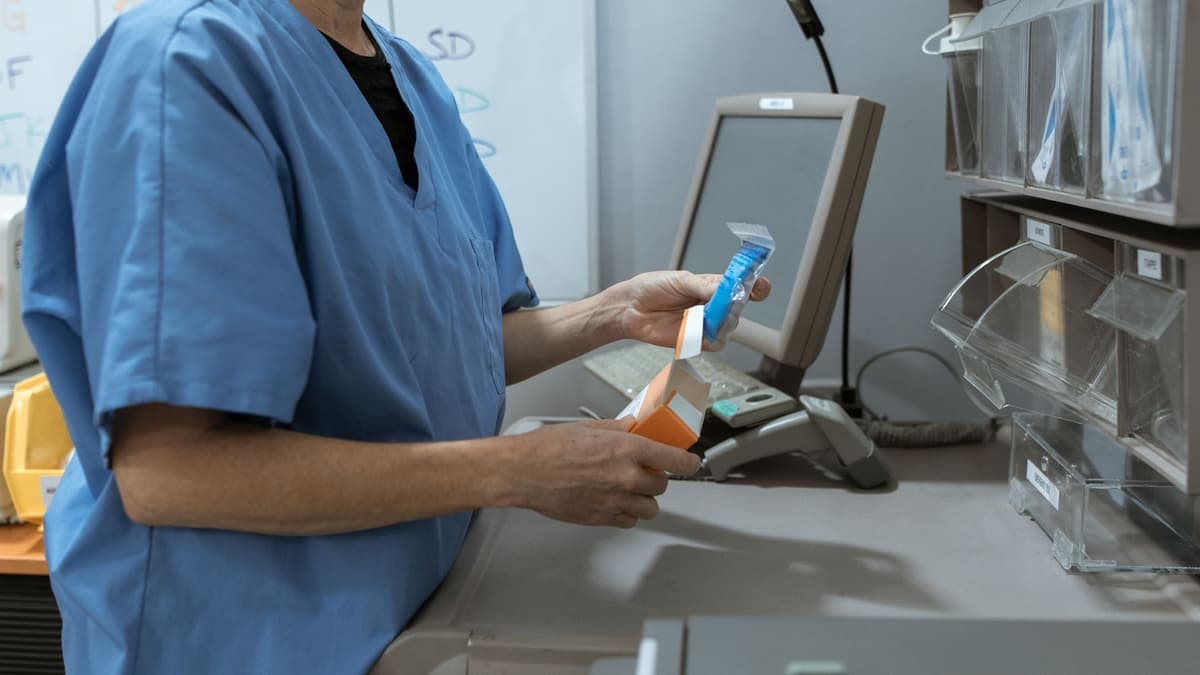
Good clinic inventory management means knowing, at any moment, what injectables and consumables you hold, where they are stored, when each batch expires and which patient received which lot. In practice that comes down to five habits: check every delivery on arrival, keep a fridge log, use the stock that expires first, record the lot number in the patient's treatment record, and count everything monthly. Get those right and most waste, shortages and awkward recall phone calls disappear.
Plenty of aesthetic clinics in Dubai, Riyadh and Amman run reception on modern software while the stock room runs on a notebook. That gap is expensive.
Why clinic stock is different from salon retail
A salon losing a bottle of shampoo is an annoyance. A clinic losing a box of toxin is a real hit to the month's margin, and possibly a compliance problem. Clinic consumables differ in four ways:
- High value per unit. A single shelf can hold more value than the reception furniture.
- Hard expiry dates. An expired syringe has zero value, and using it is not an option.
- Batch and lot traceability. If a manufacturer issues a recall on a lot, you need to know which patients received it, today, not after three days of searching paper files.
- Storage conditions. Many products have specific storage requirements. Store every product exactly as the manufacturer specifies, and follow your regulator's rules: the MOH, DHA or SFDA, depending on where you operate.
This guide covers operations. It is not regulatory advice. Storage, record-keeping and disposal rules come from the manufacturer and your health regulator, so confirm the details with the MOH, DHA, SFDA or a qualified adviser.
Receiving checks: the first five minutes matter
Most stock problems start at the door. A courier drops a cool box at reception on a busy afternoon, it sits on the floor for an hour, and nobody knows if the cold chain held.
Set one receiving routine and make one named person responsible on each shift:
- Check the delivery against the purchase order: product, quantity, strength.
- Check the packaging is intact and any temperature indicator the supplier includes.
- Record the lot number and expiry date of every box.
- Move cold-chain items into the correct storage straight away, before paperwork.
- Enter the stock into your inventory system the same day, with lot and expiry.
- Flag anything damaged, short or close to expiry to the supplier in writing.
If a product arrives with a short expiry you did not agree to, send it back.
Keeping a fridge log that actually gets filled in
For refrigerated products, the fridge log is your evidence that you stored them correctly, and it only counts if it is filled in consistently.
A workable fridge log records:
- Date and time of each check
- The reading, compared against the range the manufacturer specifies
- Initials of the person checking
- Any action taken if the reading was out of range
Assign the check to a role, such as the opening nurse, rather than "whoever remembers". Keep the fridge for clinical products only, never staff lunches. After a power cut or out-of-range reading, follow the manufacturer's guidance on whether the stock is still usable, and document the decision.

FEFO: first expiry, first out
Many clinics say they use FIFO (first in, first out). For products with expiry dates, FEFO is the safer rule: use the stock that expires first, regardless of when it arrived. Sometimes a newer delivery carries an earlier expiry than what is already on the shelf.
To make FEFO work in a busy clinic:
- Arrange shelves and fridge trays so the earliest expiry sits at the front.
- Label each box or tray with its expiry in large writing.
- Run a short-dated report every week: anything expiring within the next 60 days goes on a list the medical director sees.
- Use short-dated stock first rather than discounting in a panic.
Logging lot numbers against patient treatment records
This habit separates a well-run clinic from one hoping for the best. Every time a practitioner uses a filler or toxin, the product, lot number and quantity go into that patient's treatment record, alongside the notes and injection areas.
Why it matters:
- Recalls. If a lot is recalled, you can contact exactly the affected patients.
- Complications. If a patient has a reaction, the practitioner can see exactly what was used.
- Repeat treatments. Next visit, the doctor knows which product and how much was used last time.
Remember that treatment records are health data. In Saudi Arabia, health data is classed as sensitive under the PDPL and cannot be used for marketing. In the UAE, Federal Law No. 2 of 2019 keeps health data inside the country by default. Store records in a system that respects those rules and limit access to clinical staff. For the bigger picture on setting up clinical workflows, see our guide to aesthetic clinic management and automation in the UAE, Saudi Arabia and Jordan.
Reorder points: stop guessing when to buy
A reorder point is the stock level that triggers a new order. A simple way to set one:
Reorder point = average daily usage × supplier lead time in days + safety stock
For example, if your clinic uses two units of a product a day, the supplier takes five days to deliver, and you want three days of cover, your reorder point is 2 × 5 + (2 × 3) = 16 units. These numbers are illustrative; use your own usage data.
With expiring products, don't overdo the safety stock. A bulk discount on stock you end up binning is no discount at all.
In WAJ, inventory and reports sit in the same system as bookings and sales, across every branch, so reorder points come from real figures instead of the nurse's best guess. Clinics that want a setup built around clinical workflows can look at WAJ's clinic product, Nabd.
Theft and leakage control
Most clinic stock loss is leakage rather than dramatic theft: the extra syringe used "just to finish the area", the unrecorded touch-up, the staff treatment nobody logged.
Controls that work without creating a culture of suspicion:
- Lock injectables and give keys or access to named clinical staff only.
- Match product usage against completed treatments every week. Twelve toxin treatments should match the units recorded.
- Record every complimentary or staff treatment as a zero-priced sale, so stock still moves in the system.
- Separate duties where you can: the person who orders stock is not the only person who counts it.
- Investigate gaps quickly and calmly. Most are recording errors.
Monthly stock counts
Do a full physical count once a month, ideally on a fixed day before the month closes. Count by product, lot and expiry, compare with the system, and write down the reason for every difference. Weekly spot checks on your five highest-value items catch problems earlier.
Over a few months, the variance report shows where the leaks are: one branch, one product, one shift.
Clinic stock-control checklist
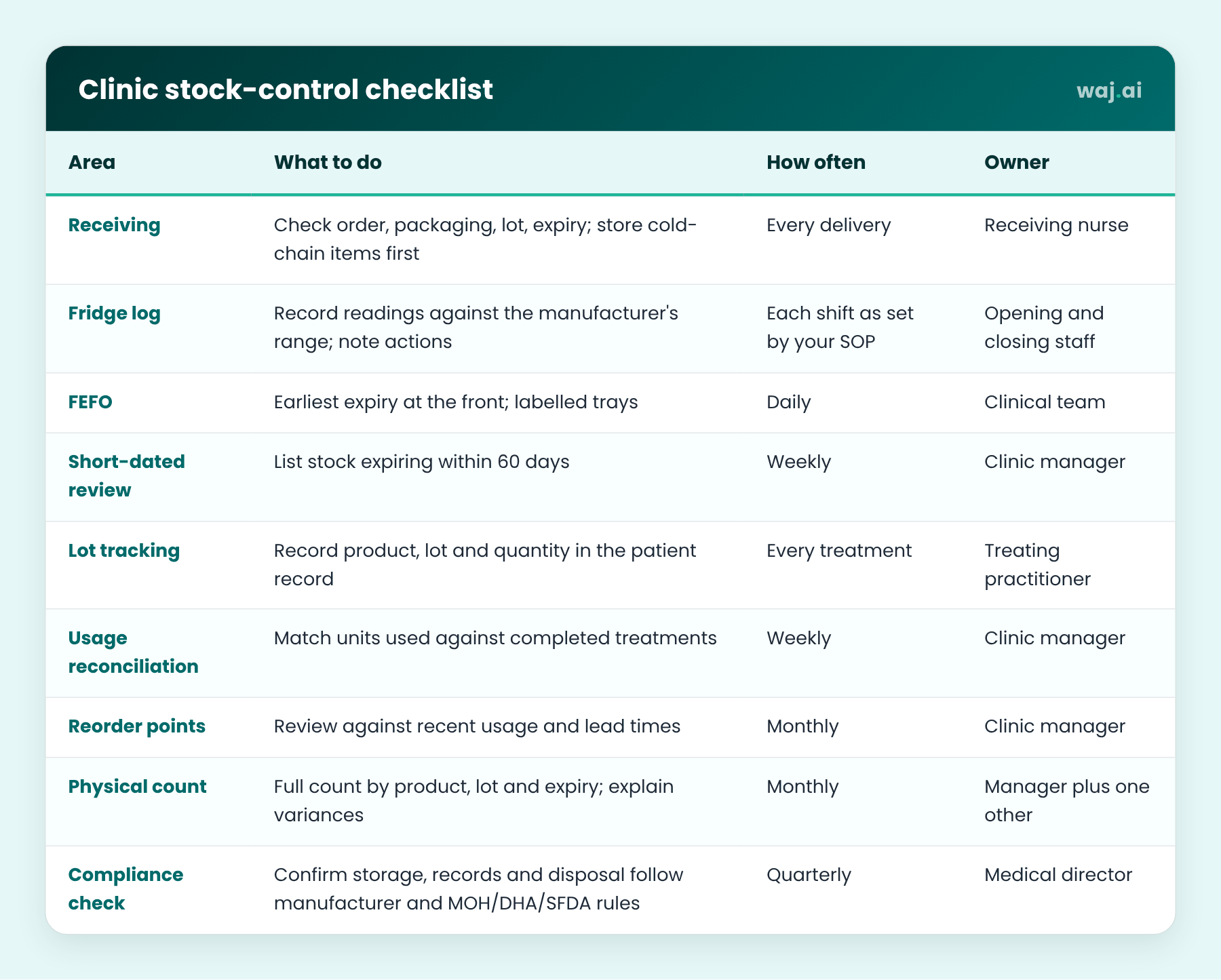
- Receiving
What to do: Check order, packaging, lot, expiry; store cold-chain items first
How often: Every delivery
Owner: Receiving nurse - Fridge log
What to do: Record readings against the manufacturer's range; note actions
How often: Each shift as set by your SOP
Owner: Opening and closing staff - FEFO
What to do: Earliest expiry at the front; labelled trays
How often: Daily
Owner: Clinical team - Short-dated review
What to do: List stock expiring within 60 days
How often: Weekly
Owner: Clinic manager - Lot tracking
What to do: Record product, lot and quantity in the patient record
How often: Every treatment
Owner: Treating practitioner - Usage reconciliation
What to do: Match units used against completed treatments
How often: Weekly
Owner: Clinic manager - Reorder points
What to do: Review against recent usage and lead times
How often: Monthly
Owner: Clinic manager - Physical count
What to do: Full count by product, lot and expiry; explain variances
How often: Monthly
Owner: Manager plus one other - Compliance check
What to do: Confirm storage, records and disposal follow manufacturer and MOH/DHA/SFDA rules
How often: Quarterly
Owner: Medical director
FAQ
What is the best way to manage clinic inventory?
Check every delivery, log the fridge, use FEFO, record lot numbers in patient records and count monthly.
What is FEFO and why does it matter for fillers and toxins?
FEFO means first expiry, first out: use the stock that expires first. It reduces waste because a newer delivery can carry an earlier expiry than older stock.
Do I need to record lot numbers for every injection?
Recording the product, lot number and quantity in the patient's treatment record is good practice for recalls and complications. Check your regulator's specific record-keeping requirements with the MOH, DHA or SFDA.
How should fillers and toxins be stored?
Exactly as the manufacturer specifies, and in line with your regulator's rules. Keep a fridge log for any refrigerated products and keep that fridge for clinical stock only.
How often should a clinic count its stock?
A full count monthly, with weekly spot checks on your highest-value products.
Ready to move your stock room off the notebook? Book a free WAJ demo: waj.ai/demo. For more on keeping patients coming back once operations are tight, read our guide to aesthetic clinic patient retention.
Follow WAJ on Google
Add WAJ as a preferred source to see more of our articles in your Google Search results, marked with a "preferred" badge.