
Salon CRM: Turn Visitors into Loyal Clients
WAJ Team
August 25, 2025
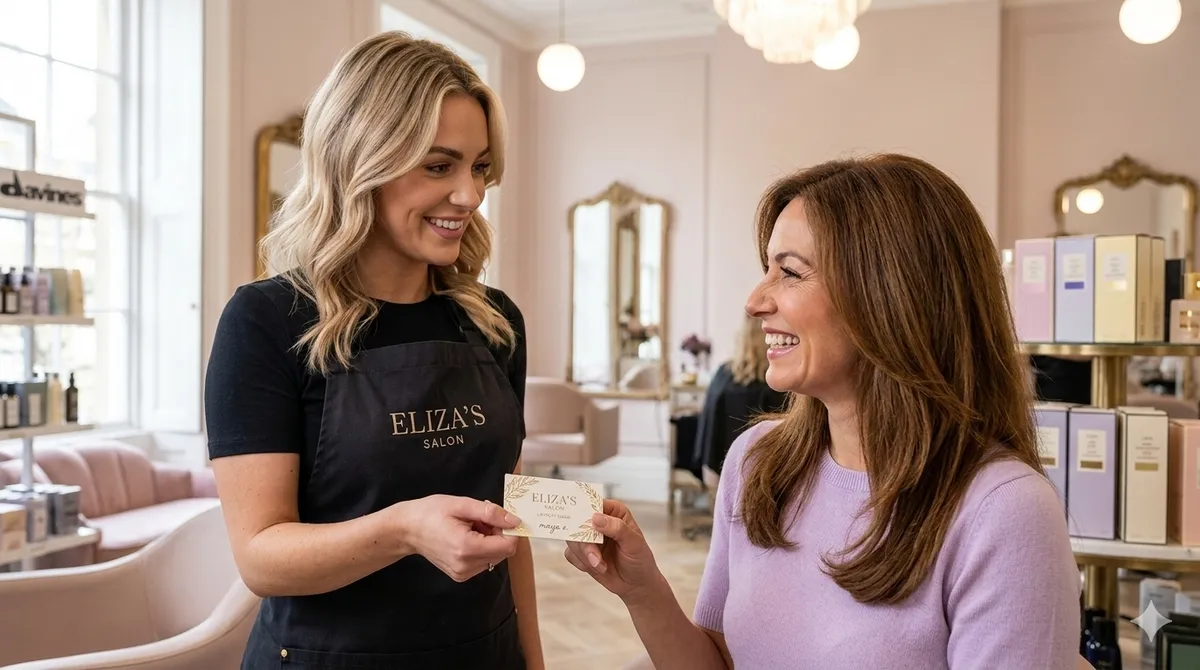
Here is a number that should change how you think about your salon business: it costs five to seven times more to acquire a new client than to retain an existing one.
Yet most salon owners spend the majority of their marketing budget and energy on attracting new faces through the door, while doing relatively little to ensure that today's new client becomes next month's regular and next year's loyal advocate.
The tool that bridges this gap is a Customer Relationship Management (CRM) system — and in the salon industry, it is not a separate piece of software. It is built into your salon management platform. The question is whether you are actually using it.
What a Salon CRM Does (Beyond Storing Phone Numbers)
At its most basic, a CRM stores client contact information. But a proper salon CRM goes far deeper, creating a comprehensive profile for every person who walks through your door.
Service history. Every appointment, every service, every product used, dating back to their very first visit. When a client asks "what color did we use last time?" — the answer is one tap away.
Preferences and notes. Their preferred stylist, their usual drink, their sensitivity to certain products, their wedding anniversary, their children's names. The small details that transform a transaction into a relationship.
Communication history. Every message sent and received — booking confirmations, reminders, marketing campaigns, feedback surveys. This gives any team member full context when interacting with a client.
Financial data. Total lifetime spend, average ticket value, frequency of visits, and preferred payment method. This data is gold for segmentation and personalized marketing.
Behavioral patterns. When they typically book, how far in advance, whether they tend to add services at the appointment, and whether they purchase retail products. Patterns reveal opportunities.
The Client Lifecycle in Salons
Every client relationship follows a predictable lifecycle, and each stage requires different CRM strategies.
Stage 1: The First Visit
A client's first visit is the most critical moment in the relationship. They are evaluating everything: the booking process, the welcome, the consultation, the service quality, the atmosphere, and the checkout experience. Their decision to return — or not — is largely made during this single visit.
CRM action: After the first visit, your system should automatically send a personalized thank-you message within 24 hours. Include a direct rebooking link and a gentle invitation to leave a review. Do not offer a discount — the first follow-up should be about gratitude, not selling.
CRM data to capture: All service details, the stylist who served them, any noted preferences or sensitivities, and how they found your salon (referral, Google, Instagram, walk-in). This acquisition source data is critical for marketing optimization.
Stage 2: The Second Visit
The second visit is where retention begins. A client who returns once is significantly more likely to become a regular than one who has only visited once.
CRM action: If the client has not rebooked within their expected return window (typically 4-6 weeks for hair services, 2-3 weeks for nails), send a gentle reminder: "It's been a while since your last visit. Your stylist has availability this week — would you like to book?"
CRM data to leverage: Reference their first visit to create continuity. "Welcome back! Last time you had the keratin treatment with Noura. Would you like to continue with the same or try something different?"
Stage 3: Regular Client
A client who has visited three or more times is a regular. They have established a pattern, chosen a preferred stylist, and integrated your salon into their routine.
CRM action: Maintain the relationship with consistent touchpoints: birthday messages, seasonal recommendations, early access to new services, and loyalty rewards. Avoid over-communicating — one to two messages per month beyond booking-related communications is appropriate.
CRM data to leverage: Use their visit frequency and average spend to personalize offers. A high-value client who visits monthly might receive an invitation to a VIP preview event. A moderate-spend client who visits every eight weeks might receive a gentle nudge at six weeks.
Stage 4: Loyal Advocate
Your best clients are those who not only return regularly but actively recommend you to friends and family. These advocates are worth many times more than their personal spend because each referral they generate has an acquisition cost of essentially zero.
CRM action: Identify advocates through referral tracking and review behavior. Reward them generously — not just with discounts, but with experiences: exclusive events, first access to new services, personalized gifts on milestones, and genuine expressions of gratitude.
Stage 5: At-Risk and Lapsed
Every salon has clients who were once regulars but have gradually drifted away. Perhaps they had a disappointing experience, moved to a different area, found another salon, or simply fell out of the habit.
CRM action: Set up automated triggers for clients who exceed their typical visit interval. A client who normally visits every four weeks but has not booked in six weeks should receive a "we miss you" message. At eight weeks, a more personal outreach — perhaps a message from their usual stylist — can reignite the connection.
Important: Do not offer discounts as the default re-engagement strategy. Discounting trains clients to wait for offers before booking. Instead, focus on personal connection and the value of the experience.
Segmentation: The Power of Targeted Communication
The biggest mistake salon owners make with their CRM is treating all clients the same. A one-size-fits-all promotional email is less effective than targeted messages for specific segments.
Useful segments for salon marketing include:
By visit frequency: Weekly, bi-weekly, monthly, bi-monthly, quarterly, and lapsed. Each segment has different needs and responds to different messages.
By average spend: High-value clients (top 20%) versus moderate and budget-conscious clients. High-value clients deserve premium treatment; budget-conscious clients may respond to package deals.
By service type: Color clients, cut-only clients, treatment regulars, nail clients, and multi-service clients. Service-specific recommendations are far more relevant than generic promotions.
By acquisition source: Referral clients typically have higher retention rates than marketplace or advertising-acquired clients. Understanding this helps you invest in the right acquisition channels.
By stylist: Clients who see the same stylist consistently have higher retention rates. If a stylist leaves, you can proactively reach out to their client list before they find out on their own.
Automation That Feels Personal
The goal of CRM automation is not to replace personal interaction — it is to ensure that no client falls through the cracks. Even the most attentive salon team cannot remember to follow up with every client at exactly the right moment. Automation handles the timing; your team provides the personal touch.
Birthday campaigns. Automatically send a birthday greeting with a special offer seven days before the client's birthday. This is one of the highest-converting automated campaigns in the salon industry because it feels genuinely personal and creates a time-limited reason to book.
Rebooking reminders. When a client's typical interval has passed without a new booking, send a gentle reminder suggesting available times with their preferred stylist. The message should feel like a helpful nudge, not a sales pitch.
Post-visit follow-up. Within 24 hours of every appointment, send a thank-you message with an optional feedback survey. This catches dissatisfied clients before they become lapsed clients and generates positive reviews from satisfied ones.
Loyalty milestones. Recognize anniversaries (one year as a client), visit milestones (10th visit, 25th visit), and spending milestones with personalized messages. These acknowledgments make clients feel valued and noticed.
Seasonal campaigns. Automated campaigns aligned with seasons, holidays, and cultural events. For Gulf markets, this includes Ramadan, Eid, National Day, and back-to-school periods.
Measuring Client Retention
You cannot improve retention without measuring it. Track these metrics monthly:
Client retention rate. The percentage of clients who return within a defined period (typically 90 days). A healthy salon retention rate is 60% to 70%. Top-performing salons achieve 75% or higher.
Average client lifetime value (CLV). The total revenue a client generates over their entire relationship with your salon. Calculate this by multiplying average visit value by visit frequency by average relationship duration.
Rebooking rate. The percentage of clients who book their next appointment before leaving the salon or within 48 hours of their visit. High rebooking rates indicate strong service satisfaction and effective front-desk processes.
Client churn rate. The percentage of active clients who become inactive (no visit) within a defined period. Track this monthly and investigate spikes.
Net Promoter Score (NPS). Survey clients with a single question: "How likely are you to recommend our salon to a friend?" Scores of 9-10 are promoters, 7-8 are passive, and 0-6 are detractors. A healthy NPS for a salon is 50 or above.
Your salon software should calculate these metrics automatically and display them in a dashboard that you review regularly.
The Bottom Line
Client retention is the single most impactful metric you can improve in your salon business. A 5% increase in retention can increase profits by 25% to 95%, according to widely cited research on customer lifetime value.
Your CRM is the engine that drives retention. But it only works if you feed it data (capture client information at every interaction), use it consistently (check profiles before every appointment, act on automated alerts), and measure results (track retention metrics monthly and adjust your strategies based on what the data tells you).
The salon that remembers you, anticipates your needs, follows up with care, and makes you feel valued is the salon you return to again and again. CRM technology makes this possible at scale — turning what was once dependent on a single receptionist's memory into a systematic, reliable process that works for every client, every time.
Sources and References
1. Mindbody. "Wellness Insights." mindbodyonline.com — Client retention benchmarks and consumer loyalty data in wellness businesses.
2. The Salon Business. "9 Best Salon Software in 2026." thesalonbusiness.com — CRM features and client management capabilities across leading platforms.
3. GlossGenius Blog. "Salon Booking Software: 9 Apps for Booking and Payments." glossgenius.com — Client management tools and retention strategy features.
4. Vagaro. "The Best Salon Software of 2026." vagaro.com — CRM capabilities, loyalty programs, and automated marketing features.
5. Meevo Inspo Blog. "How to Choose the Right Salon Management Software." meevo.com — Client relationship management evaluation criteria.
6. Phorest Salon Software. "Salon CRM and Client Retention." phorest.com — Client lifecycle management and retention metrics.
7. Koalendar. "8 Best Salon Booking Software for Beauty Professionals." koalendar.com — Client communication and relationship management features.
8. Mordor Intelligence. "Salon & Spa Software Market." mordorintelligence.com — Customer management technology trends in the salon industry.
Follow WAJ on Google
Add WAJ as a preferred source to see more of our articles in your Google Search results, marked with a "preferred" badge.