
How to Start a Salon Business in Dubai
WAJ Team
July 5, 2025
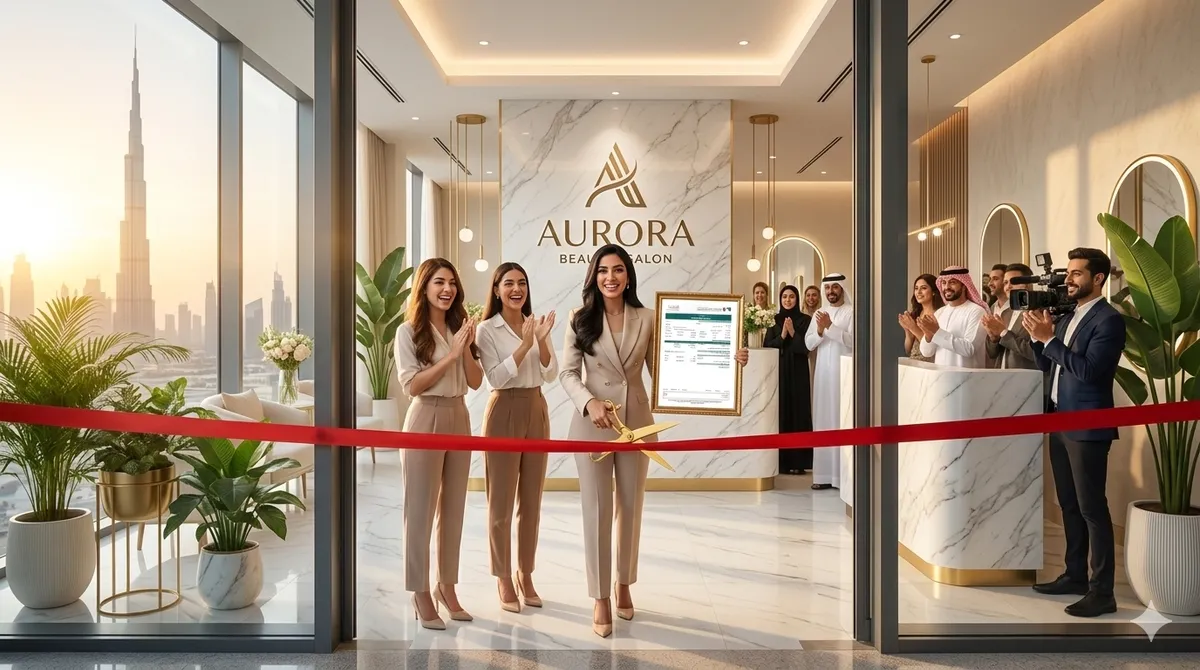
Dubai has one of the highest per-capita spending rates on beauty and personal care in the world. The city's diverse, image-conscious population, thriving tourism industry, and favorable business environment make it one of the most attractive markets globally for salon entrepreneurs.
But starting a salon in Dubai is not as simple as renting a space, buying some chairs, and opening your doors. The UAE has specific licensing requirements, municipal regulations, and operational standards that every salon must meet. Navigating these requirements efficiently can save you months of delays and thousands of dirhams in avoidable expenses.
This guide walks you through every step — from initial planning to welcoming your first client.
Step 1: Define Your Salon Concept and Business Plan
Before you touch any paperwork, get crystal clear on what you are building.
Choose Your Niche
Dubai's beauty market is competitive, and generalist salons often struggle to differentiate. Consider specializing in a niche that you can dominate:
Ladies salon. The largest segment in the UAE market. Services typically include hair, nails, facials, waxing, and makeup. Gender-segregated salons are the norm, and many female clients specifically seek out women-only environments.
Gents salon or barbershop. Men's grooming is a booming sector in Dubai, driven by a young, image-conscious male population. Traditional barbershop services combined with modern grooming (beard styling, skin treatments, hair coloring) are in high demand.
Unisex salon. Less common in the Gulf but growing in popularity, especially in expatriate-heavy neighborhoods. Requires careful layout planning to ensure appropriate privacy.
Specialty salon. Focused on a specific service category such as nail art, hair extensions, braiding, bridal makeup, or organic and halal beauty treatments.
Med spa or aesthetic clinic. Combines traditional beauty services with medical aesthetics like laser treatments, injectables, and skin rejuvenation. Requires additional healthcare licensing and a medical director.
Build a Financial Model
Your business plan needs realistic numbers. At minimum, model the following:
Startup costs. Include trade license fees, municipality approvals, visa costs, fit-out and interior design, furniture and equipment, initial product inventory, technology setup (including salon software), and a marketing launch budget. A realistic range for a mid-sized ladies salon in Dubai is 250,000 to 600,000 AED.
Monthly operating costs. Include rent, salaries, utilities, product replenishment, software subscriptions, marketing, insurance, and miscellaneous expenses. A typical mid-sized salon's monthly overhead runs 60,000 to 150,000 AED depending on location and team size.
Revenue projections. Base these on your expected number of daily appointments, average ticket value, and utilization rate. Be conservative in your first six months — it takes time to build a client base.
Break-even analysis. Calculate how many months it will take to cover your startup investment and begin generating profit. Most salons in Dubai reach break-even within 12 to 18 months.
Step 2: Choose Your Business Structure and Location
Mainland vs. Free Zone
In the UAE, you can establish your business on the mainland (under the Department of Economy and Tourism, or DET, in Dubai) or in a free zone. For salons, the choice is almost always mainland because:
Mainland companies can operate anywhere in Dubai. Free zone companies are typically restricted to operating within their designated free zone, which limits your location options.
Mainland companies can take walk-in clients. Free zone entities may face restrictions on serving customers outside their zone.
Salon activities require municipal approvals that are tied to specific physical locations on the mainland.
Since 2020, the UAE has allowed 100% foreign ownership for most business activities on the mainland, so the historical advantage of free zones (avoiding the need for a local sponsor) is no longer a factor for most salon setups.
Selecting Your Location
Location is arguably the most important decision you will make. Consider:
Foot traffic. Salons in malls, mixed-use buildings, and high-street locations benefit from natural walk-in traffic. Standalone salons in residential areas rely more heavily on destination bookings.
Target demographics. Match your location to your target client. A luxury ladies salon targeting high-net-worth clients belongs in areas like Jumeirah, Downtown, or Dubai Marina. A budget-friendly barbershop targeting the working population thrives in areas like Deira, Bur Dubai, or Al Quoz.
Competition density. Research how many salons already operate within a one-kilometer radius. While some competition validates demand, oversaturation makes it harder to attract clients.
Accessibility and parking. Clients will not battle for parking to get a haircut. Ensure your location has adequate parking or is easily accessible by metro and public transport.
Rent costs. Salon rents in Dubai vary enormously by location. Annual rent for a suitable space ranges from 80,000 AED in affordable areas to 500,000 AED or more in premium locations. Most commercial leases require post-dated cheques — typically two to four payments per year.
Step 3: Obtain Your Trade License
The licensing process in Dubai involves several government entities. Here is the sequence:
Register with the Department of Economy and Tourism (DET)
The DET issues your trade license, which is the foundational document for your business. You will need to:
1. Choose a trade name. The name must comply with DET naming guidelines. Arabic names are required, with English translations. Avoid names that conflict with existing registrations.
2. Select your business activity. For salons, the relevant activities include "Ladies Salon," "Gents Salon," "Unisex Salon," or "Beauty Center." Each activity may have slightly different requirements.
3. Submit your application. This can be done online through the DET's digital services or through a business setup consultant. You will need your passport copies, Emirates ID (if applicable), a tenancy contract for your salon location, and a layout plan.
4. Pay the fees. Trade license fees typically range from 10,000 to 20,000 AED annually, depending on the business activity and structure.
Obtain Municipality Approvals
Dubai Municipality reviews your salon's physical space to ensure it meets health, safety, and operational standards. This includes:
Layout approval. Submit a floor plan showing the arrangement of workstations, washing areas, storage, waiting areas, and restrooms. The municipality has specific requirements for minimum space per workstation, ventilation, lighting, and sanitary facilities.
Health and safety inspection. An inspector will visit your premises to verify compliance with hygiene standards. This covers sterilization equipment, waste disposal, ventilation, fire safety, and general cleanliness.
Signage approval. External signage must be approved by the municipality and comply with local regulations regarding size, language, and placement.
Staff Visas and Work Permits
For each employee, you will need to obtain a work permit and residence visa. The process involves:
1. Labor card from the Ministry of Human Resources (MOHRE)
2. Entry permit
3. Emirates ID registration
4. Residence visa stamping
The cost per employee visa is approximately 5,000 to 8,000 AED, including medical tests, Emirates ID, and processing fees. For a salon with 10 staff members, visa costs alone can reach 50,000 to 80,000 AED.
Important: Salon professionals (hairdressers, aestheticians, nail technicians) must hold relevant professional qualifications. The municipality may require certificates or diplomas as part of the approval process.
Step 4: Design and Fit Out Your Space
Your salon's interior design sets the tone for every client interaction. While the aesthetics are up to you, several practical considerations affect your daily operations:
Workflow optimization. Design your layout so that the client journey flows logically: reception, waiting area, service stations, washing area, and checkout. Minimize bottlenecks where staff and clients cross paths.
Electrical and plumbing infrastructure. Salons require more electrical outlets and plumbing points than typical commercial spaces. Plan these before you finalize the interior design — retrofitting is expensive.
Storage. Adequate storage for products, tools, towels, and personal belongings is often underestimated. Running out of storage space within six months of opening is a common complaint.
Technology infrastructure. Plan for internet connectivity (you need reliable, fast WiFi for both your salon software and client WiFi), a POS terminal location, and screen mounting points for digital displays.
Compliance features. Ensure your design meets municipality requirements for ventilation, fire exits, restrooms, and accessibility.
Fit-out costs for a mid-sized salon in Dubai typically range from 150,000 to 400,000 AED, depending on the size, location, and design quality.
Step 5: Set Up Your Technology Stack
Your technology decisions will affect every aspect of your daily operations. At minimum, you need:
Salon management software. This is your operational backbone — handling scheduling, client management, POS, staff management, and marketing. Choose a platform that supports Arabic and English, handles AED and VAT natively, offers WhatsApp integration, and provides reliable local support.
Payment terminal. Ensure your payment terminal supports contactless payments, Apple Pay, Samsung Pay, and all major card networks. Integration with your salon software eliminates manual reconciliation.
Internet connectivity. Invest in business-grade internet with a backup connection. Your salon software, payment processing, and client WiFi all depend on reliable connectivity. A lost connection during peak hours means lost revenue.
Phone system. A business phone line for appointments and inquiries. VoIP solutions can save money, especially if you have staff handling calls from multiple locations.
Step 6: Hire and Train Your Team
Your team is your product. In the salon industry, the quality of the experience depends almost entirely on the people delivering it.
Hire for attitude, train for skill. Technical skills can be taught; warmth, professionalism, and attention to detail are harder to develop. Look for candidates who genuinely enjoy making people feel good.
Plan your team structure. A typical mid-sized ladies salon needs a salon manager or senior stylist, two to four junior stylists, one to two nail technicians, one aesthetician, and a receptionist. Scale based on your projected demand.
Invest in training. Beyond technical skills, train your team on your salon software, your service standards, upselling techniques, and cultural sensitivity. Dubai's diverse clientele expects service that respects cultural norms and individual preferences.
Build a compensation structure that retains talent. The Dubai salon market has high staff turnover. A competitive package includes a base salary, commission on services and product sales, performance bonuses, and clear career progression paths.
Step 7: Launch and Acquire Your First Clients
Opening day is exciting, but the real work begins in the weeks that follow. Your initial marketing should focus on three channels:
Google Business Profile. Set up a complete profile with professional photos, accurate hours, service listings, and a direct booking link. Encourage your first clients to leave reviews — in the UAE, Google reviews significantly influence salon selection.
Instagram. Start posting before you open. Share behind-the-scenes content of your fit-out, introduce your team, showcase the neighborhood, and build anticipation. Once open, post transformation photos, client testimonials, and service highlights daily.
Local outreach. Partner with nearby businesses — gyms, spas, hotels, and offices — for cross-promotional opportunities. Offer special opening rates for the first month to build your initial client base.
WhatsApp marketing. Build a WhatsApp broadcast list from day one. Share your menu, promotions, and booking link. In the UAE, WhatsApp is often more effective than email for salon marketing.
Within three months of opening, shift your marketing focus from awareness to retention. Use your salon software's automated marketing features to send post-visit thank-you messages, rebooking reminders, birthday offers, and loyalty rewards. Acquiring a new client costs five to seven times more than retaining an existing one.
Timeline and Budget Summary
| Phase | Duration | Estimated Cost (AED) | |-------|----------|---------------------| | Business planning and concept | 2-4 weeks | 5,000 - 15,000 (consultancy) | | Trade license and approvals | 4-8 weeks | 15,000 - 30,000 | | Location and lease | 2-6 weeks | 80,000 - 500,000 (annual rent) | | Fit-out and design | 6-12 weeks | 150,000 - 400,000 | | Equipment and inventory | 2-4 weeks | 50,000 - 150,000 | | Technology setup | 1-2 weeks | 5,000 - 15,000 | | Staff hiring and visas | 4-8 weeks | 50,000 - 100,000 | | Marketing launch | 2-4 weeks | 10,000 - 30,000 | | Total estimated range | 4-8 months | 365,000 - 1,240,000 |
These ranges are broad because salon startups vary enormously. A modest gents salon in a secondary location can launch for under 300,000 AED, while a premium ladies salon in a prime location can easily exceed 1,000,000 AED.
Final Thoughts
Starting a salon in Dubai is a significant investment of money, time, and energy. But the market fundamentals are strong: high demand, affluent consumers, a growing population, and a business environment that rewards quality and professionalism.
The keys to success are clear planning, realistic financial projections, the right location, a talented team, and the technology to run your operations efficiently from day one. Do not cut corners on any of these — the competitive landscape is too intense for a "figure it out as you go" approach.
Plan thoroughly, execute with discipline, and your salon can become one of the success stories in Dubai's thriving beauty industry.
Sources and References
1. Mordor Intelligence. "Salon & Spa Software Market - Report & Analysis." mordorintelligence.com — MENA beauty market growth data and per-capita spending statistics.
2. Alpha EBM. "Salon and Spa Software Dubai." alphaebm.com — Local salon setup requirements and VAT compliance in UAE.
3. Zolmi. "Best Salon Software Dubai." zolmi.ae — UAE-specific salon technology features and local payment integration.
4. The Salon Business. "9 Best Salon Software in 2026: The Ultimate Guide." thesalonbusiness.com — Technology stack recommendations for new salons.
5. GlossGenius Blog. "Salon Booking Software: 9 Apps for Booking and Payments." glossgenius.com — Technology setup guidance for salon startups.
6. Mindbody. "Wellness Insights." mindbodyonline.com — Industry benchmarks and salon business performance data.
7. Vagaro. "The Best Salon Software of 2026." vagaro.com — Salon operations best practices and technology recommendations.
8. WAJ Blog. "WAJ vs CloudMeSoft 2025." waj.ai — MENA-specific salon software features and compliance capabilities.
Follow WAJ on Google
Add WAJ as a preferred source to see more of our articles in your Google Search results, marked with a "preferred" badge.